THE CLASSIC COLLECTION✦Letters on LiteratureCLASSIC FREE BOOKS
Letters on Literature
Andrew Lang
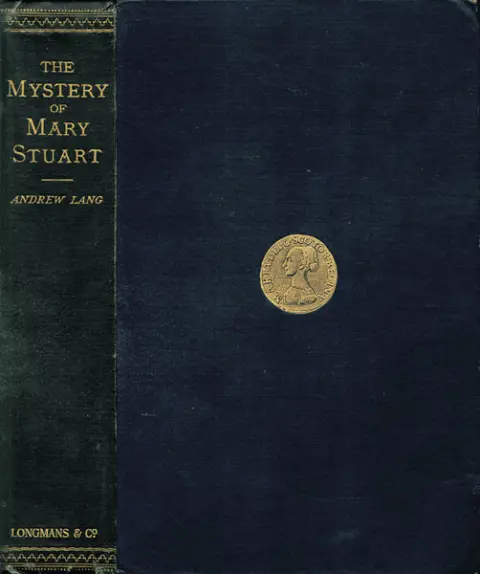
THE CLASSIC COLLECTION · 1901
"The Mystery of Mary Stuart" by Andrew Lang is a historical account written in the late 19th century. It explores the complexities surrounding the life and reign of Mary Stuart, Queen of Scots, particularly focusing on her trials, enemies, and the controversial "Casket Letters" which implicated her in various conspiracies. Lang aims to unravel the truth behind the historical events that led to her downfall, scrutinizing both her character and the motives of those around her. The opening of the text introduces the intricate web of personalities involved in the tragic story of Mary Stuart, providing a rich prelude to her struggles for power amidst political intrigue and personal betrayal. Lang illustrates the historical setting, emphasizing the socio-political climate of Scotland during Mary’s reign and the pivotal figures that shaped her narrative, including her husbands, noble adversaries, and loyal aides. The insight into her characterized traits, motives, and the events leading up to her troubles, including the infamous murder of her second husband, Darnley, sets a compelling stage for a deeper exploration of her life. The reader is invited to reflect on the multifaceted interactions of these historical figures and the enduring debate over Mary Stuart's guilt or innocence in the eyes of history.
Introduction adapted from the source catalogue; source summaries may be automatically generated.
Free to read · English · 123,454 words · No account needed
MAKE TIME FOR A GOOD BOOK
On by default. Untick to stop anonymous reading totals. Each page counts after 10 seconds in view. How this works.
Anonymous counting is on unless you have switched it off.
One thing this woman wanted, a master. Even before Darnley and she were wedded, at least publicly, Randolph wrote, ‘All honour that may be attributed unto any man by a wife, he hath it wholly and fully.’ In her authentic letters to Norfolk, when, a captive in England, she regarded herself as betrothed to him, we find her adopting an attitude of submissive obedience. The same tone pervades the disputed Casket Letters, to Bothwell, and is certainly in singular consonance with the later, and genuine epistles to Norfolk. But the tone--if the Casket Letters are forged--may have been borrowed from what was known of her early submission to Darnley.
The second dramatis persona is Darnley, ‘The Young Fool.’ Concerning Darnley but little is recorded in comparison with what we know of Mary. He was the son, by the Earl of Lennox, a royal Stewart, of that daughter whom Margaret Tudor, sister of Henry VIII., and widow of James IV., bore to her second husband, the Earl of Angus. Darnley’s father regarded himself as next to the Scottish crown, for the real nearest heir, the head of the Hamiltons, the Duke of Chatelherault, Lennox chose to consider as illegitimate. After playing a double and dishonest part in the troubled years following the death of James V., Lennox retired to England with his wife, a victim of the suspicions of Elizabeth.[6] The education of his son, Henry, Lord Darnley, seems to have been excellent, as far as the intellect and the body are concerned. The letter which, as a child of nine, he wrote to Mary Tudor, speaking of a work of his own, ‘The New Utopia,’ is in the new ‘Roman’ hand, carried to the perfection of copperplate. The Lennox MSS. say that ‘the Queen was stricken with the dart of love by the comliness of his sweet behaviour, personage, wit, and vertuous qualities, as well in languages[7] and lettered sciencies, as also in the art of music, dancing, and playing on instruments.’ When his murderers had left his room at midnight, his last midnight, his chamber-child begged him to play, while a psalm was sung, but his hand, he replied, was out for the lute, so say the Lennox Papers. Physically he was ‘a comely Prince of a fair and large stature, pleasant in countenance ... well exercised in martial pastimes upon horseback as any Prince of that age.’ The Spanish Ambassador calls him ‘an amiable youth.’ But it is plain that ‘the long lad,’ the gentil hutaudeau, with his girlish bloom, and early tendency to fulness of body, was a spoiled child. His mother, a passionate intriguer, kept this before him, that, as great-grandson of Henry VII., and as cousin of Mary Stuart, he should unite the two crowns. There were Catholics enough in England to flatter the pride of a future king, though now in exile. This Prince in partibus, like his far-away descendant, Prince Charles Edward, combined a show of charming manners, when he chose to charm, with an arrogant and violent petulance, when he deemed it safe to be insulting. At his first arrival in Scotland he won golden opinions, ‘his courteous dealing with all men is well spoken of.’ As his favour with Mary waxed he ‘dealt blows where he knew that they would be taken;’ he is said to have drawn his dagger on an official who brought him a disappointing message, and his foolish freedom of tongue gave Moray the alarm. It was soon prophesied that he ‘could not continue long.’ ‘To all honest men he is intolerable, and almost forgetful of her already, that has adventured so much for his sake. What shall become of her or what life with him she shall lead, that already taketh so much upon him as to control and command her, I leave it to others to think.’ So Randolph, the English Ambassador, wrote as early as May, 1565. She was ‘blinded, transported, carried I know not whither or which way, to her own confusion and destruction:’ words of omen that were fulfilled.
Your reading position is saved on this browser. Take it to another device with a library code. Reading pages adapt to text, rather than matching a printed edition.
Andrew Lang
Andrew Lang
Andrew Lang

Andrew Lang
BEHIND THE BOOK
This eBook is for the use of anyone anywhere in the United States and most other parts of the world at no cost and with almost no restrictions whatsoever. You may copy it, give it away or re-use it under the terms of the Project Gutenberg License included with this eBook or online at www.gutenberg.org. If you are not located in the United States, you will have to check the laws of the country where you are located before using this eBook. Read the source licence.
The original source file, including credits and licence, is retained by this library. Request an original-format copy at no charge. Please include the book title and Project Gutenberg identifier #42910.
KEEP YOUR CURIOSITY GOING
Cécile Tormay

Moritz Busch
John L. Ransom
Frances Wright
Cécile Tormay

Mabel Potter Daggett