Angels of the Battlefield A History of the Labors of the Catholic Sisterhoods in the Late Civil War
George Barton

THE CLASSIC COLLECTION · 1907
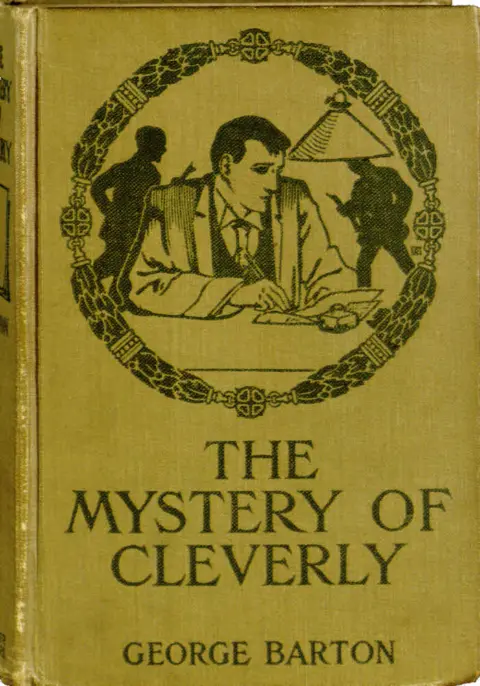
"The Mystery of Cleverly: A Story for Boys" by George Barton is a fictional tale likely written in the early 20th century. This adventurous story centers around Herbert Harkins, a young boy who must navigate schoolyard conflicts and complex family dynamics in the small town of Cleverly. The narrative explores themes of courage, integrity, and the often challenging journey to uphold one’s principles in the face of adversity. The opening of the book introduces readers to Herbert Harkins as he is confronted by a group of boys during a school prank known as “barring out day.” When he witnesses his frail teacher left outside in the cold, Herbert's sense of justice drives him to devise a clever plan to regain entry to the school, leading to a confrontation with the school bully, Arthur Black. This conflict not only establishes Herbert as a resourceful and brave character but also foreshadows the challenges he will face as he learns to balance the responsibilities of friendship, family honor, and personal ambition in the ensuing chapters.
Introduction adapted from the source catalogue; source summaries may be automatically generated.
Free to read · English · 49,578 words · No account needed
MAKE TIME FOR A GOOD BOOK
On by default. Untick to stop anonymous reading totals. Each page counts after 10 seconds in view. How this works.
Anonymous counting is on unless you have switched it off.
Mr. Harkins hastened to give him the most comfortable chair in the room, and Mrs. Harkins, who had remained, waited expectantly to hear the occasion of the visit. The visitor stroked his chin in an absent-minded way and seemed ill at ease. He was not smiling either, which was a strange thing for Horace Coke. Presently he said abruptly:
“It’s a lovely evening Dave, isn’t it?”
“Yes,” replied Mr. Harkins, “it is a lovely evening.”
But he knew in his heart that the lawyer had not called to make this useless comment on the weather. He knew that something more important was to come, so he sat silent and waited.
“Dave,” said the lawyer, clearing his throat, “I’m here on a very, very unpleasant errand. It was in the line of my professional duty though, and I couldn’t get out of it.”
“Indeed,” was the non-committal reply.
“No,” pursued Mr. Coke, “you see I am here representing a client.”
“Might I ask the name of your client?”
“Yes; it is John Black.”
Mr. Harkins started as he heard this name. It was not altogether unexpected, yet the sound gave him an uncomfortable feeling. Mrs. Harkins, too, was very much depressed by the announcement. Herbert had entered the room quietly during the conversation; but when he heard what Mr. Coke had said, he paused at the threshold.
“Well,” said Mr. Harkins finally, “what about Mr. Black?”
“It seems,” replied the lawyer, “that you have had a financial transaction with Mr. Black.”
“Yes, sir.”
“That he has your note for one thousand dollars.”
“That is correct.”
“Well, Mr. Black sends me here to collect it.”
“Mr. Coke, isn’t this a rather unusual method of doing business? I borrowed this money from Mr. Black at the bank to pay off the mortgage on my house. I understood that it was to run for several years, although we had no written agreement regarding the time. But I never heard of a banker sending a lawyer to collect a note.”
“It is unusual,” confessed the lawyer, “but Mr. Black has the legal right to do it if he sees fit. He says the endorsers of the note are no good and he instructs me, if payment is not made within twenty-four hours, to proceed against you.”
He arose to go. As he reached the door he turned and said:
“Dave, I don’t think this is a square deal; but I’m only acting as a lawyer for a client. If I had the money to spare, I’d give it to you myself.”
He said good-night and departed. Mrs. Harkins turned to her husband.
Your reading position is saved on this browser. Take it to another device with a library code. Reading pages adapt to text, rather than matching a printed edition.
George Barton

George Barton
George Barton
BEHIND THE BOOK
This eBook is for the use of anyone anywhere in the United States and most other parts of the world at no cost and with almost no restrictions whatsoever. You may copy it, give it away or re-use it under the terms of the Project Gutenberg License included with this eBook or online at www.gutenberg.org. If you are not located in the United States, you will have to check the laws of the country where you are located before using this eBook. Read the source licence.
The original source file, including credits and licence, is retained by this library. Request an original-format copy at no charge. Please include the book title and Project Gutenberg identifier #64386.
KEEP YOUR CURIOSITY GOING
Coulson Kernahan

Maurice Baring
Frances Wright
Cécile Tormay

Frederic Jesup Stimson

W. H. P. (William Henry Pope) Jarvis