Angels of the Battlefield A History of the Labors of the Catholic Sisterhoods in the Late Civil War
George Barton

THE CLASSIC COLLECTION · 1907
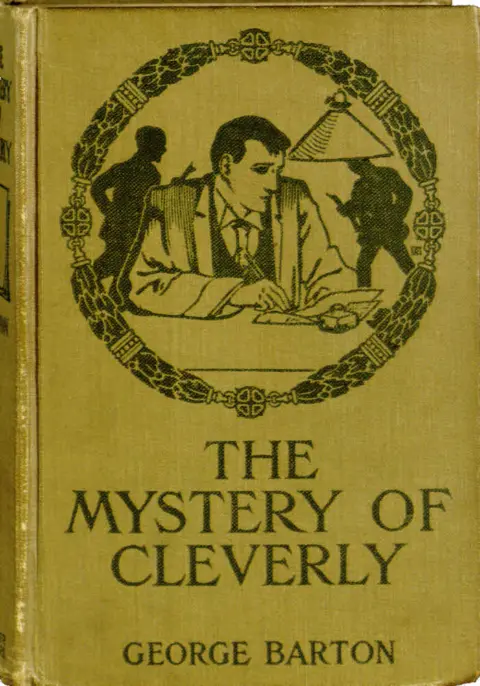
"The Mystery of Cleverly: A Story for Boys" by George Barton is a fictional tale likely written in the early 20th century. This adventurous story centers around Herbert Harkins, a young boy who must navigate schoolyard conflicts and complex family dynamics in the small town of Cleverly. The narrative explores themes of courage, integrity, and the often challenging journey to uphold one’s principles in the face of adversity. The opening of the book introduces readers to Herbert Harkins as he is confronted by a group of boys during a school prank known as “barring out day.” When he witnesses his frail teacher left outside in the cold, Herbert's sense of justice drives him to devise a clever plan to regain entry to the school, leading to a confrontation with the school bully, Arthur Black. This conflict not only establishes Herbert as a resourceful and brave character but also foreshadows the challenges he will face as he learns to balance the responsibilities of friendship, family honor, and personal ambition in the ensuing chapters.
Introduction adapted from the source catalogue; source summaries may be automatically generated.
Free to read · English · 49,578 words · No account needed
MAKE TIME FOR A GOOD BOOK
On by default. Untick to stop anonymous reading totals. Each page counts after 10 seconds in view. How this works.
Anonymous counting is on unless you have switched it off.
“You may call it a boys’ fight,” thundered the other; “I call it an outrage. Why that child of mine came home with his nose bleeding--do you understand sir--with his nose bleeding.”
“That child as you call him,” ventured Mr. Harkins, a note of amusement in his voice, “is, I believe, nearly seventeen years old.”
“What’s that got to do with it?” shouted the other.
“Nothing, except that he’s nearly two years older than my boy.”
“Age is not the only thing--”
“No,” interrupted Mr. Harkins, “weight should be considered. Arthur is not only older, but he is much heavier than Herbert.”
“Do you mean to say,” exclaimed the banker in amazement, “that you are taking up for that boy?”
“Oh, no,” said Mr. Harkins pleasantly, “that’s not necessary. Herbert seems to be fully capable of taking up for himself.”
“Take care, Harkins,” said the rich man, banging his cane angrily on the floor; “take care; don’t attempt to trifle with me!”
David Harkins paid no attention to this outburst, but sat silent wondering what would come next. His curiosity was soon satisfied.
John Black arose with a gesture of impatience.
“There is no need of my wasting any more time here,” he exclaimed. “I came over to give you a chance to set yourself straight.”
“To set myself straight?” queried Harkins.
“Yes; if you have that boy of yours apologize to Arthur at school to-morrow, we’ll call it quits.”
David Harkins stood looking at the banker as if he had taken leave of his senses. The silence lasted so long that it became embarrassing.
“Come, come, what do you say to my proposal?” asked John Black. “I don’t want to be too hard on your young one. Do as I say and the matter will drop. Your answer.”
“No!” shouted Harkins. “No; a hundred times no! Herbert did perfectly right in thrashing that bully of a son of yours. I’m proud of him for doing it. And if he would dare to apologize for it I’d disown him as a son.”
John Black grew almost livid with rage. He hurried to the door. When he reached it he looked back and shook his cane at Harkins.
“You will regret this insult; blast you, I’ll make you sorry for what
you said.”
Mrs. Harkins entered the room just as the banker retired. She hurried
over to her husband.
“I heard loud voices, David,” she said. “I am sorry you quarreled with
Mr. Black.”
Her husband looked at her fondly. His face was pale, although he was
smiling.
Your reading position is saved on this browser. Take it to another device with a library code. Reading pages adapt to text, rather than matching a printed edition.
George Barton

George Barton
George Barton
BEHIND THE BOOK
This eBook is for the use of anyone anywhere in the United States and most other parts of the world at no cost and with almost no restrictions whatsoever. You may copy it, give it away or re-use it under the terms of the Project Gutenberg License included with this eBook or online at www.gutenberg.org. If you are not located in the United States, you will have to check the laws of the country where you are located before using this eBook. Read the source licence.
The original source file, including credits and licence, is retained by this library. Request an original-format copy at no charge. Please include the book title and Project Gutenberg identifier #64386.
KEEP YOUR CURIOSITY GOING
Coulson Kernahan

Maurice Baring
Frances Wright
Cécile Tormay

Frederic Jesup Stimson

W. H. P. (William Henry Pope) Jarvis