Angels of the Battlefield A History of the Labors of the Catholic Sisterhoods in the Late Civil War
George Barton

THE CLASSIC COLLECTION · 1907
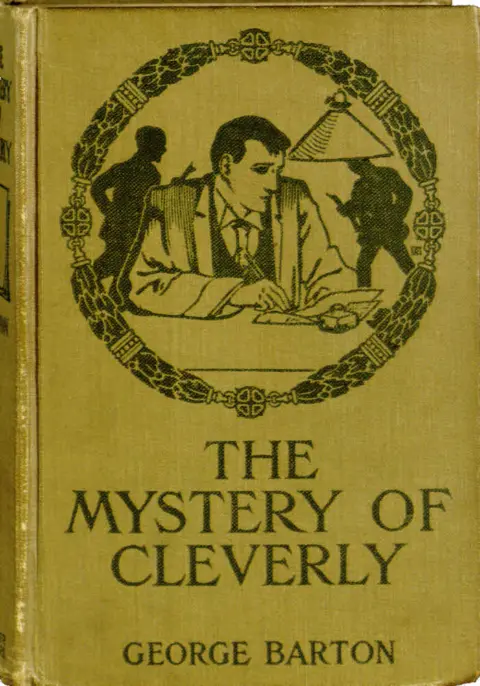
"The Mystery of Cleverly: A Story for Boys" by George Barton is a fictional tale likely written in the early 20th century. This adventurous story centers around Herbert Harkins, a young boy who must navigate schoolyard conflicts and complex family dynamics in the small town of Cleverly. The narrative explores themes of courage, integrity, and the often challenging journey to uphold one’s principles in the face of adversity. The opening of the book introduces readers to Herbert Harkins as he is confronted by a group of boys during a school prank known as “barring out day.” When he witnesses his frail teacher left outside in the cold, Herbert's sense of justice drives him to devise a clever plan to regain entry to the school, leading to a confrontation with the school bully, Arthur Black. This conflict not only establishes Herbert as a resourceful and brave character but also foreshadows the challenges he will face as he learns to balance the responsibilities of friendship, family honor, and personal ambition in the ensuing chapters.
Introduction adapted from the source catalogue; source summaries may be automatically generated.
Free to read · English · 49,578 words · No account needed
MAKE TIME FOR A GOOD BOOK
On by default. Untick to stop anonymous reading totals. Each page counts after 10 seconds in view. How this works.
Anonymous counting is on unless you have switched it off.
“Oh,” said the lawyer, “that was simply a little illustration of mine. You see the moral is a good one.”
“Hump! I don’t think it’s good at all, and I don’t like to hear you talk in that way.” Then after a momentary pause, “But what is it you want? Why did you come here?”
“I came with some good news,” said the lawyer. “David Harkins called on me this morning and paid off that note of a thousand dollars, and I have brought the money to you.”
The crafty face of the banker lighted up with surprise at this announcement. It was so unexpected that he hardly knew what to say in reply. Finally he managed to remark:
“Paid you? Paid you this morning, did he? I wonder where he got the
money.”
“I am sure I do not know,” said the lawyer, “and really I don’t think it makes much difference as long as you get the amount of your note.”
The two men sat down at the desk together, and the lawyer, after some preliminary remarks, handed over the money to the banker. The minute it was laid before him he jumped with a start.
“Why, this is all new money,” he exclaimed. “That’s just the kind of money that was taken from me last night. I don’t believe Dave Harkins came by that money honestly. It makes him look like a thief. It was probably done by that smart boy of his.”
“I wouldn’t say that,” cried the lawyer, trying to pacify the banker.
“But I will say it. Both father and son have a grudge against me, and I don’t believe they would hesitate at anything to get even.”
“But my dear sir,” remarked the lawyer in a soothing tone, “you have made a very rash assertion, and you have absolutely nothing to base it upon.”
John Black was silent for a moment, and then suddenly turning around,
he said in a harsh tone:
“Did you get that money direct from David Harkins?”
“I did,” was the response.
“Then,” exclaimed the banker in a tone of triumph, “that proves my suspicion. The money that was taken out of my desk consisted of ten $100 bills, and the money you have just given me is made up exactly of ten $100 bills. That satisfies me.”
“It is a coincidence,” admitted the lawyer.
“Coincidence,” snorted the banker, “it’s sufficient to convict the man. It satisfies me, and it ought to be enough to satisfy any other man with brains.”
“I wouldn’t be too hasty,” suggested the lawyer. “There is nothing to be gained by acting in that manner.”
Your reading position is saved on this browser. Take it to another device with a library code. Reading pages adapt to text, rather than matching a printed edition.
George Barton

George Barton
George Barton
BEHIND THE BOOK
This eBook is for the use of anyone anywhere in the United States and most other parts of the world at no cost and with almost no restrictions whatsoever. You may copy it, give it away or re-use it under the terms of the Project Gutenberg License included with this eBook or online at www.gutenberg.org. If you are not located in the United States, you will have to check the laws of the country where you are located before using this eBook. Read the source licence.
The original source file, including credits and licence, is retained by this library. Request an original-format copy at no charge. Please include the book title and Project Gutenberg identifier #64386.
KEEP YOUR CURIOSITY GOING
Coulson Kernahan

Maurice Baring
Frances Wright
Cécile Tormay

Frederic Jesup Stimson

W. H. P. (William Henry Pope) Jarvis