
The three strings
Natalie Sumner Lincoln
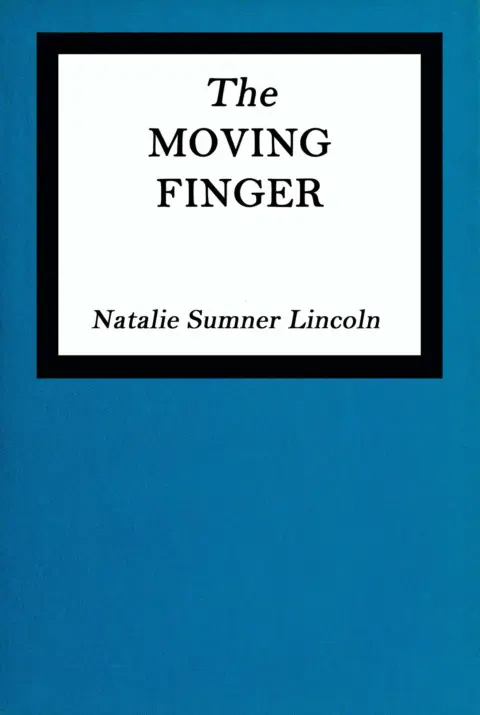
THE CLASSIC COLLECTION · 1918
"The Moving Finger" by Natalie Sumner Lincoln is a mystery novel written in the early 20th century. The story revolves around tragic events at the Porter homestead, where a guest, Bruce Brainard, is found dead under mysterious circumstances. The main characters introduced are Vera Deane, the nurse attending to Craig Porter, and Hugh Wyndham, who becomes involved in the unfolding drama. The book sets the stage for a suspenseful exploration of intrigue, relationships, and the investigation into Brainard's death. At the start of the novel, Vera Deane is introduced as a dedicated nurse attending to patients at the Porter residence. After an illness during dinner, Brainard has been brought to the house, only to be discovered later with a tragic injury to his throat. The narrative unfolds through various characters—the nurse, the grieving family, and the coroner—each contributing to the chilling atmosphere as they confront the ramifications of Brainard's death. Rising tensions hint at deeper secrets and possible motives, creating an engaging setup for the mystery that is sure to captivate readers drawn to tales of suspense and conflicting loyalties.
Introduction adapted from the source catalogue; source summaries may be automatically generated.
Free to read · English · 65,142 words · No account needed
MAKE TIME FOR A GOOD BOOK
On by default. Untick to stop anonymous reading totals. Each page counts after 10 seconds in view. How this works.
Anonymous counting is on unless you have switched it off.
“Yes, miss,” and Murray smiled broadly. “Shall I throw him out, miss?”
“Heavens, no!” exclaimed Millicent. “You might get in serious trouble with the law. He has, I suppose,” bitterly, “the right to hang about the scene of a crime--detectives are sanctioned human vultures.”
“He is, miss; a regular troublesome, meddlesome busybody, getting innocent people into trouble,” responded Murray feelingly. “He thinks he’s so bright with his ideas--I’ll idea him.” And the footman, forgetting his customary respectful attitude in his indignation, doubled up his fists suggestively. “How is Miss Deane feeling, miss?”
“Who, Miss Vera? She is at last getting some rest; be sure, Murray, and tell mother and Miss Dorothy not to disturb her when they return.”
“Certainly, miss.” The footman turned to leave. “Anything else I can
get you, miss?”
“Not a thing, thank you.” But as Murray stepped around the highboy she asked: “Any telegrams or telephones?”
“No telegrams, miss; but the telephone is going every instant, ’most all of them are reporters.”
“Don’t give out any information, Murray,” she cautioned.
“Certainly not, miss.” And he hurried away.
Millicent waited until she heard the door at the foot of the attic stairs close, then bent over the trunk and again took out the ledger and carefully tore out a handful of pages. Before replacing the ledger in its hiding-place she felt about under the false bottom until convinced that the article she sought was still there, after which she put back the ledger and the false bottom, rearranged the silks and laces, put in the tray, and locked the trunk.
“If you are not going to drink your coffee, I will,” announced a voice to her left, and a man stepped out from behind the Japanese screen. A low cry escaped Millicent, and her hands closed spasmodically over the pages torn from her ledger.
“Hugh!” she gasped. “Where--where have you been?”
“In town.” Wyndham stopped by the tray and, picking up the plate of sandwiches, handed it to Millicent. She shook her head. “No?” he queried; “then I’ll eat your share.” He poured out a cup of coffee and drank it clear, almost at a gulp. “That’s delicious,” he declared. “I had no idea I was so cold and hungry. Can’t I help you get up?”
But Millicent declined his proffered assistance, and rose somewhat clumsily, both hands engaged in pressing the torn sheets into the smallest possible compass.
“Where have you been, Hugh?” she asked again.
“Sitting on a trunk behind that screen waiting for Murray to go downstairs,” he responded, refilling his cup.
“Then you came up to the attic just after he did?”
Your reading position is saved on this browser. Take it to another device with a library code. Reading pages adapt to text, rather than matching a printed edition.
Natalie Sumner Lincoln
Natalie Sumner Lincoln
Natalie Sumner Lincoln

Natalie Sumner Lincoln
BEHIND THE BOOK
This eBook is for the use of anyone anywhere in the United States and most other parts of the world at no cost and with almost no restrictions whatsoever. You may copy it, give it away or re-use it under the terms of the Project Gutenberg License included with this eBook or online at www.gutenberg.org. If you are not located in the United States, you will have to check the laws of the country where you are located before using this eBook. Read the source licence.
The original source file, including credits and licence, is retained by this library. Request an original-format copy at no charge. Please include the book title and Project Gutenberg identifier #74210.
KEEP YOUR CURIOSITY GOING
Coulson Kernahan

Maurice Baring
Frances Wright
Cécile Tormay

Frederic Jesup Stimson

W. H. P. (William Henry Pope) Jarvis