THE CLASSIC COLLECTION✦Darwinism stated by Darwin himself Characteristic passages from the writings of Charles DarwinCLASSIC FREE BOOKS
Darwinism stated by Darwin himself Characteristic passages from the writings of Charles Darwin
Charles Darwin
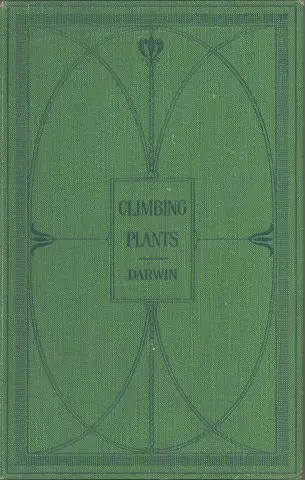
THE CLASSIC COLLECTION · 1875
"The Movements and Habits of Climbing Plants" by Charles Darwin is a scientific publication written in the mid-19th century. This work explores the unique mechanisms and adaptive strategies employed by climbing plants, focusing specifically on their movements and habits as they interact with their environment. At the start of the book, Darwin introduces the topic of climbing plants and discusses his motives for studying their movements, sparked by previous observations from other botanists. He classifies climbing plants into four main categories, particularly emphasizing twining plants that spiral around supports and those equipped with sensitive organs that clasp objects. The opening portion highlights detailed observations of specific plants, such as the Hop, detailing their rotational movements, rates of ascent, and how these unique traits enable them to thrive in their habitats. Darwin sets the stage for a comprehensive examination of these fascinating plant behaviors, ultimately aiming to illustrate the principles of evolution through adaptations to their climbing environments.
Introduction adapted from the source catalogue; source summaries may be automatically generated.
Free to read · English · 51,766 words · No account needed
MAKE TIME FOR A GOOD BOOK
On by default. Untick to stop anonymous reading totals. Each page counts after 10 seconds in view. How this works.
Anonymous counting is on unless you have switched it off.
Tamus communis (Dioscoreaceæ). A young shoot from a tuber in a pot placed in the greenhouse: follows the sun.
H. M.
July, 7, 1st circle was made in 3 10
7, 2nd 2 38
8, 3rd 3 5
8, 4th 2 56
8, 5th 2 30
8, 6th 2 30
Lapagerea rosea (Philesiaceæ), in greenhouse, follows the sun.
H. M. March 9, 1st circle was made in 26 15 (shoot young) 10, semicircle 8 15 11, 2nd circle 11 0 12, 3rd 15 30 13, 4th 14 15 16, 5th 8 40 when placed in the hothouse; but the next day the shoot remained stationary.
Roxburghia viridiflora (Roxburghiaceæ) moves against the sun; it completed a circle in about 24 hours.
Humulus Lupulus (Urticaceæ) follows the sun. The plant was kept in a room during warm weather.
H. M.
April 9, 2 circles were made in 4 16
Aug. 13, 3rd circle was 2 0
14, 4th 2 20
14, 5th 2 16
14, 6th 2 2
14, 7th 2 0
14, 8th 2 4
With the Hop a semicircle was performed, in travelling from the light, in 1 hr. 33 m.; in travelling to the light, in 1 hr. 13 m.; difference of rate, 20 m.
Akebia quinata (Lardizabalaceæ), placed in hothouse, moves against the
sun.
H. M.
March 17, 1st circle was made in 4 0 (shoot young)
18, 2nd 1 40
18, 3rd 1 30
19, 4th 1 45
Stauntonia latifolia (Lardizabalaceæ), placed in hothouse, moves
against the sun.
H. M.
March 28, 1st circle was made in 3 30
29, 2nd 3 45
Sphærostemma marmoratum (Schizandraceæ) follows the sun.
H. M.
August 5th, 1st circle was made in about 24 0
5th, 2nd circle was made in 18 30
Stephania rotunda (Menispermaceæ) moves against the sun.
H. M.
May 27, 1st circle was made in 5 5
30, 2nd 7 6
June 2, 3rd 5 15
3, 4th 6 28
Thryallis brachystachys (Malpighiaceæ) moves against the sun: one shoot made a circle in 12 hrs., and another in 10 hrs. 30 m.; but the next day, which was much colder, the first shoot took 10 hrs. to perform only a semicircle.
Hibbertia dentata (Dilleniaceæ), placed in the hothouse, followed the sun, and made (May 18th) a circle in 7 hrs. 20 m.; on the 19th, reversed its course, and moved against the sun, and made a circle in 7 hrs.; on the 20th, moved against the sun one-third of a circle, and then stood still; on the 26th, followed the sun for two-thirds of a circle, and then returned to its starting-point, taking for this double course 11 hrs. 46 m.
Sollya Drummondii (Pittosporaceæ) moves against the sun kept in
greenhouse.
H. M.
April 4, 1st circle was made in 4 25
5, 2nd 8 0 (very cold day)
6, 3rd 6 25
7, 4th 7 5
Polygonum dumetorum (Polygonaceæ). This case is taken from Dutrochet (p. 299), as I observed, no allied plant: follows the sun. Three shoots, cut off a plant, and placed in water made circles in 3 hrs. 10 m., 5 hrs. 20 m., and 7 hrs. 15 m.
Wistaria Chinensis (Leguminosæ), in greenhouse, moves against the sun.
H. M.
May 13, 1st circle was made in 3 5
13, 2nd 3 20
16, 3rd 2 5
24, 4th 3 21
25, 5th 2 37
25, 6th 2 35
Phaseolus vulgaris (Leguminosæ), in greenhouse, moves against the sun.
H. M.
May, 1st circle was made in 2 0
2nd 1 55
3rd 1 55
Dipladenia urophylla (Apocynaceæ) moves against the sun.
Your reading position is saved on this browser. Take it to another device with a library code. Reading pages adapt to text, rather than matching a printed edition.
Charles Darwin
Charles Darwin
Charles Darwin
Charles Darwin & Francis, Sir Darwin
BEHIND THE BOOK
This eBook is for the use of anyone anywhere in the United States and most other parts of the world at no cost and with almost no restrictions whatsoever. You may copy it, give it away or re-use it under the terms of the Project Gutenberg License included with this eBook or online at www.gutenberg.org. If you are not located in the United States, you will have to check the laws of the country where you are located before using this eBook. Read the source licence.
The original source file, including credits and licence, is retained by this library. Request an original-format copy at no charge. Please include the book title and Project Gutenberg identifier #2485.
KEEP YOUR CURIOSITY GOING

John Muir

Asa Gray
Asa Gray

Florence Nightingale
Elizabeth Robins Pennell
Denison Olmsted