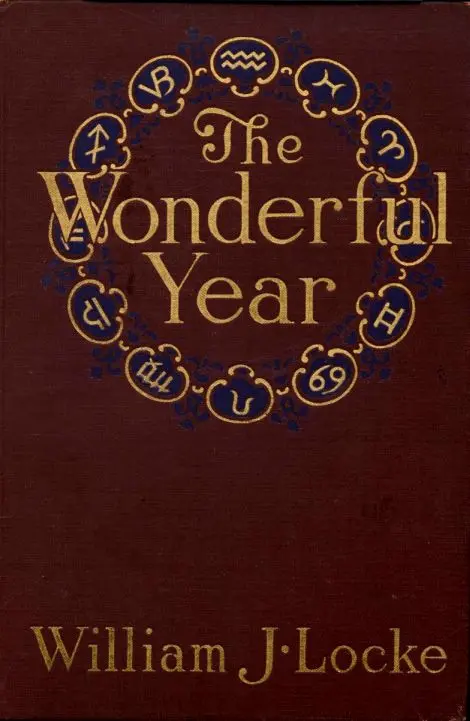
The Wonderful Year
William John Locke
THE CLASSIC COLLECTION · 1925
"The Mountebank" by William John Locke is a novel written in the post-World War I era, specifically in the early 20th century. The story introduces Brigadier-General Andrew Lackaday, who reflects on his tumultuous life, particularly the events surrounding his rise from humble beginnings and his experiences in the circus as a child. The narrative unfolds through a correspondence with a friend who has agreed to compile Lackaday's life story, highlighting his struggle with identity and his efforts to reconcile his past with his present status as a military figure. The opening of the book presents a thoughtful and introspective look at Lackaday's life, marked by a peculiar combination of comedy and tragedy. As he grapples with his past as a circus performer known as "Petit Patou," we see his attempts to transition into the world of military leadership. The reader is introduced to a whimsical yet serious tone, capturing Lackaday's charming yet awkward personality alongside his memories of the Cirque Rocambeau, where he was raised and nurtured by a clown named Ben Flint. Through engaging dialogue and vivid descriptions, the narrative sets the stage for Lackaday's journey of self-discovery, as he grapples with his identity and develops connections with other characters, including Lady Auriol, who plays a significant role in shaping his reflections on life, love, and the complexities of human existence.
Introduction adapted from the source catalogue; source summaries may be automatically generated.
Free to read · English · 93,730 words · No account needed
MAKE TIME FOR A GOOD BOOK
On by default. Untick to stop anonymous reading totals. Each page counts after 10 seconds in view. How this works.
Anonymous counting is on unless you have switched it off.
We went to the net-covered wall of ripe and beauteous temptation, trampling over Jenkins's beds of I know not what, and ate forbidden fruit. At least Evadne did, until, son of Adam, I fell.
"Do have a bite. It's lovely. And I've left you the blushy side."
What could I do? There she stood, fair, slim, bobbed-haired, green-kirtled, serious-eyed, carelessly juicy-lipped, holding up the peach. I, to whom all wall-fruit is death, bit into the side that blushed. She anxiously watched my expression.
"Topping, isn't it?"
"Yum, yum," said I.
"Isn't it?" she said, taking back the peach.
That's the beauty of childhood. It demands no elaborate expression. Simplicity is its only coinage. A rhapsody on the exquisiteness of the fruit's flavour would have bored Evadne stiff. Her soul yearned for the establishment between us of a link of appreciation. "Yum, yum," said I, and the link was instantly supplied.
She threw away a peach stone and sighed.
"Let's go."
"Why?" I asked.
"I'm not looking for any more trouble," she replied.
We returned to the lawn and Lady Auriol and Colonel Lackaday. Not a hole could be picked in the perfect courtesy of their greeting; but it lacked passionate enthusiasm. Evadne and I sat down, and our exceedingly dull conversation was soon interrupted by the advent of the church goers.
Towards lunch time Lackaday and I, chance companions, strolled towards the
house.
"What a charming woman," he remarked.
"Lady Verity-Stewart," said I, with a touch of malice--our hostess was the last woman with whom he had spoken--"is a perfect dear."
"So she is, but I meant Lady Auriol."
"I've known her since she was that high," I said spreading out a measuring hand. "Her development has been most interesting."
A shade of annoyance passed over the Colonel's ugly good-humoured face. To treat the radiant creature who had swum into his ken as a subject for psychological observation savoured of profanity. With a smile I added:
"She's one of the very best."
His brow cleared and his teeth gleamed out my tribute.
"I've met very few English ladies in the course of my life," said he half apologetically. "The other day, a brother officer finding me fooling about Pall Mall insisted on my lunching with him at the Carlton. He had a party. I sat next to a Mrs. Tankerville, who I gather is a celebrity."
"She is," said I. "And she said, 'You must really come and have tea with me to-morrow. I've a crowd of most interesting people coming.'"
Your reading position is saved on this browser. Take it to another device with a library code. Reading pages adapt to text, rather than matching a printed edition.
William John Locke
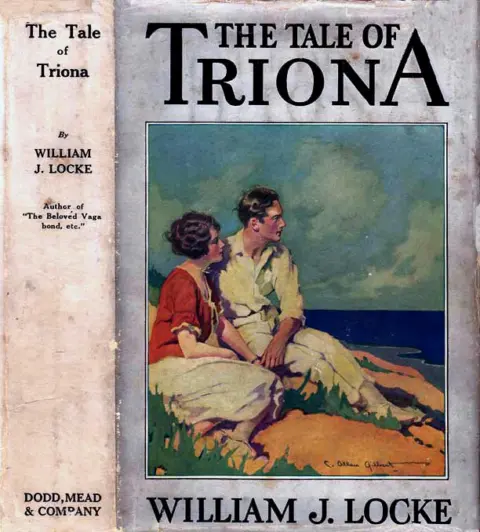
William John Locke
William John Locke
William John Locke
BEHIND THE BOOK
This eBook is for the use of anyone anywhere in the United States and most other parts of the world at no cost and with almost no restrictions whatsoever. You may copy it, give it away or re-use it under the terms of the Project Gutenberg License included with this eBook or online at www.gutenberg.org. If you are not located in the United States, you will have to check the laws of the country where you are located before using this eBook. Read the source licence.
The original source file, including credits and licence, is retained by this library. Request an original-format copy at no charge. Please include the book title and Project Gutenberg identifier #8430.
KEEP YOUR CURIOSITY GOING
Coulson Kernahan

Maurice Baring
Frances Wright
Cécile Tormay

Frederic Jesup Stimson

W. H. P. (William Henry Pope) Jarvis