THE CLASSIC COLLECTION✦The haunts of menCLASSIC FREE BOOKS
The haunts of men
Robert W. (Robert William) Chambers
THE CLASSIC COLLECTION · 1919
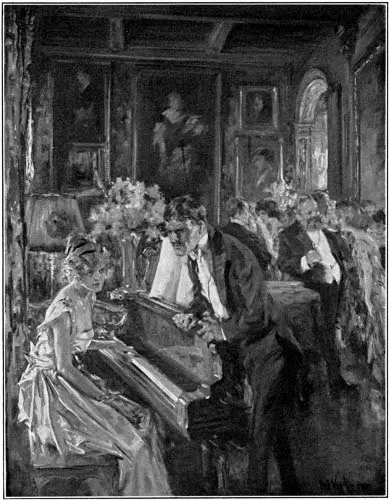
"The Moonlit Way: A Novel" by Robert W. Chambers is a fictional narrative written in the early 20th century. The story unfolds in an enchanting, moonlit setting, primarily in Constantinople, where intrigues of European nobility and a captivating dancer named Nihla Quellen intertwine with themes of love, betrayal, and ambition. The plot hints at layers of complex relationships against a backdrop of rising political tensions and the glamour of the East. At the start of the novel, the atmosphere is rich with vivid imagery of the moonlit Bosphorus, inviting the reader into the opulence of a gathering at the German Embassy, where various characters discuss their fascination with Nihla, a beautiful dancer who has just made a striking entrance. Set among a cast of diplomats and socialites, we are introduced to Count d’Eblis, who is eager to make Nihla the center of attention while Ferez Bey, an influential figure, schemes behind the scenes. As the prologue unfolds, Nihla is revealed as not just an alluring performer but also a pawn in a complex game of power and desire, setting the stage for her dramatic entanglements that echo themes of fate and the quests for personal gain.
Introduction adapted from the source catalogue; source summaries may be automatically generated.
Free to read · English · 105,024 words · No account needed
MAKE TIME FOR A GOOD BOOK
On by default. Untick to stop anonymous reading totals. Each page counts after 10 seconds in view. How this works.
Anonymous counting is on unless you have switched it off.
"7. It will be impossible to contemplate a landing in Ireland unless the German Navy can gain such a victory as to make it really likely that an attempt to reach Ireland by sea would succeed. Should the German Navy not win such a victory, then a use will be found for the Irish Brigade in Germany or elsewhere. But in no case will it be used except in such ways as Sir Roger Casement shall approve, as being completely in accordance with Article 2.
"In this case the Irish Brigade might be sent to Egypt to lend assistance in expelling the English and re-establishing Egyptian independence.
"Even if the Irish Brigade should not succeed in fighting for the liberation of Ireland from the English yoke, nevertheless a blow dealt at the British intruders in Egypt and intended to help the Egyptians to recover their freedom would be a blow struck for a cause closely related to that of Ireland."
Another paper read as follows:
"Halbmondlager,
"Aug. 20th, 1915.
"To MURTAGH SKEEL, COLONEL,
"Irish Exp. Force,
"N. Y.
"On June 7, fifty Irishmen, with one German subaltern, were handed over to this camp, to be temporarily accommodated here. On June 16 five more Irishmen arrived, one of whom, having a broken leg, was sent to the camp hospital. There are, therefore, fifty-four Irishmen now here, one Sergeant Major, one Deputy Sergeant Major, three Sergeants, three Corporals, three Lance Corporals, and forty-three privates.
"They were accommodated as well as could be among the Indian battalion, an arrangement which gives rise to much trouble, which is inevitable, considering the tasks imposed upon Half Moon Camp.
"The Irish form an Irish brigade, which was constituted after negotiations between the Foreign Office and Sir Roger Casement, the champion of Irish independence.
"Enclosed is the Foreign Office communication of Dec. 28, 1914,
confirming the conditions on which the Irish brigade was to be
formed.
"The members of the Irish brigade are no longer German prisoners of war, but receive an Irish uniform; and, according to orders, instructions are to be issued to treat the Irish as comrades in arms.
"The Irish are under the command of a German officer, First Lieut. Boehm, the representative of the Grand General Staff (Political Division) which is in direct communication with the subaltern in charge of the Irish. This subaltern has been receiving money direct, which he expends in the interests of the Irish; 250 marks were given him through the Commandant's office, Zossen, and 250 marks by First Lieut. Boehm.
"Promotions, also, are made known by being directly communicated to the subaltern in question. As will appear from the enclosed copy, dated July 20, these promotions were as follows: (1) Sergeant Major, (2) Deputy Sergeant Major, and (3) Sergeants.
Your reading position is saved on this browser. Take it to another device with a library code. Reading pages adapt to text, rather than matching a printed edition.
Robert W. (Robert William) Chambers
Robert W. (Robert William) Chambers

Robert W. (Robert William) Chambers
Robert W. (Robert William) Chambers
BEHIND THE BOOK
This eBook is for the use of anyone anywhere in the United States and most other parts of the world at no cost and with almost no restrictions whatsoever. You may copy it, give it away or re-use it under the terms of the Project Gutenberg License included with this eBook or online at www.gutenberg.org. If you are not located in the United States, you will have to check the laws of the country where you are located before using this eBook. Read the source licence.
The original source file, including credits and licence, is retained by this library. Request an original-format copy at no charge. Please include the book title and Project Gutenberg identifier #33557.
KEEP YOUR CURIOSITY GOING
Coulson Kernahan

Maurice Baring
Frances Wright
Cécile Tormay

Frederic Jesup Stimson

W. H. P. (William Henry Pope) Jarvis