THE CLASSIC COLLECTION✦The haunts of menCLASSIC FREE BOOKS
The haunts of men
Robert W. (Robert William) Chambers
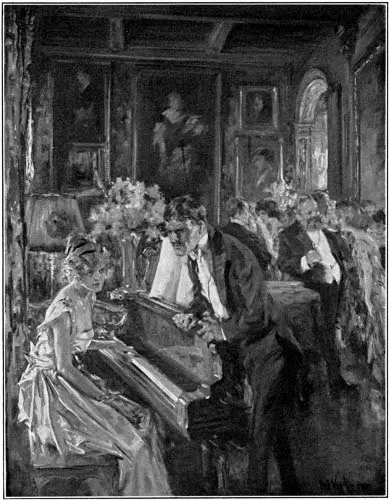
THE CLASSIC COLLECTION · 1919
"The Moonlit Way: A Novel" by Robert W. Chambers is a fictional narrative written in the early 20th century. The story unfolds in an enchanting, moonlit setting, primarily in Constantinople, where intrigues of European nobility and a captivating dancer named Nihla Quellen intertwine with themes of love, betrayal, and ambition. The plot hints at layers of complex relationships against a backdrop of rising political tensions and the glamour of the East. At the start of the novel, the atmosphere is rich with vivid imagery of the moonlit Bosphorus, inviting the reader into the opulence of a gathering at the German Embassy, where various characters discuss their fascination with Nihla, a beautiful dancer who has just made a striking entrance. Set among a cast of diplomats and socialites, we are introduced to Count d’Eblis, who is eager to make Nihla the center of attention while Ferez Bey, an influential figure, schemes behind the scenes. As the prologue unfolds, Nihla is revealed as not just an alluring performer but also a pawn in a complex game of power and desire, setting the stage for her dramatic entanglements that echo themes of fate and the quests for personal gain.
Introduction adapted from the source catalogue; source summaries may be automatically generated.
Free to read · English · 105,024 words · No account needed
MAKE TIME FOR A GOOD BOOK
On by default. Untick to stop anonymous reading totals. Each page counts after 10 seconds in view. How this works.
Anonymous counting is on unless you have switched it off.
"Thank God!" he said, "here they are! Where on earth did you find these papers, Barres? They're the documents we were after! They ought to have been in Lehr's pockets!"
"He must have passed them to the fellow who bumped into me near the wash-room," said Barres, enchanted at his luck. "What a fortunate chance that you sent me around there!"
Renoux, delighted, stood under the electric light unfolding document after document, and nodding his handsome, mischievous head with satisfaction.
"What luck, Barres! What did you do to the fellow?"
"Thumped him to sleep and turned out his pockets. Are these really
what you want?"
"I should say so! This is precisely what we are looking for!"
"Do you mind if I read them, too?"
"No, I don't. Why should I? You're my loyal comrade and you understand discretion.... What do you think of this!" displaying a typewritten document marked "Copy," enclosing a sheaf of maps.
It contained plans of all the East River and Harlem bridges, a tracing showing the course of the new aqueduct and the Ashokan Dam, drawings of the Navy Yard, a map of Iona Island, and a plan of the Welland Canal.
The document was brief:
"Included in report by K17 to Diplomatic Agent controlling Section 7-4-11-B. Recommended that detail plan of DuPont works be made without delay.
Followed several sheets in cipher, evidently some intricate variation of those which are always ultimately solved by experts.
But the documents that were now unfolded by Captain Renoux proved readable and intensely interesting.
These were the papers which Renoux read and which Barres read over his
shoulder:
"(Copy)
Berlin Military Telegraph Office Telegram
Berlin. Political Division of the General Staff
Nr. Pol. 6431.
8, Moltkestrasse,
Berlin, NW, 40.
March 20, 1916.
"Referring to your correspondence and conversations with Colonel Skeel, I most urgently request that the necessary funds be raised through the New York banker, Adolf Gerhardt; also that Bernstorff be immediately informed through Boy-Ed, so that plans of Head General Staff of Army on campaign may not be delayed.
"Begin instantly enlist and train men, secure and arm power-boat assemble equipment and explosives, Welland Canal Exp'd'n. War Office No. 159-16, Secret U. K.:--T, 3, P."
"Foreign Office, Berlin,
"Dec. 28, 1914.
"DEAR SIR ROGER:--I have the honour to acknowledge receipt of your letter of the 23d inst., in which you submitted to his Imperial Majesty's Government a proposal for the formation of an Irish brigade which would be pledged to fight only for the cause of Irish nationalism, and which is to be composed of any Irish prisoners of war willing to join such a regiment.
Your reading position is saved on this browser. Take it to another device with a library code. Reading pages adapt to text, rather than matching a printed edition.
Robert W. (Robert William) Chambers
Robert W. (Robert William) Chambers

Robert W. (Robert William) Chambers
Robert W. (Robert William) Chambers
BEHIND THE BOOK
This eBook is for the use of anyone anywhere in the United States and most other parts of the world at no cost and with almost no restrictions whatsoever. You may copy it, give it away or re-use it under the terms of the Project Gutenberg License included with this eBook or online at www.gutenberg.org. If you are not located in the United States, you will have to check the laws of the country where you are located before using this eBook. Read the source licence.
The original source file, including credits and licence, is retained by this library. Request an original-format copy at no charge. Please include the book title and Project Gutenberg identifier #33557.
KEEP YOUR CURIOSITY GOING
Coulson Kernahan

Maurice Baring
Frances Wright
Cécile Tormay

Frederic Jesup Stimson

W. H. P. (William Henry Pope) Jarvis