THE CLASSIC COLLECTION✦The haunts of menCLASSIC FREE BOOKS
The haunts of men
Robert W. (Robert William) Chambers
THE CLASSIC COLLECTION · 1919
"The Moonlit Way: A Novel" by Robert W. Chambers is a fictional narrative written in the early 20th century. The story unfolds in an enchanting, moonlit setting, primarily in Constantinople, where intrigues of European nobility and a captivating dancer named Nihla Quellen intertwine with themes of love, betrayal, and ambition. The plot hints at layers of complex relationships against a backdrop of rising political tensions and the glamour of the East. At the start of the novel, the atmosphere is rich with vivid imagery of the moonlit Bosphorus, inviting the reader into the opulence of a gathering at the German Embassy, where various characters discuss their fascination with Nihla, a beautiful dancer who has just made a striking entrance. Set among a cast of diplomats and socialites, we are introduced to Count d’Eblis, who is eager to make Nihla the center of attention while Ferez Bey, an influential figure, schemes behind the scenes. As the prologue unfolds, Nihla is revealed as not just an alluring performer but also a pawn in a complex game of power and desire, setting the stage for her dramatic entanglements that echo themes of fate and the quests for personal gain.
Introduction adapted from the source catalogue; source summaries may be automatically generated.
Free to read · English · 105,024 words · No account needed
MAKE TIME FOR A GOOD BOOK
On by default. Untick to stop anonymous reading totals. Each page counts after 10 seconds in view. How this works.
Anonymous counting is on unless you have switched it off.
"Barres imitates Manship with impunity; I'd like to have a plagiaristic try at Sorolla and Zuloaga, if Dulcie says the word. Very agreeable job for a girl in hot weather," he added, looking at Dulcie, "--an easy swimming pose in some nice cool little Adirondack lake----"
"Seriously," interrupted Mandel, twirling his monocle impatiently by its greasy string, "I mean it, Barres." He turned and looked at the lithely speeding Arethusa. "If that is Dulcie, I can give her a good part in----"
"You hear, Dulcie?" enquired Barres. "These two kind gentlemen have what they consider attractive jobs for you. All I can offer you is liberty to tumble around the hayfields at Foreland Farms, with my sketching easel in the middle distance. Now, choose your job, Sweetness."
"The hayfields and----"
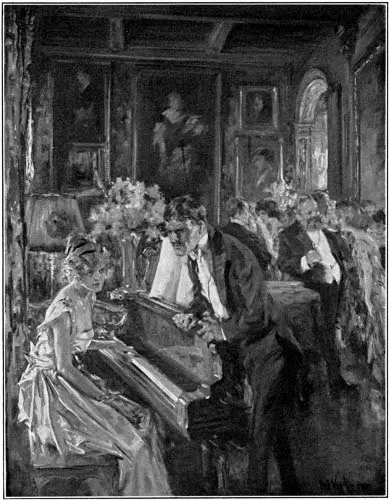
Dulcie's voice faded to a whisper; Barres, seated beside her, leaned nearer, bending his head to listen.
"And you," she murmured again, "--if you want me."
"I always want you," he whispered laughingly, in return.
Esme regarded the scene with weariness and chagrin.
"Come on," he said languidly to Mandel, "we'll buy her some flowers for the evil she does us. She'll need 'em; she'll be finished before this amateur sculptor finishes his blooming Arethusa."
Mandel lingered:
"I'm going up to Northbrook in a day or two, Barres. If you
change--change Dulcie's mind for her, just call me up at the Adolf
Gerhardt's."
"Dulcie will call you up if she changes my mind."
Dulcie laughed.
When they had gone, Barres said:
"You know I haven't thought about the summer. What was your idea about
it?"
"My--idea?"
"Yes. You'd want a couple of weeks in the country somewhere, wouldn't
you?"
"I don't know. I never went away," she replied vaguely.
It occurred to him, now, that for all his pleasant toleration of Soane's little daughter during the two years and more of his residence in Dragon Court, he had never really interested himself in her well-being, never thought to enquire about anything which might really concern her. He had taken it for granted that most people have some change from the stifling, grinding, endless routine of their lives--some respite, some quiet interval for recovery and rest.
And so, returning from his own vacations, it never occurred to him that the shy girl whom he permitted within his precincts, when convenient, never knew any other break in the grey monotony--never left the dusty, soiled, and superheated city from one year's summer to another.
Now, for the first time, he realised it.
Your reading position is saved on this browser. Take it to another device with a library code. Reading pages adapt to text, rather than matching a printed edition.
Robert W. (Robert William) Chambers
Robert W. (Robert William) Chambers

Robert W. (Robert William) Chambers
Robert W. (Robert William) Chambers
BEHIND THE BOOK
This eBook is for the use of anyone anywhere in the United States and most other parts of the world at no cost and with almost no restrictions whatsoever. You may copy it, give it away or re-use it under the terms of the Project Gutenberg License included with this eBook or online at www.gutenberg.org. If you are not located in the United States, you will have to check the laws of the country where you are located before using this eBook. Read the source licence.
The original source file, including credits and licence, is retained by this library. Request an original-format copy at no charge. Please include the book title and Project Gutenberg identifier #33557.
KEEP YOUR CURIOSITY GOING
Coulson Kernahan

Maurice Baring
Frances Wright
Cécile Tormay

Frederic Jesup Stimson

W. H. P. (William Henry Pope) Jarvis