THE CLASSIC COLLECTION✦The lion’s shareCLASSIC FREE BOOKS
The lion’s share
Octave Thanet
THE CLASSIC COLLECTION · 1897
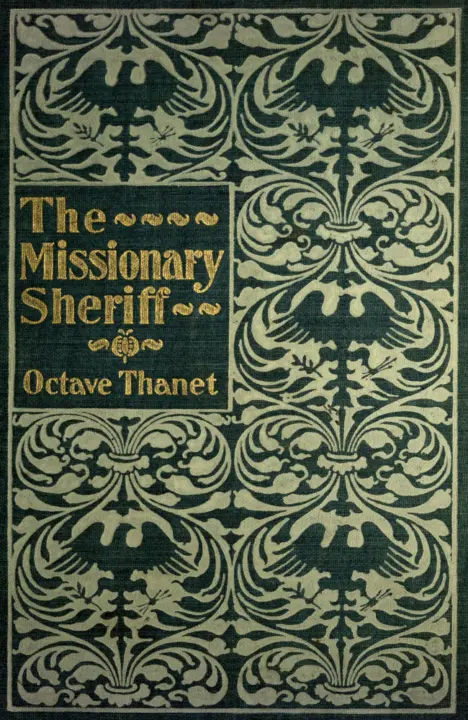
"The Missionary Sheriff" by Octave Thanet is a novel written in the late 19th century. The story revolves around Sheriff Amos Wickliff, a plain and honorable man who navigates the complexities of morality and duty within his role. As he interacts with various characters, including a troubled young man named Ned Paisley, themes of compassion, redemption, and the societal challenges of the time begin to unfold. The opening of the novel introduces Sheriff Wickliff as he observes local boy soldiers during a parade, reflecting on his position of authority and influence within the community. His character is depicted as large and imposing, yet kind-hearted—particularly in his dealings with the inmates of the jail, including the swindler Ned Paisley. The sheriff discovers a photograph belonging to Paisley that sparks sympathy in him for the young man's mother. As the narrative progresses, Sheriff Wickliff aims to shield her from the truth about her son’s life of crime and the realities of the justice system. The opening establishes the sheriff’s dual role as a law enforcer and a compassionate man determined to do right by those in his care.
Introduction adapted from the source catalogue; source summaries may be automatically generated.
Free to read · English · 52,461 words · No account needed
MAKE TIME FOR A GOOD BOOK
On by default. Untick to stop anonymous reading totals. Each page counts after 10 seconds in view. How this works.
Anonymous counting is on unless you have switched it off.
The only other person (outside of her customers) who kept so much as a speaking acquaintance with Margaret was the sheriff, Amos Wickliff. And what he knew of her he was able to keep even from the press. As for the customers, her malicious nickname explains her business. Margaret was an irregular money-lender. She loaned money for short periods on personal security or otherwise. It should speak well for her shrewdness that she rarely made a bad debt. Yet she was not unpopular; on the contrary, she had the name of giving the poor a long day, and, for one of her trade, was esteemed lenient. Shortly after her accident, also (she had the ill-hap to fall down her cellar-way, injuring her spine), she had remitted a number of debts to her poorest debtors.
The accident occurred of a Wednesday morning; Wednesday afternoon her nephew called on her, having, he said, but just discovered her whereabouts. The reporters discovered that this nephew, Archibald Cary Allerton by name, was not an invited and far from a welcome guest, although he gave out that his mother and he were his aunt’s sole living kindred. She would not speak to him when he visited her, turning her head to the wall, moaning and muttering, so that it was but kindness to leave her. The nurse (Mrs. Raker, the jailer’s wife, had come up from the jail) said that he seemed distressed. He called again during the evening, after Wickliff, who spent most of the evening with her alone, was gone, but he had no better success; she would not or could not speak to him. Thursday morning she saw Amos Wickliff. She seemed brighter, and gave Amos, in the presence of the nurse, the notes and mortgages that she desired released. Thursday evening, about eight o’clock, Amos returned to report how he had done his commissions. He found the house flaming from roof-tree to sills! There was no question of his saving the sick woman. Even as he panted up the hill-side the roof fell in with a crash. Amos screamed to the crowd: “Where is she? Did you save her?” And the Irish char-woman’s wail answered him: “I wint in—I wint in whin it was all afire, and the fire jumped at me, so I run; me eyebrows is gone, and I didn’t see a sign of her!” Then Amos betook himself to Mrs. Raker, whom he found only after much searching; nor did her story reassure him. She was violently agitated between pity and shock, but, as usual, she kept her head on her shoulders and her wits on duty. She was not in the house when the catastrophe had happened. Allerton had come to see his aunt. He told the nurse that she might go to her sister, her sister’s child being ill, and that he would stay with his aunt. Wickliff was expected every moment. And the patient had added her word, “Do go, Mrs. Raker; it’s only a step; and take a jar of my plum jelly to Sammy to take his medicine in!” So Mrs. Raker went. She saw the fire first, and that not half an hour from the time she left the house. She saw it flickering in the lower windows. It was she sent her brother-in-law to give the alarm, while she ran swiftly to the house. The whole lower story was ablaze when she got up the hill. To enter was impossible. But Mrs. O’Shea, the char-woman, and she did find a ladder, and put it against the wall and the window of Miss Clark’s chamber, which window was wide open, and Mrs. Baker held the ladder while Mrs. O’Shea, who was of an agile and slimmer build, clambered up the rounds to look through the smoke, already mixed with flame. And the room was empty. Amos at once had the neighborhood searched, hoping that Allerton had conveyed his aunt to a place of safety. There was no trace of either aunt or nephew. But Amos found a boy who confessed (after some pressure) that he had been in Miss Margaret’s yard, in the vineyard facing her room. He had been startled by a kind of rattling noise and a scream. Involuntarily he cowered behind the vines and peered through at the house. The windows of Miss Clark’s room were closed, or maybe one was open very slightly; but suddenly this window was pushed up and Allerton leaned out. He knew it was Allerton by the square shoulders. He did not say anything, only turned his head, looking every way. The boy thought it time to run. He was clear of the yard and beginning to descend the bluff, when he looked back and saw Allerton running very swiftly through the circle of light cast by the electric lamp. All the reporters examined the lad, but he never altered his tale. “Mr. Allerton looked frightened—he looked awful frightened,” he said.
Your reading position is saved on this browser. Take it to another device with a library code. Reading pages adapt to text, rather than matching a printed edition.
BEHIND THE BOOK
This eBook is for the use of anyone anywhere in the United States and most other parts of the world at no cost and with almost no restrictions whatsoever. You may copy it, give it away or re-use it under the terms of the Project Gutenberg License included with this eBook or online at www.gutenberg.org. If you are not located in the United States, you will have to check the laws of the country where you are located before using this eBook. Read the source licence.
The original source file, including credits and licence, is retained by this library. Request an original-format copy at no charge. Please include the book title and Project Gutenberg identifier #67357.
KEEP YOUR CURIOSITY GOING
Coulson Kernahan

Maurice Baring
Frances Wright
Cécile Tormay

Frederic Jesup Stimson

W. H. P. (William Henry Pope) Jarvis