THE CLASSIC COLLECTION✦The lion’s shareCLASSIC FREE BOOKS
The lion’s share
Octave Thanet
THE CLASSIC COLLECTION · 1897
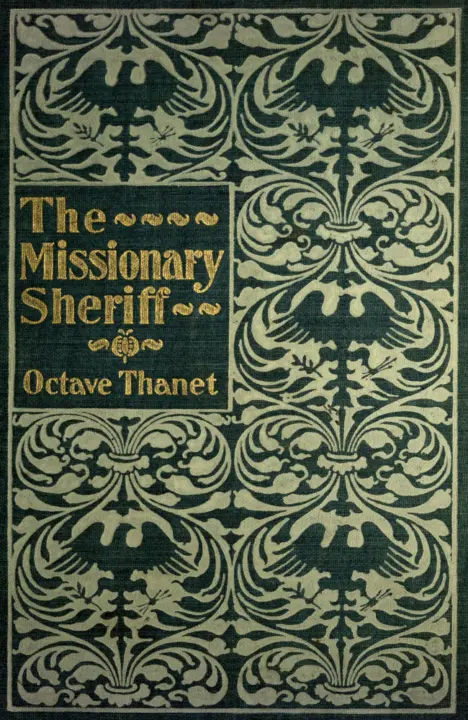
"The Missionary Sheriff" by Octave Thanet is a novel written in the late 19th century. The story revolves around Sheriff Amos Wickliff, a plain and honorable man who navigates the complexities of morality and duty within his role. As he interacts with various characters, including a troubled young man named Ned Paisley, themes of compassion, redemption, and the societal challenges of the time begin to unfold. The opening of the novel introduces Sheriff Wickliff as he observes local boy soldiers during a parade, reflecting on his position of authority and influence within the community. His character is depicted as large and imposing, yet kind-hearted—particularly in his dealings with the inmates of the jail, including the swindler Ned Paisley. The sheriff discovers a photograph belonging to Paisley that sparks sympathy in him for the young man's mother. As the narrative progresses, Sheriff Wickliff aims to shield her from the truth about her son’s life of crime and the realities of the justice system. The opening establishes the sheriff’s dual role as a law enforcer and a compassionate man determined to do right by those in his care.
Introduction adapted from the source catalogue; source summaries may be automatically generated.
Free to read · English · 52,461 words · No account needed
MAKE TIME FOR A GOOD BOOK
On by default. Untick to stop anonymous reading totals. Each page counts after 10 seconds in view. How this works.
Anonymous counting is on unless you have switched it off.
“You caynt believe it is a case of true love laffs at the aristocrats, can you, squire?” sneered Slater; “but jest as she pleases. Are you willing to see him, Abbie?”
“Whether Miss Courtlandt is willing or not,” interrupted the tall man, in a mellow, leisurely voice, “I guess I will have to trouble you for a small ‘sceance’ in the other room, Marker.”
“And who are you, sir?” said Slater, civilly, but with a truculent look
in his blue eyes.
“This is Mr. Amos Wickliff, of Iowa, special officer,” the justice said, waving one hand at the man and the other at Abbie.
Wickliff bowed in Abbie’s direction, and saluted the fortune-teller with a long look in his eyes, saying:
“Wasn’t Bill Marker that I killed out in Arizona your cousin?”
“My name ain’t Marker, and I never had a cousin killed by you or anybody,” snapped back the fortune-teller, in a bigger and rounder voice than he had used before.
Wickliff merely narrowed his bright black eyes, opened a door, and motioned within, saying, “Better.”
The fortune-teller scowled, but he walked through the door, and Wickliff, following, closed it behind him.
Abbie looked dumbly at the justice. He sighed, rubbed his hands together, and placed a chair against the wall.
“There’s a speaking-tube hole where we used to have a tube, but I took it out, ’cause it was too near the type-writer,” said he. “It’s just above the chair; if you put your ear to that hole I guess it would be the best thing. You can place every confidence in Mr. Wickliff; the chief of police here knows him well; he’s a perfect gentleman, and you don’t need to be afraid of hearing any rough language. No, ma’am.”
Abbie’s head swam; she was glad to sit down. Almost mechanically she laid
her ear to the hole.
The first words audible came from Wickliff. “Certainly I will arrest you. And I’ll take you to Toronto to-night, and you can settle with the Canadian authorities about things. Rosenbaum offers a big reward; and Rosenbaum, I judge, is a good fellow, who will act liberally.”
“I tell you I’m not Marker,” cried Slater, fiercely, “and it wouldn’t matter a damn if I was! Canada! You caynt run a man in for Canada!”
Your reading position is saved on this browser. Take it to another device with a library code. Reading pages adapt to text, rather than matching a printed edition.
BEHIND THE BOOK
This eBook is for the use of anyone anywhere in the United States and most other parts of the world at no cost and with almost no restrictions whatsoever. You may copy it, give it away or re-use it under the terms of the Project Gutenberg License included with this eBook or online at www.gutenberg.org. If you are not located in the United States, you will have to check the laws of the country where you are located before using this eBook. Read the source licence.
The original source file, including credits and licence, is retained by this library. Request an original-format copy at no charge. Please include the book title and Project Gutenberg identifier #67357.
KEEP YOUR CURIOSITY GOING
Coulson Kernahan

Maurice Baring
Frances Wright
Cécile Tormay

Frederic Jesup Stimson

W. H. P. (William Henry Pope) Jarvis