THE CLASSIC COLLECTION✦The lion’s shareCLASSIC FREE BOOKS
The lion’s share
Octave Thanet
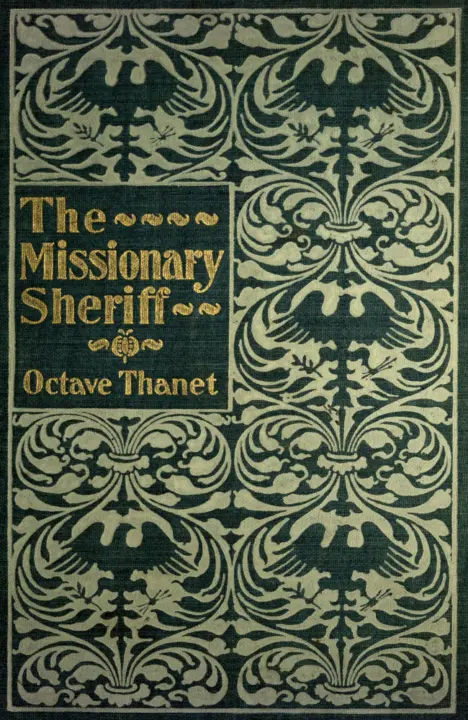
THE CLASSIC COLLECTION · 1897
"The Missionary Sheriff" by Octave Thanet is a novel written in the late 19th century. The story revolves around Sheriff Amos Wickliff, a plain and honorable man who navigates the complexities of morality and duty within his role. As he interacts with various characters, including a troubled young man named Ned Paisley, themes of compassion, redemption, and the societal challenges of the time begin to unfold. The opening of the novel introduces Sheriff Wickliff as he observes local boy soldiers during a parade, reflecting on his position of authority and influence within the community. His character is depicted as large and imposing, yet kind-hearted—particularly in his dealings with the inmates of the jail, including the swindler Ned Paisley. The sheriff discovers a photograph belonging to Paisley that sparks sympathy in him for the young man's mother. As the narrative progresses, Sheriff Wickliff aims to shield her from the truth about her son’s life of crime and the realities of the justice system. The opening establishes the sheriff’s dual role as a law enforcer and a compassionate man determined to do right by those in his care.
Introduction adapted from the source catalogue; source summaries may be automatically generated.
Free to read · English · 52,461 words · No account needed
MAKE TIME FOR A GOOD BOOK
On by default. Untick to stop anonymous reading totals. Each page counts after 10 seconds in view. How this works.
Anonymous counting is on unless you have switched it off.
The justice rapped and frowned. “Silence in der court!” he thundered. Then he glared on poor Mrs. Armstrong. “Anybody vot calls hisself a laty ought to behave itself like sooch!” he said, with strong emphasis. The attorneys present choked and coughed. In fact, the remark passed into a saying in police-court circles. Miss Henriette stepped with stately graciousness to her seat.
“Und now der defence,” said the justice—“der Armstrong family. Vot has you got to say?”
“Let me put some witnesses on first, Judge,” called Wickliff, “to show the Armstrongs’ character.” He was opening the door, and the hall behind seemed filled.
“Oh, good land, Ikey, do look!” quavered Mrs. Armstrong; “there’s pa’s boss, and the Martins that used to live in the same block with us, and Mrs. O’Toole, and all the neighbors most up to the East End, and—oh, Ikey! there’s Miss Pauline herself! Our friends ’ain’t deserted us; I knew perfectly well they wouldn’t!”
Ike did look up then—he stood up. His eyes met the eyes of his sweetheart, and he sat down with his cheeks afire and his head in the air.
“In the first place,” said Wickliff, assuming an easy attitude, with one hand in a pocket and the other free for oratorical display, “I’ll call Miss Beaumont, Miss Henriette Beaumont, for the defence.” Miss Beaumont responded to the call, and turned a defiant stare on the amateur attorney.
“You say you were disturbed by the Armstrongs’ organ?”
“I was painfully disturbed.”
“Naturally you informed your neighbors, and asked them to desist playing
the organ?”
“I did.”
“How many times?”
“Once.”
“To whom did you speak?”
“I told the boys to tell their mother.”
“Are you passionately fond of music?”
“I am.”
“Are you sensitive to bad music—acutely sensitive?”
“I suppose I am; a lover of music is, of necessity.”
The magistrate nodded and sighed.
“Are you of a particularly patient and forbearing disposition?” Henriette directed a withering glance at the tall figure of the questioner.
“I am forbearing enough,” she answered. “Do I need to answer questions that are plainly put to insult me?”
“No, madam,” said the magistrate. “Mr. Wickliff, I rules dot question
out.”
Nothing daunted, Wickliff continued: “When you gave the boys warning,
where were they?”
“In my house.”
“How came they there?”
“They had brought over a bucket of water.”
“Why?”
“Because we had only well-water, they said.”
“That was rather kind on the part of Mrs. Armstrong, don’t you think? In every respect, besides playing the organ, she was a kind neighbor, wasn’t she?”
“I don’t complain of her.”
Your reading position is saved on this browser. Take it to another device with a library code. Reading pages adapt to text, rather than matching a printed edition.
BEHIND THE BOOK
This eBook is for the use of anyone anywhere in the United States and most other parts of the world at no cost and with almost no restrictions whatsoever. You may copy it, give it away or re-use it under the terms of the Project Gutenberg License included with this eBook or online at www.gutenberg.org. If you are not located in the United States, you will have to check the laws of the country where you are located before using this eBook. Read the source licence.
The original source file, including credits and licence, is retained by this library. Request an original-format copy at no charge. Please include the book title and Project Gutenberg identifier #67357.
KEEP YOUR CURIOSITY GOING
Coulson Kernahan

Maurice Baring
Frances Wright
Cécile Tormay

Frederic Jesup Stimson

W. H. P. (William Henry Pope) Jarvis