
Neka, the boy conjuror
Edward Stratemeyer
THE CLASSIC COLLECTION · 1897
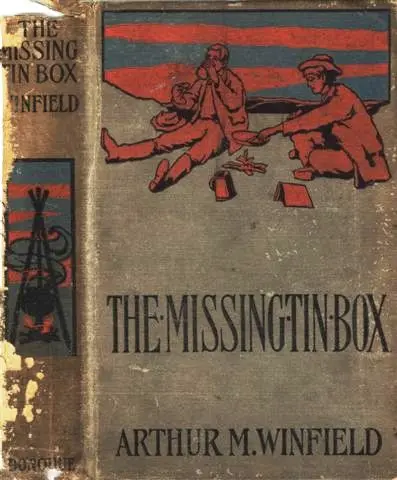
"The Missing Tin Box; Or, The Stolen Railroad Bonds" by Edward Stratemeyer is a novel written in the late 19th century. The story revolves around a young protagonist named Hal Carson, who has recently escaped from a poor-house and ventured to New York City in search of work and a better life. His journey quickly becomes perilous as he becomes embroiled in a plot involving stolen railroad bonds and a conspiracy against him, led by the sinister bookkeeper Felix Hardwick and the disgruntled former office boy, Dick Ferris. At the start of the novel, readers are introduced to Hal Carson, who overhears a suspicious conversation between two men about railroad bonds while traveling on a ferry. As he follows his instincts to uncover their intentions, Hal reveals his brave and clever nature. After running away from the poor-house, he seeks employment and eventually finds a job in an office, where treachery and deceit lead him to be accused of a theft he did not commit. The opening sets the stage for a thrilling narrative filled with adventure, intrigue, and the struggle of a determined young man fighting against the odds to prove his innocence.
Introduction adapted from the source catalogue; source summaries may be automatically generated.
Free to read · English · 45,983 words · No account needed
MAKE TIME FOR A GOOD BOOK
On by default. Untick to stop anonymous reading totals. Each page counts after 10 seconds in view. How this works.
Anonymous counting is on unless you have switched it off.
Arriving at the very last of these, he ascended the front stoop and knocked loudly upon the door. There was no reply, and while he was waiting for some one to answer his summons, Hal managed to skulk up behind the other buildings and approach within hearing distance.
At last Ferris got tired of waiting, and he tried the door. It was unlocked, and, pushing it open, the tall boy entered.
Hal waited for a moment, and then, mounting the stoop, peered in at the door, which Ferris had left partly open.
As the youth had surmised, the hall-way was quite dark. He heard Ferris mounting the rickety stairs, and like a shadow he followed, fairly holding his breath, lest some sound might betray his presence.
Ferris mounted almost to the top of the tenement, and then hammered on a
door in the rear.
"Come!" cried a voice from inside, and Ferris entered.
No sooner was the door closed than Hal approached it and applied his eye to the key-hole. He saw a small apartment, scantily furnished with a small cook-stove, a table, three chairs, and some kitchen utensils.
A man sat before the stove, smoking a short briar pipe. He was unshaved, but his face bore evidence of former gentility and manhood, in spite of the fact that it was now dissipated.
"Hullo, Ferris!" he exclaimed.
"How are you, Macklin?" returned the tall boy.
"Not very well, I can tell you," returned Macklin, removing his pipe and spitting into the stove. "I've got rheumatism, yer know."
"Rheumatism!" laughed Ferris. "More likely it's rumatism, Tommy."
"Don't give me any o' yer jokes, Ferris. Wot brings yer?"
"I've got a letter for you."
"From Hardwick?"
Ferris nodded.
"I thought I would hear from him before long. Hand it over."
Ferris did so. Macklin tore open the epistle and began to peruse it hastily. As he did so Ferris tried to glance over his shoulder.
"Here! none o' dat!" cried Macklin, savagely. "Wot's my business is my
business."
He finished reading the letter and put it in his coat pocket. Then he pulled away on his pipe for a moment.
"Well?" said Ferris, by way of inquiry.
"Tell him it's all right if he doubles the figger."
"Makes the amount twice as large?"
"Dat's it. It's a ticklish piece o' business."
"What is the work, Macklin?" questioned Ferris, sitting down on the
opposite side of the stove.
The man closed one eye.
"Hardwick knows," he replied, shortly.
"I know that," replied Ferris. "And I know something about this new
deal, too."
"Wot do yer know?"
"Never mind. I know."
Your reading position is saved on this browser. Take it to another device with a library code. Reading pages adapt to text, rather than matching a printed edition.
Edward Stratemeyer

Edward Stratemeyer
Edward Stratemeyer

Edward Stratemeyer
BEHIND THE BOOK
This eBook is for the use of anyone anywhere in the United States and most other parts of the world at no cost and with almost no restrictions whatsoever. You may copy it, give it away or re-use it under the terms of the Project Gutenberg License included with this eBook or online at www.gutenberg.org. If you are not located in the United States, you will have to check the laws of the country where you are located before using this eBook. Read the source licence.
The original source file, including credits and licence, is retained by this library. Request an original-format copy at no charge. Please include the book title and Project Gutenberg identifier #30864.
KEEP YOUR CURIOSITY GOING
Coulson Kernahan

Maurice Baring
Frances Wright
Cécile Tormay

Frederic Jesup Stimson

W. H. P. (William Henry Pope) Jarvis