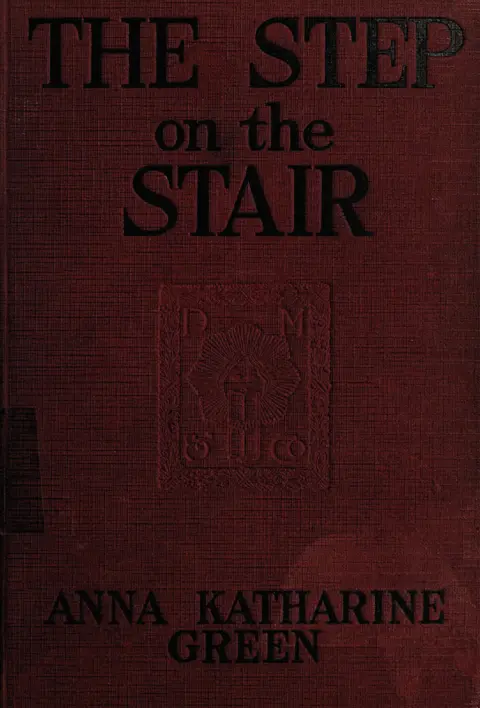
The step on the stair
Anna Katharine Green
THE CLASSIC COLLECTION · 1886
"The Mill Mystery" by Anna Katharine Green is a novel written in the late 19th century. The story centers on Constance Sterling, a young woman grappling with personal challenges, who becomes entwined in a larger mystery following the tragic death of Mr. Barrows, a beloved local clergyman, found in an old mill. As Constance navigates her own struggles, she befriends Ada Reynolds, Mr. Barrows' betrothed, drawing her into an emotional whirlwind filled with intrigue, community gossip, and questions surrounding the circumstances of the clergyman's death. At the start of the book, we find Constance feeling desolate and alone when she receives a letter for her roommate, Ada. Their bond strengthens as Ada, who harbors a secret about her own happiness and romantic plans, offers to help Constance in her time of need. Their interaction is interrupted by commotion in the streets, leading to the revelation of Mr. Barrows' death, which devastates Ada. The opening chapters effectively set the stage for the unfolding drama, establishing the mystery of Barrows' death while introducing themes of love, friendship, and the stigma of societal judgment as Constance resolves to uncover the truth behind the clergyman's tragic end.
Introduction adapted from the source catalogue; source summaries may be automatically generated.
Free to read · English · 75,108 words · No account needed
MAKE TIME FOR A GOOD BOOK
On by default. Untick to stop anonymous reading totals. Each page counts after 10 seconds in view. How this works.
Anonymous counting is on unless you have switched it off.
And yet since human nature is human nature, and good hearts as well as bad yield sometimes to a fatal weakness, I would add that the facts which I suppress are always facts, and that if I see in you or him any forgetfulness of the gulf that separates you, I shall not think it too late to speak, though months have been added to months, and years to years, and I am no longer any thing but old
Close upon these words I read these others:
MISS STERLING:--Pardon me that I presume to address you. Pardon the folly, the weakness of a man who, having known you for less than a week, finds the loss of your esteem the hardest of the many miseries he is called upon to bear.
I know that I can never recover this esteem--if, indeed, I ever possessed it. The revelation of the secret which disgraced our family has been fatal; the secret which our mother commanded us on her death-bed to preserve, foreseeing that, if it should become known that we had been guilty of the occurrence of the seventeenth of August, nothing could save us from the suspicion that we were guilty of the real catastrophe of the twenty-fourth of September. Alas! my mother was a keen woman, but she did not reckon upon Rhoda Colwell; she did not reckon upon you. She thought if we kept silence, hell and heaven would find no tongue. But hell and heaven have both spoken, and we stand suspected of crime, if not absolutely accused of it.
Hard as this is to bear--and it is harder than you might think for one in whom the base and cowardly action into which he was betrayed a month ago has not entirely obliterated the sense of honor--I neither dare to complain of it nor of the possible consequences which may follow if Rhoda Colwell slights my brother's warning and carries out her revenge to the full. Deeds of treachery and shame must bear their natural fruit, and we are but reaping what we sowed on that dreadful night when we allowed David Barrows to taste the horrors of his future grave. But though I do not complain, I would fain say a final word to one whose truth and candor have stood in such conspicuous relief to my own secrecy and repression. Not in way of hope, not in way of explanation even. What we have done we have done, and it would little become me to assign motives and reasons for what in your eyes--and, I must now allow, in my own--no motive or reason can justify or even excuse. I can only place myself before you as one who abhors his own past; regarding it, indeed, with such remorse and detestation that I would esteem myself blessed if it had been my body, instead of that of Mr. Barrows, which had been drawn from the fatal pit. Not that any repentance can rid me of the stain which has fallen upon my manhood, or make me worthy of the honor of your faintest glance; but it may make me a less debased object in your eyes, and I would secure that much grace for myself even at the expense of what many might consider an unnecessary humiliation. For you have made upon my mind in the short time I have known you a deep, and, as I earnestly believe, a most lasting and salutary impression. Truth, candor, integrity, and a genuine loyalty to all that is noblest and best in human nature no longer seem to me like mere names since I have met you. The selfishness that makes dark deeds possible has revealed itself to me in all its hideous deformity since the light of your pure ideal fell upon it; and while naught on earth can restore me to happiness, or even to that equanimity of mind which my careless boyhood enjoyed, it would still afford me something like relief to know that you recognize the beginning of a new life in me, which, if not all you could desire, still has that gleam of light upon it which redeems it from being what it was before I knew you. I will, therefore, ask not a word from you, but a look. If, when I pass your house to-morrow afternoon at six o'clock, I see you standing in the window, I shall know you grant me the encouragement of your sympathy, a sympathy which will help me to endure the worst of all my thoughts, that indirectly, if not directly, Guy and myself may be guilty of Mr. Barrows' death; that our action may have given him an impetus to destroy himself, or at least have shown him the way to end his life in a seemingly secret manner; though why a man so respected and manifestly happy as he should wish to close his career so suddenly, is as great a mystery to me as it can possibly be to you.
Your reading position is saved on this browser. Take it to another device with a library code. Reading pages adapt to text, rather than matching a printed edition.
Anna Katharine Green
Anna Katharine Green
Anna Katharine Green
Anna Katharine Green
BEHIND THE BOOK
This eBook is for the use of anyone anywhere in the United States and most other parts of the world at no cost and with almost no restrictions whatsoever. You may copy it, give it away or re-use it under the terms of the Project Gutenberg License included with this eBook or online at www.gutenberg.org. If you are not located in the United States, you will have to check the laws of the country where you are located before using this eBook. Read the source licence.
The original source file, including credits and licence, is retained by this library. Request an original-format copy at no charge. Please include the book title and Project Gutenberg identifier #6805.
KEEP YOUR CURIOSITY GOING
Coulson Kernahan

Maurice Baring
Frances Wright
Cécile Tormay

Frederic Jesup Stimson

W. H. P. (William Henry Pope) Jarvis