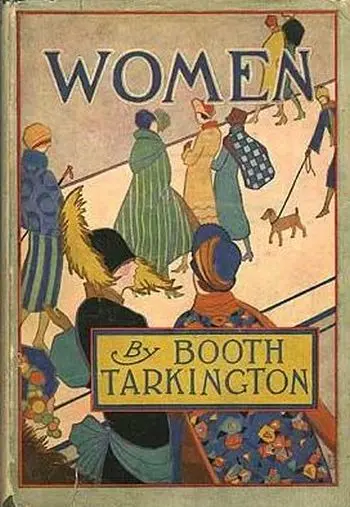
Women
Booth Tarkington
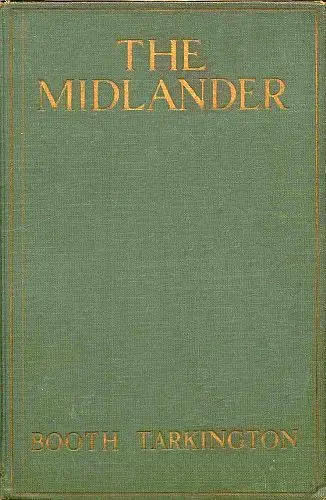
THE CLASSIC COLLECTION · 1923
"The Midlander" by Booth Tarkington is a novel written in the early 20th century. The story explores the lives of the Oliphant brothers, Harlan and Dan, who represent contrasting personalities and social ideals against the backdrop of their affluent upbringing. The novel delves into themes of class, identity, and the negotiation of familial expectations as the brothers navigate their relationships and the societal pressures of their time. At the start of the novel, we are introduced to the Oliphant brothers and the stately family home they inhabit, which symbolizes the significance of wealth and social standing. Harlan is portrayed as the polished, aristocratic brother, while Dan is characterized as more carefree and socially adventurous, leading to tension and rivalry between them. The initial chapters depict a conflict between Dan and Harlan regarding their friend Sam Kohn, highlighting underlying themes of prejudice and class consciousness. As the story unfolds, it hints at deeper relational dynamics, familial expectations, and the brothers' individual journeys toward self-discovery.
Introduction adapted from the source catalogue; source summaries may be automatically generated.
Free to read · English · 103,989 words · No account needed
MAKE TIME FOR A GOOD BOOK
On by default. Untick to stop anonymous reading totals. Each page counts after 10 seconds in view. How this works.
Anonymous counting is on unless you have switched it off.
But upon this argument, delivered in a tone most hopeful of convincing, Mr. Oliphant laughed outright. “So that’s the way of it!” he exclaimed, and, returning to his seat by the fire, again extended his feet to the fender. “Well, whether you’re really a little too young or only appear so, on account of your grandmother’s advanced age, we have to face the fact that you’ve asked this young lady to marry you, and she’s said she will. When that’s happened, all the old folks can do is to make the best of it. You know we’ll do that, don’t you, son?”
“Yes, sir,” Dan said a little bleakly. “I knew you would.” He took the blue case from his mother’s lap, and kissed her as she looked pathetically up at him; then he moved toward the door. “I—I always knew I could count on you and mother, sir.”
“Yes, Dan,” Mrs. Oliphant murmured, “you know you can.”
And her husband, from his chair by the fireside, echoed this with a heartiness that was somewhat husky: “Yes, indeed, Dan. If the young lady is necessary to your happiness——”
“Yes, sir.”
“Why, we’ll just try to say, ‘God bless you both,’ my boy.”
“Yes, sir,” Dan returned, with an inadequacy that he seemed to feel, himself, for he lingered near the doorway some moments more, coughed in a futile and unnecessary manner, then said feebly: “Well—well, thank you,” and retired slowly to his own room.
When his steps were no longer heard ascending the broad stairway, the sound of a quick sob, too impulsive to be smothered, was heard in the silent library, and Mr. Oliphant turned to stare at his wife. “Well, what’s the matter?” he said. “I told you, you can’t tell anything from a photograph, didn’t I?”
She pressed her handkerchief to her eyes and shook her head, offering no
other response.
Thereupon he struck the poker into the fire, badgered a lump of coal, and said gruffly: “It’s all nonsense! She may turn out to be the finest girl in the world. How can you tell anything from a photograph?”
“You can’t much,” the serene Harlan agreed. He spoke from his easy-chair in the bay window, whither he had returned from an unemotional excursion to the blue leather case when it was exhibited. “You can see, though, that Dan’s young person is perfect, as he said, in several ways.”
“Think so?”
“Yes; she’s perfectly à la mode; she’s perfectly pretty—and perfectly what we usually call shallow.”
“Oh, I don’t know.”
Your reading position is saved on this browser. Take it to another device with a library code. Reading pages adapt to text, rather than matching a printed edition.
Booth Tarkington
Booth Tarkington
Booth Tarkington
Booth Tarkington & Harry Leon Wilson
BEHIND THE BOOK
This eBook is for the use of anyone anywhere in the United States and most other parts of the world at no cost and with almost no restrictions whatsoever. You may copy it, give it away or re-use it under the terms of the Project Gutenberg License included with this eBook or online at www.gutenberg.org. If you are not located in the United States, you will have to check the laws of the country where you are located before using this eBook. Read the source licence.
The original source file, including credits and licence, is retained by this library. Request an original-format copy at no charge. Please include the book title and Project Gutenberg identifier #58870.
KEEP YOUR CURIOSITY GOING
Coulson Kernahan

Maurice Baring
Frances Wright
Cécile Tormay

Frederic Jesup Stimson

W. H. P. (William Henry Pope) Jarvis