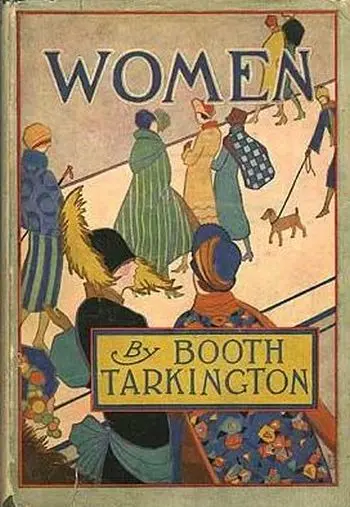
Women
Booth Tarkington
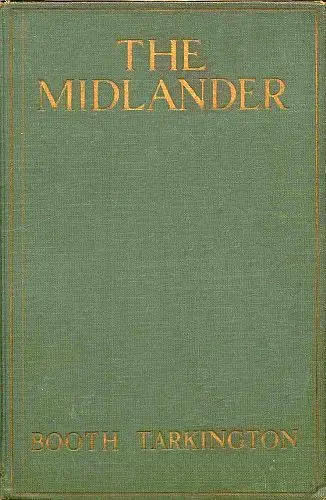
THE CLASSIC COLLECTION · 1923
"The Midlander" by Booth Tarkington is a novel written in the early 20th century. The story explores the lives of the Oliphant brothers, Harlan and Dan, who represent contrasting personalities and social ideals against the backdrop of their affluent upbringing. The novel delves into themes of class, identity, and the negotiation of familial expectations as the brothers navigate their relationships and the societal pressures of their time. At the start of the novel, we are introduced to the Oliphant brothers and the stately family home they inhabit, which symbolizes the significance of wealth and social standing. Harlan is portrayed as the polished, aristocratic brother, while Dan is characterized as more carefree and socially adventurous, leading to tension and rivalry between them. The initial chapters depict a conflict between Dan and Harlan regarding their friend Sam Kohn, highlighting underlying themes of prejudice and class consciousness. As the story unfolds, it hints at deeper relational dynamics, familial expectations, and the brothers' individual journeys toward self-discovery.
Introduction adapted from the source catalogue; source summaries may be automatically generated.
Free to read · English · 103,989 words · No account needed
MAKE TIME FOR A GOOD BOOK
On by default. Untick to stop anonymous reading totals. Each page counts after 10 seconds in view. How this works.
Anonymous counting is on unless you have switched it off.
“It’s this,” she said; then closed her eyes, and when she opened them, asked again: “Is it Dan?”
“Why, yes, of course, grandma! You just said——”
“I know what I said! I wanted to tell you—to tell you——”
“Yes, grandma,” he said, and added indulgently, “Tell me anything you
like to.”
“I wanted to tell you not to mind,” she went on. “You mustn’t mind anything that happens. I mean anything I have to do with.”
“No; of course,” he returned without any idea of what she might mean. “Of course I won’t. I won’t mind it.”
“You must be sure not to,” she insisted. “You won’t understand, but you mustn’t let it make you feel hurt with me. You mustn’t——”
“Of course I won’t. Why, I’d never dream of feelin’ hurt with you about anything in the world, grandma.”
“Listen, Dan. I’ve always liked you best since you were a little boy. If you don’t understand something that happens, you remember I said this, will you? What may happen is for your own good and to help you, though it may seem just the other way to you. Will you promise to remember?”
“Of course,” he returned promptly; but she was not satisfied.
“No; I want you to think what you’re saying. You speak too quickly to make me sure you’ll remember. Say it slower, Dan. Say, ‘I promise to remember.’”
“I promise to remember,” he repeated slowly, to indulge this whim of hers; and then asked, “To remember what, grandma?”
“What I’ve just told you. That’s all I have to say, Dan.”
“All right, grandma;—I hope I haven’t stayed long enough to tire you,” he said, and patted her hand as he rose. “I expect you want to drowse a little now. Good-night, grandma.”
“Good-bye,” she said. And her cold and bent fingers feebly clasped his hand, giving it an impulse which he allowed it to follow until he found it resting against her cheek. “Dear boy!” she said faintly; and he was touched by this, the first caress she had given him since he was a child. She retained his hand, keeping it against her cheek a moment longer; then relinquished it gently and said “Good-bye” again.
“Not ‘good-bye,’ grandma,” he protested heartily. “‘Good-night,’ not ‘good-bye.’ You are better, and the doctor himself says so. Why, by next week——”
“Next week?” she said in the faintest voice in the world and with the remotest shadow of an elfin smile to herself. “Next week? Yes. You can—you can bring the baby to see me—next week.”
Your reading position is saved on this browser. Take it to another device with a library code. Reading pages adapt to text, rather than matching a printed edition.
Booth Tarkington
Booth Tarkington
Booth Tarkington
Booth Tarkington & Harry Leon Wilson
BEHIND THE BOOK
This eBook is for the use of anyone anywhere in the United States and most other parts of the world at no cost and with almost no restrictions whatsoever. You may copy it, give it away or re-use it under the terms of the Project Gutenberg License included with this eBook or online at www.gutenberg.org. If you are not located in the United States, you will have to check the laws of the country where you are located before using this eBook. Read the source licence.
The original source file, including credits and licence, is retained by this library. Request an original-format copy at no charge. Please include the book title and Project Gutenberg identifier #58870.
KEEP YOUR CURIOSITY GOING
Coulson Kernahan

Maurice Baring
Frances Wright
Cécile Tormay

Frederic Jesup Stimson

W. H. P. (William Henry Pope) Jarvis