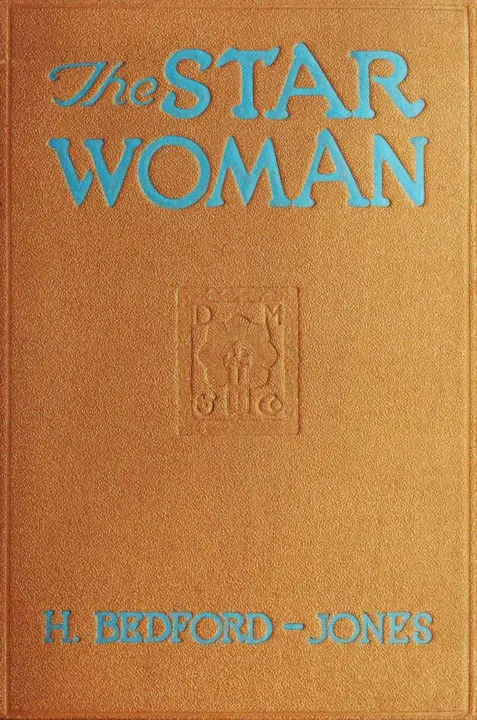
The Star Woman
H. (Henry) Bedford-Jones
THE CLASSIC COLLECTION · 1920
"The Mesa Trail" by H. Bedford-Jones is a novel written in the early 20th century. The story introduces us to Mehitabel Crump, a burly woman braving the New Mexico landscape as she navigates her way through challenges, and Thaddeus Roscius Shea—a down-and-out thespian who has succumbed to the depths of despair due to a severe drinking problem. Their paths cross when Shea is found unconscious on the road, leading to an unexpected partnership between the two, as Mrs. Crump offers him a second chance at life as her mining partner. The opening portion of the novel unfolds as Mehitabel struggles with her troublesome vehicle while discovering Shea in a seemingly lifeless state. Her curious and robust character is highlighted as she tends to the gaunt man, leading to an exchange that reveals their contrasting backgrounds. As Shea regains consciousness, they discuss his failed career and her ambitions in the mining world. The narrative sets the tone for an exploration of personal redemption, resilience, and the quest for purpose as both characters embark on a journey into the harsh yet beautiful New Mexico wilderness. It hints at the challenges they will face together and the adventure that lies ahead as they strive for better lives against the backdrop of their rugged environment.
Introduction adapted from the source catalogue; source summaries may be automatically generated.
Free to read · English · 53,158 words · No account needed
MAKE TIME FOR A GOOD BOOK
On by default. Untick to stop anonymous reading totals. Each page counts after 10 seconds in view. How this works.
Anonymous counting is on unless you have switched it off.
"Now," pursued Sandy, chewing hard on a cigar, "if I had something to give the Smithsonian or some other museum, something that would be a tenstrike for science, something that 'ud make every scientific shark in the country water at the eyes for envy, what 'ud the Smithsonian do for me?"
The professor cleared his throat and registered hesitation.
"I--ah--I do not exactly apprehend your meaning, Mr. Mackintavers. You do not speak in a financial sense, I presume?"
"Of course not. I tell you, I want to be known as a scientist! Man, I've got the biggest thing up my sleeve that you ever struck! Can your museum, or any other, make me famous as a scientist? That is, if I turn over a regular tenstrike?"
"Ah--that is exceedingly difficult to answer. A scientific reputation, Mr. Mackintavers, is founded upon solid bases, upon research or discoveries. If your--ah--contribution were a thing of such merit as you say, it would undoubtedly be published far and wide. Your name, naturally, would be attached to it, according as your work justified."
"In other words," amended Sandy, "if I turn over a complete job, I'd get full credit and publicity?"
"Yes."
"That's what I want. I'm interested in this ethnology stuff, and I can do you sharks a whopping good turn. I want to get the credit, that's all. Folks call me a hard-fisted old mining crab, and I want to show 'em that I'm something more."
"A highly laudable ambition, sir. You understand, however, that what to a lay mind might appear to be a most interesting ethnological fact, to a scientist might prove well known or insufficiently supported----"
Mackintavers waved his square hand.
"This thing is all assayed and fire tested, professor, and I'm no fool. May I give you an outline of it?"
"If you care to, by all means do so!"
"You know where the San Marcos pueblo is--away down south of Bonanza?" Mackintavers struck into his subject without further parley. "It was abandoned about 1680 because of attacks from the Comanches, who destroyed several pueblos down in that country. There's a tradition that the Injuns migrated west of the Rio Grande and settled the Cochiti and Domingo pueblos. Has that tradition ever been proved up?"
The professor evinced an awakening interest.
"No, sir. We know that the survivors of the Pecos pueblo went to Jimez, but the older migrations are hidden in the mists of time, unfortunately. Where the present Pueblos came from we do not know. The migrations----"
"They won't be hid very long," said Mackintavers, complacently. "Aiblins, now, we'll clear 'em up a bit, eh?"
Your reading position is saved on this browser. Take it to another device with a library code. Reading pages adapt to text, rather than matching a printed edition.
H. (Henry) Bedford-Jones
H. (Henry) Bedford-Jones
H. (Henry) Bedford-Jones
H. (Henry) Bedford-Jones
BEHIND THE BOOK
This eBook is for the use of anyone anywhere in the United States and most other parts of the world at no cost and with almost no restrictions whatsoever. You may copy it, give it away or re-use it under the terms of the Project Gutenberg License included with this eBook or online at www.gutenberg.org. If you are not located in the United States, you will have to check the laws of the country where you are located before using this eBook. Read the source licence.
The original source file, including credits and licence, is retained by this library. Request an original-format copy at no charge. Please include the book title and Project Gutenberg identifier #35078.
KEEP YOUR CURIOSITY GOING
Coulson Kernahan

Maurice Baring
Frances Wright
Cécile Tormay

Frederic Jesup Stimson

W. H. P. (William Henry Pope) Jarvis