
His Little World: The Story of Hunch Badeau
Samuel Merwin
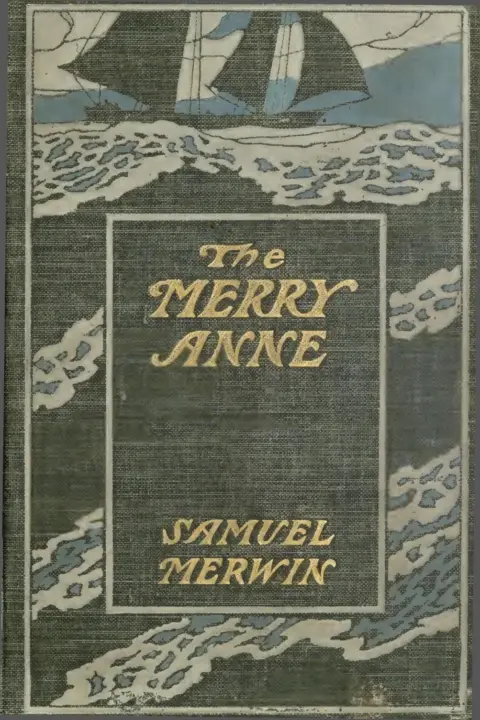
THE CLASSIC COLLECTION · 1904
"The Merry Anne" by Samuel Merwin is a novel written in the early 20th century. The story centers around Dick Smiley, the captain of a lumber schooner named the Merry Anne, and delves into his adventures and personal relationships, particularly with a girl named Annie. The book illustrates themes of ambition, love, and the struggles of life on the Great Lakes, against a backdrop of maritime culture. At the start of the narrative, the dedication reveals a past shared by the author and a friend, hinting at nostalgia and deep connections. The main character, Dick Smiley, is introduced as a lively and somewhat reckless captain, who is preparing to set sail amidst an approaching storm, reflecting his bold nature and determination. As he interacts with his crew and contemplates his feelings for Annie, the opening chapters highlight his struggles with authority, responsibility, and the dynamics of love. The stage is set for a gripping adventure filled with nautical challenges and emotional conflicts, signaling an engaging read for those drawn to maritime fiction and romantic plots.
Introduction adapted from the source catalogue; source summaries may be automatically generated.
Free to read · English · 63,420 words · No account needed
MAKE TIME FOR A GOOD BOOK
On by default. Untick to stop anonymous reading totals. Each page counts after 10 seconds in view. How this works.
Anonymous counting is on unless you have switched it off.
Beveridge, as they all found seats, was taking in the farmer, noting his shifting eyes, and his clothes, which were nothing more than a suit of torn overalls.
“Diana,” said Lindquist, “you might give these young men some bread and
milk.”
His wife laid aside her sewing without a word, and went to the pantry.
“Now,” began Beveridge, “I suppose we ought to find out where we are.”
“What's that?”
“Where are we, Mr. Lindquist? What's the nearest town?”
“The nearest town, you said?”
“Yes.”
“Why, Ramsey, I guess, or--”
“Or--what?”
“Or--Spencer's place.”
“That's what I was afraid of.” Beveridge turned to his companions, adding, “You see, we've got back near the lake.”
At the sound of strange voices, the boy came down the stairs and stood in a corner, gazing at the strangers, and holding his book behind him.
“How far off is the Lake, Mr. Lindquist?”
“How--what's that you say?”
“How far off is the Lake?”
“What Lake?”
“Lake Huron, of course.”
“Lake Huron?--Oh, twenty,--twenty-two mile.”
“That's another story!” exclaimed Wilson. But Beveridge, evidently fearing his assistant's tongue, gave him a look that quieted him. The faces of the four travellers all showed relief.
The bread and milk were ready now, and they fell to, joking and laughing as heartily as if their only care had been a camp outfit somewhere in the woods; but all the time the three were watching Beveridge, awaiting his next move. It came, finally, when the last crumb of bread had disappeared and the plates had been pushed back.
“Now, Mr. Lindquist,” said Beveridge, “it's getting on pretty late in the evening, and we're tired. Can't you put us up for the night? Not in the house--I'd hardly ask that--but out in the barn, say?” As he spoke he laid a two-dollar bill on the table and pushed it over close to the farmer's hand.
“Well, I dunno.” For a moment the bill lay there between their two hands, then Lindquist's nervous fingers slowly closed over it. “I suppose you could sleep out there.”
“That's first-rate. We 'll go right out if you don't mind. You needn't bother about coming. Just let your boy there bring a lantern and show us where to go.”
Lindquist did not take to this. “Axel,” he said, “you go up to bed. Mind, now!” Then he lighted the lantern and led the way to the barn. When he had left them, tumbled about on the fragrant hay, Smiley spoke up. “Well, Beveridge, what next?”
“Didn't he lock the door just then?”
“Yes,” said Harper, “I'm sure I heard it. I 'll go and see.”
Your reading position is saved on this browser. Take it to another device with a library code. Reading pages adapt to text, rather than matching a printed edition.
Samuel Merwin
Samuel Merwin
Samuel Merwin
Samuel Merwin
BEHIND THE BOOK
This eBook is for the use of anyone anywhere in the United States and most other parts of the world at no cost and with almost no restrictions whatsoever. You may copy it, give it away or re-use it under the terms of the Project Gutenberg License included with this eBook or online at www.gutenberg.org. If you are not located in the United States, you will have to check the laws of the country where you are located before using this eBook. Read the source licence.
The original source file, including credits and licence, is retained by this library. Request an original-format copy at no charge. Please include the book title and Project Gutenberg identifier #51916.
KEEP YOUR CURIOSITY GOING
Coulson Kernahan

Maurice Baring
Frances Wright
Cécile Tormay

Frederic Jesup Stimson

W. H. P. (William Henry Pope) Jarvis