His Little World: The Story of Hunch Badeau
Samuel Merwin
THE CLASSIC COLLECTION · 1904
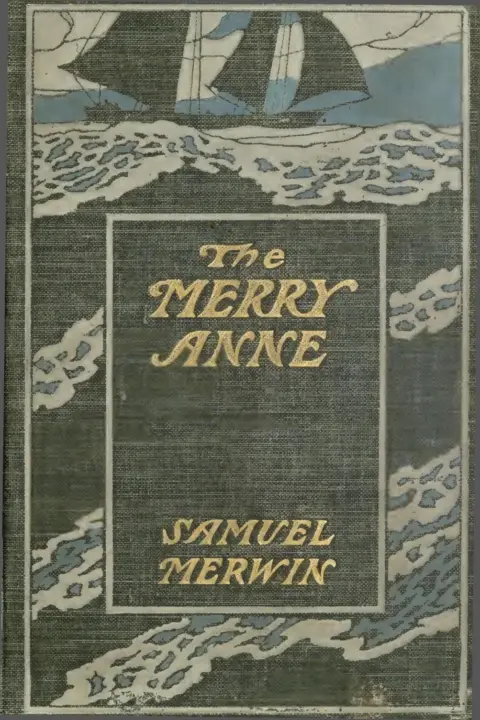
"The Merry Anne" by Samuel Merwin is a novel written in the early 20th century. The story centers around Dick Smiley, the captain of a lumber schooner named the Merry Anne, and delves into his adventures and personal relationships, particularly with a girl named Annie. The book illustrates themes of ambition, love, and the struggles of life on the Great Lakes, against a backdrop of maritime culture. At the start of the narrative, the dedication reveals a past shared by the author and a friend, hinting at nostalgia and deep connections. The main character, Dick Smiley, is introduced as a lively and somewhat reckless captain, who is preparing to set sail amidst an approaching storm, reflecting his bold nature and determination. As he interacts with his crew and contemplates his feelings for Annie, the opening chapters highlight his struggles with authority, responsibility, and the dynamics of love. The stage is set for a gripping adventure filled with nautical challenges and emotional conflicts, signaling an engaging read for those drawn to maritime fiction and romantic plots.
Introduction adapted from the source catalogue; source summaries may be automatically generated.
Free to read · English · 63,420 words · No account needed
MAKE TIME FOR A GOOD BOOK
On by default. Untick to stop anonymous reading totals. Each page counts after 10 seconds in view. How this works.
Anonymous counting is on unless you have switched it off.
“They wouldn't likely have lugged him across the pier with them. He may be on the Schmidt yet. How about it, Bert?”
“I don't think so. I looked around the cabin. Shall I look again?”
“Yes. We 'll wait here. You 'll have to hurry with it. We can't stay here more than ten minutes longer.”
Wilson was out of the room at a bound, down the steps and across the beach and running out on the long pier. In five minutes he was back.
“Well--”
“Not a soul there.”
“How many men did he have aboard? Do you know, Cap'n?”
“Only one or two, I guess, besides Mc-Glory.”
“They've gone along, of course. The only question is, did they take him
with 'em?”
“How could they?” said Wilson. “He is a strong man, and there wasn't any sound of a scuffle. No, if there had been anything like that, I should have heard it.”
“I 'll tell you what I think,” said Fargo. “It isn't what I think, either; but it keeps coming up in my mind. He didn't seem quite himself when he was talking to me.”
“How--nervous?”
“Oh, no, but kind of depressed. He never says a lot, but then he isn't generally blue like he certainly was to-night. He talked about McGlory, too.”
“What did he say about him?” asked Beveridge sharply.
“He said that McGlory and Dick had disagreed, and Dick had ordered him off his schooner, and he had taken him in for the night. McGlory, he said, was so ugly there was no getting on with him. He had sort of made an errand up-town so he could get away and cool down a little. I guess he felt so glum himself he was afraid to trust himself with a man that acted like McGlory was acting.” Beveridge was standing by the door, ready to start, watching the Captain closely during this speech. Now a look of intelligence came to his face. “How are Henry Smiley's affairs--money and that sort of thing?” he asked.
“Oh, all right, I think. He has always been saving. He must have a neat little pile tucked away by this time.”
“And he wasn't married, or--” Beveridge paused.
“Not Henry. No, he was a woman-hater, pretty nearly.”
“Was he pessimistic--kind of down on things? Did he have any particular object in living--anything to work for specially?”
“He was pessimistic, all right. Didn't believe in much of anything. I--I know what you're thinking, Mr. Beveridge, but I--I can't hardly think it's possible. I don't know, though, I guess his schooner was about the only thing he cared for, except maybe Dick here.”
“Oh, fond of his cousin, was he?”
Your reading position is saved on this browser. Take it to another device with a library code. Reading pages adapt to text, rather than matching a printed edition.
Samuel Merwin
Samuel Merwin
Samuel Merwin
Samuel Merwin
BEHIND THE BOOK
This eBook is for the use of anyone anywhere in the United States and most other parts of the world at no cost and with almost no restrictions whatsoever. You may copy it, give it away or re-use it under the terms of the Project Gutenberg License included with this eBook or online at www.gutenberg.org. If you are not located in the United States, you will have to check the laws of the country where you are located before using this eBook. Read the source licence.
The original source file, including credits and licence, is retained by this library. Request an original-format copy at no charge. Please include the book title and Project Gutenberg identifier #51916.
KEEP YOUR CURIOSITY GOING
Coulson Kernahan

Maurice Baring
Frances Wright
Cécile Tormay

Frederic Jesup Stimson

W. H. P. (William Henry Pope) Jarvis