
His Little World: The Story of Hunch Badeau
Samuel Merwin
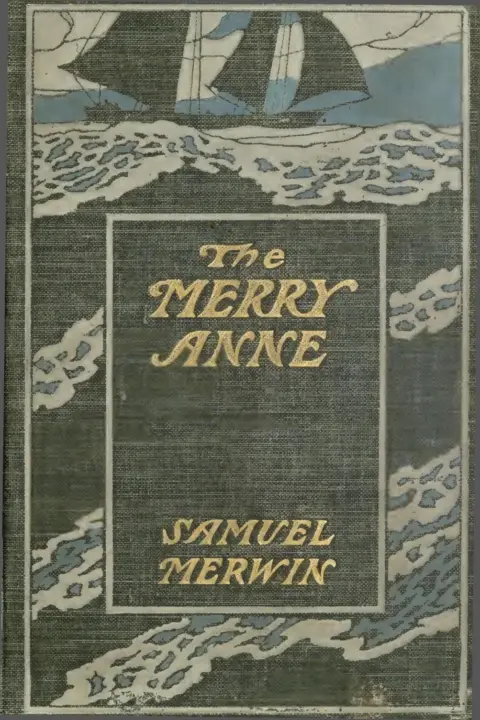
THE CLASSIC COLLECTION · 1904
"The Merry Anne" by Samuel Merwin is a novel written in the early 20th century. The story centers around Dick Smiley, the captain of a lumber schooner named the Merry Anne, and delves into his adventures and personal relationships, particularly with a girl named Annie. The book illustrates themes of ambition, love, and the struggles of life on the Great Lakes, against a backdrop of maritime culture. At the start of the narrative, the dedication reveals a past shared by the author and a friend, hinting at nostalgia and deep connections. The main character, Dick Smiley, is introduced as a lively and somewhat reckless captain, who is preparing to set sail amidst an approaching storm, reflecting his bold nature and determination. As he interacts with his crew and contemplates his feelings for Annie, the opening chapters highlight his struggles with authority, responsibility, and the dynamics of love. The stage is set for a gripping adventure filled with nautical challenges and emotional conflicts, signaling an engaging read for those drawn to maritime fiction and romantic plots.
Introduction adapted from the source catalogue; source summaries may be automatically generated.
Free to read · English · 63,420 words · No account needed
MAKE TIME FOR A GOOD BOOK
On by default. Untick to stop anonymous reading totals. Each page counts after 10 seconds in view. How this works.
Anonymous counting is on unless you have switched it off.
“I should think so.”
“McGlory and Roche are pretty good examples of the sort of thing I have had to contend with. I've never been able to get good reliable men to work for me.”
Beveridge wanted to smile over the incongruity in this speech, but he controlled himself and listened soberly. Henry went on:--
“If I could have handled it alone, or with only Spencer to help, you would never have got me. But with such a big business, I had to employ a good many men. That was my weak spot. I've known it all along and dreaded it, but I had to run the risk. There's a risk in every business, and that was the risk in mine. No, sir, if I could have had competent men, I should be laughing to-day at the whole revenue system.”
“I should take exception to that, Smiley,” said Beveridge. “Your men weren't the only thing that gave you away, not by any means.”
“Oh, weren't they?”
“No, the most important clew was the label you used. But say, Smiley, here is what puzzles me. Why is it that you, a man of unusual ability, haven't put in your time at something respectable? The brains and work you have wasted on smuggling would have made you a comfortable fortune in some other line.”
“What do you mean by 'respectable,' Beveridge,--politics, trading,
preaching?”
“I guess you recognize the distinction.”
“On the contrary, I don't recognize it at all. I asked for information.”
“Oh, well, there is no use opening up that question. We all know the difference between right and wrong, honesty and dishonesty.”
“Do we? Do you?”
“I have always supposed I did.”
“You're an unusual man. I congratulate you.”
“See here, Smiley, this is interesting. You don't mean to say that you consider smuggling an honorable business?”
“Why not?”
“Why not! Why--why--”
“It might clear your ideas, Beveridge, to go into this question a little. Smuggling means, I suppose, the bringing of merchandise from, say, Canada to this country.”
“Dutiable merchandise, yes.”
“What makes it dutiable?”
“The law.”
“What makes the law?”
“The law is made by the people.”
“What people?”
“Oh, see here, Smiley, this--”
“No, wait a minute. The trouble with you is you don't do your own thinking; I 'll do a little for you. Take an imaginary case: There is a little group of men in this country who manufacture, say, tacks. As every man should, they are looking out for their own interests. They are out to make money. The tacks mean nothing to them, except as they can be turned into money. That is right and proper, isn't it?”
“Certainly.”
Your reading position is saved on this browser. Take it to another device with a library code. Reading pages adapt to text, rather than matching a printed edition.
Samuel Merwin
Samuel Merwin
Samuel Merwin
Samuel Merwin
BEHIND THE BOOK
This eBook is for the use of anyone anywhere in the United States and most other parts of the world at no cost and with almost no restrictions whatsoever. You may copy it, give it away or re-use it under the terms of the Project Gutenberg License included with this eBook or online at www.gutenberg.org. If you are not located in the United States, you will have to check the laws of the country where you are located before using this eBook. Read the source licence.
The original source file, including credits and licence, is retained by this library. Request an original-format copy at no charge. Please include the book title and Project Gutenberg identifier #51916.
KEEP YOUR CURIOSITY GOING
Coulson Kernahan

Maurice Baring
Frances Wright
Cécile Tormay

Frederic Jesup Stimson

W. H. P. (William Henry Pope) Jarvis