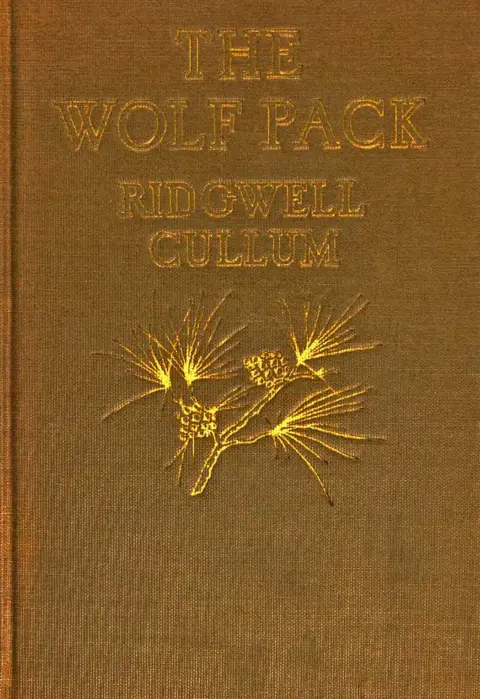
The wolf pack
Ridgwell Cullum
THE CLASSIC COLLECTION · 1916
"The Men Who Wrought" by Ridgwell Cullum is a novel written in the early 20th century. The story opens amidst the backdrop of post-World War I Britain, where the characters grapple with the uncertain peace and the looming threat of future conflicts. The narrative primarily revolves around Sir Andrew Farlow, a wealthy shipowner, and his son Ruxton, who are entangled in discussions about the implications of modern inventions and the state of national security following the recent war. At the start of the novel, we witness a tense dinner conversation between Sir Andrew and Ruxton, who reflect on the failures of their country during the war and the necessity of being vigilant against future threats. They discuss the importance of inventors and innovations in securing the nation, setting the stage for the introduction of a mysterious inventor, Charles Smith. As the opening progresses, we are also introduced to an enigmatic woman named Vita Vladimir, who captivates Ruxton with her beauty and urgent quest for his assistance. Their encounter foreshadows a potentially dangerous adventure, as Vita hints at hidden agendas and risks that are crucial for the future of Britain. The reader is left intrigued by the interwoven plots of national duty and personal intrigue that promise to unfold throughout the novel.
Introduction adapted from the source catalogue; source summaries may be automatically generated.
Free to read · English · 110,177 words · No account needed
MAKE TIME FOR A GOOD BOOK
On by default. Untick to stop anonymous reading totals. Each page counts after 10 seconds in view. How this works.
Anonymous counting is on unless you have switched it off.
"It is not what I think. It is not what any of us think. It is what we see and hear--and know. This war has shown up so many weaknesses in the armor of our social economy as well as the psychology of our people that one hardly knows where to hurl one's condemnation the most forcefully. So many weaknesses and failures stand out crying aloud for the bitter castigations of national conscience that it is difficult to point out one worthy feature. Oh, you think that too sweeping," cried the baronet with flushed rugged cheeks and brow, as his son raised questioning eyes in his direction. "That is what every other man and woman in the country would say in their purblind vanity. But it is true. True of the country. True of us all. There is one thing which appeals to me as our greatest failure, however. One failure preeminent over all others that has sunk deep down in my heart, and the scar of which can never be obliterated. I was brought up in the early Victorian days when patriotism was no mere head-line in a sensation-loving press. It was something real. Something big. Something which gripped the sense of duty and made our men and women yearn for active participation when danger threatened our Empire, even to the sacrifice of all they held dear in life. That national spirit was sick to death when this war broke out. Our press was divided, our politicians were divided, and, yes, our people were largely indifferent. But for the strength of a few of our leaders, men who have deserved far better of our country than our country has ever yielded them, thanks to indifference and Party politics, the end of this war would have come with even more terrible consequences to our Empire than all that is signified by the position, almost approaching in status quo ante, in which we now find ourselves. The ramifications of our lack of national spirit are so multifarious that it is impossible to go into them as a whole. One or two, however, are so prodigious, and have been so pronouncedly marked, that the veriest optimist has not failed to observe. One which stood out remarkably was the attitude of the reigning Government when war was declared. Every newspaper cried aloud that our ranks had closed up to meet the peril. They did close up, as far as the will of the country was concerned, but our machinery was geared to certain movement, a machine built through years of partizanship in politics. The result was pitiful. When the party in power was faced with Labor troubles which threatened our downfall in the war, they dared not face their task of drastic remedy because they saw in the dim future the loss of votes which would return their opponents to power at the next election. Hence the political crisis, at a time when we could ill afford such crises, and the formation of a coalition. Ten months were thus lost in drifting while Labor played, and our soldiers, inadequately armed, went to their deaths. The press, a divided press, mark you, sought a scapegoat in the individual, when they, no less than our national machinery, were to blame for the disaster. Is such a condition conceivable in a fervent Latin race, or an iron-shod Teuton? No, no. Is it right to blame Labor, who, for the past decade and more, has been coddled and pampered into the belief that like any baby in its cradle it has only to cry loud enough to obtain the alleviating fluid? It at least has cunning enough to realize that its weight of vote in the country is sufficient to control the destiny of the demagogues who seek place and power through its ignorance. Man, but it makes me sweat to think of it. National spirit? Faugh! Look at the manufacturers. Patriotism? They were full of newspaper patriotism until those who were executing Government contracts discovered that their profits were to be limited. The Army? Our voluntary system? The Army was all right. Oh, yes, the Army was great. But the system? The system was probably the most painful among all our national systems. The most hopelessly inadequate. And, from a national spirit view, was hideously grotesque. But the men who joined and shed their blood upon those terrible battle-fields abroad were as the worker in the vineyard who engaged for one penny. They gave their all, and made up in the execution of their duty for those who sheltered behind the skirts of their womenkind, and the race of shopkeepers they left behind. The spirit of our country when the war broke out was a sordid commercial spirit. 'Business as usual' was the cry. Then our press, our wonderful divided press, said the country was not awake. It was slumbering! I tell you it was a lie!" The old man banged his fist upon the table and set the glasses jumping. "Our country was not asleep. Every man, woman, and child capable of common understanding realized our peril from the start. It was the hateful commercial mind seeking to make gain out of the disaster which had overtaken the world, that mind that has acquired for us the detestable sobriquet of 'a race of shopkeepers,' that hindered and deterred us. We were not slumbering. We were awake. Wide awake! To think that I have lived to see the day when our women's fair hands should be called upon to distribute the white feather. Our present-day musicians and our national bards will tell you that the old songs of England are out of date. They are right. Our girls and boys look askance at your Marryats, your Dickenses, your Thackerays, your Stevensons, and all those great masters who found their strength in our country's greatest ages. When war broke out we were floundering in the mire of sensualism brought about by the years of peace and security, and so we bred the cult of the sensualist writers on sex problems, and all the accompaniment of the other arts to match."
Your reading position is saved on this browser. Take it to another device with a library code. Reading pages adapt to text, rather than matching a printed edition.
Ridgwell Cullum
Ridgwell Cullum
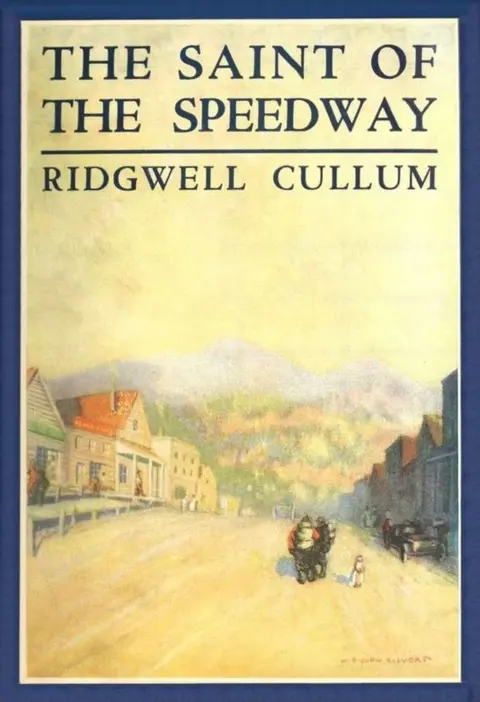
Ridgwell Cullum
Ridgwell Cullum
BEHIND THE BOOK
This eBook is for the use of anyone anywhere in the United States and most other parts of the world at no cost and with almost no restrictions whatsoever. You may copy it, give it away or re-use it under the terms of the Project Gutenberg License included with this eBook or online at www.gutenberg.org. If you are not located in the United States, you will have to check the laws of the country where you are located before using this eBook. Read the source licence.
The original source file, including credits and licence, is retained by this library. Request an original-format copy at no charge. Please include the book title and Project Gutenberg identifier #36836.
KEEP YOUR CURIOSITY GOING
Coulson Kernahan

Maurice Baring
Frances Wright
Cécile Tormay

Frederic Jesup Stimson

W. H. P. (William Henry Pope) Jarvis