THE CLASSIC COLLECTION✦The private life of Henry Maitland: A record dictated by J. H.CLASSIC FREE BOOKS
The private life of Henry Maitland: A record dictated by J. H.
Morley Roberts
THE CLASSIC COLLECTION · 1892
"The Mate of the Vancouver" by Morley Roberts is a novel written in the late 19th century. This maritime tale follows Tom Ticehurst, the chief mate of the bark Vancouver, as he navigates personal and emotional challenges while at sea, particularly involving his brother Will's dangerous drinking and the complications arising from romantic tensions with Will's wife, Helen, and passenger Elsie Fleming. The narrative intertwines themes of honor, love, and despair within the seafaring life. At the start of the story, Tom reflects on his family's long maritime lineage and his own rise to mate on the Vancouver. He reluctantly accepts this position to keep an eye on his brother, Will, who struggles with alcoholism. After a turbulent journey filled with drama, including a perilous confrontation leading to a tragic outcome, Tom finds himself entangled in complex relationships on board, especially with the formidable Helen and the charming young Elsie. The opening establishes Tom's internal conflicts and foreshadows the emotional turbulence he will face during the voyage.
Introduction adapted from the source catalogue; source summaries may be automatically generated.
Free to read · English · 43,611 words · No account needed
MAKE TIME FOR A GOOD BOOK
On by default. Untick to stop anonymous reading totals. Each page counts after 10 seconds in view. How this works.
Anonymous counting is on unless you have switched it off.
"What are you going to do in Alaska or British Columbia, Tom?" said he to me one day. "Do you think of farming, or seal-hunting, or gold-mining, or what? I should like to hear your plans, if you have any." And then he went on without waiting for an answer, showing plainly that he thought that I had none, and was a fool. "And that young idiot Harmer, why didn't he stick to his ship?"
"Because he will never stick to anything, Mr. Fleming," I answered, "though he is a clever young fellow, and fit for other things than sailoring, if I'm a judge. But as for myself I don't think I am, and yet when I make up my mind to a thing, I usually do it."
"You usually succeed, then?" said he, with a hard smile. "It is well to have belief in one's own strength and abilities. But sometimes others have strength as well, and then"----
"And then," I answered, "it is very often a question of will."
He smiled again and dropped the subject.
On the third day out from San Francisco, when we were running along the coast of Oregon, I found at last an opportunity of speaking to Elsie. I first went to Fanny.
"Fanny, my dear girl, I want to speak to you a few minutes." I sat
down beside her.
"I think you know, Fanny, why I am here, don't you?" I asked.
"It is tolerably obvious, Mr. Ticehurst," she answered rather
gravely, I thought.
"Yes, I suppose it is; but first I want to be sure whether you were right about what you told me on the morning we left San Francisco."
I was silent, and looked at her. She seemed a trifle distressed.
"Well, Tom, I thought that I was," she answered at length; "and I still think I am--and yet I don't know. You see, Elsie is a strange girl, and never confides in anyone since dear mother died, and she would never confess anything to me. Still, I have eyes in my head, and ears too. But since you have been with us she has been harder and colder than I ever saw her in all my life, and she has said enough to make me think that there is something that I know nothing about which makes her so. You know, I joked her about you yesterday, and she got so angry all of a sudden, like pouring kerosene on a fire, and she said you were a coward. When I asked her why, she turned white and wouldn't answer. Then I said of course you must be a coward if she said so, but I didn't think she had any right to say it or think it when you had saved all our lives by your coolness and courage. And then, you know, I got angry and cried, because I like you very much, just as much as I do my brother on the station at home. And I said she was a cruel beast, and all kinds of horrid things, until I couldn't think of anything but making faces at her, just as I did when I was a child. And we are having a quarrel now, and it is all about you--you ought to be proud." And Fanny looked up half laughing and half crying, for she dearly loved Elsie, as I knew.
Your reading position is saved on this browser. Take it to another device with a library code. Reading pages adapt to text, rather than matching a printed edition.
Morley Roberts
Morley Roberts
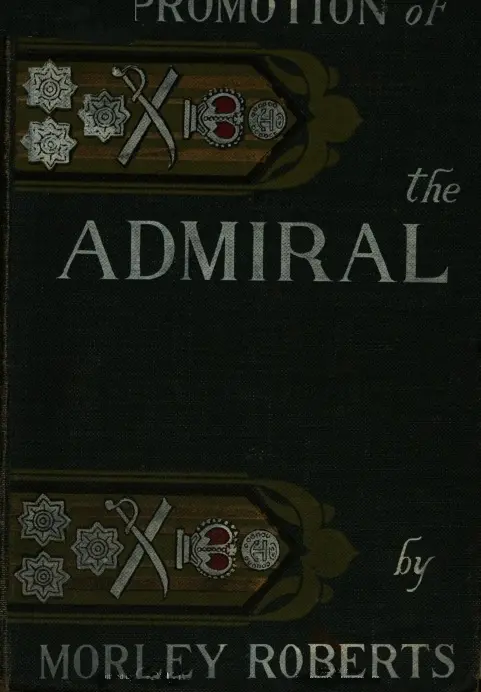
Morley Roberts
BEHIND THE BOOK
This eBook is for the use of anyone anywhere in the United States and most other parts of the world at no cost and with almost no restrictions whatsoever. You may copy it, give it away or re-use it under the terms of the Project Gutenberg License included with this eBook or online at www.gutenberg.org. If you are not located in the United States, you will have to check the laws of the country where you are located before using this eBook. Read the source licence.
The original source file, including credits and licence, is retained by this library. Request an original-format copy at no charge. Please include the book title and Project Gutenberg identifier #68936.
KEEP YOUR CURIOSITY GOING
Coulson Kernahan

Maurice Baring
Frances Wright
Cécile Tormay

Frederic Jesup Stimson

W. H. P. (William Henry Pope) Jarvis