
List, Ye Landsmen! A Romance of Incident
William Clark Russell
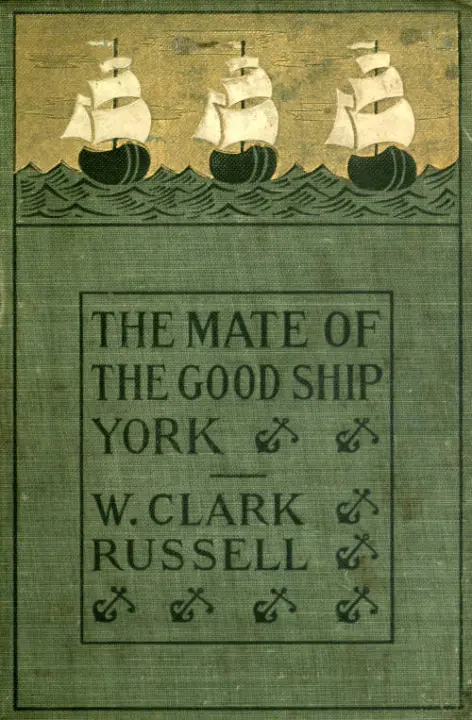
THE CLASSIC COLLECTION · 1900
"The Mate of the Good Ship York; Or, The Ship's Adventure" by William Clark Russell is a novel written in the early 20th century. The story follows George Hardy, the chief mate of the clippership "York", and his encounter with Julia Armstrong, a young woman fleeing a troubled home life to seek independence. Their journey unfolds with themes of adventure, social class struggles, and the search for belonging. At the start of the narrative, we meet George Hardy as he prepares to join his ship after an absence at sea. On his way to the station, he discovers Julia Armstrong unconscious in a ditch, having fled her oppressive household due to her cruel stepmother. George comes to her aid, and, following their brief interaction, it is revealed that Julia is determined to escape England for a better life, aiming to work as a stewardess on a ship. As their connection deepens, they share plans for the future in a world that seems full of obstacles, setting the stage for their ensuing adventures in the bustling and challenging setting of London.
Introduction adapted from the source catalogue; source summaries may be automatically generated.
Free to read · English · 93,861 words · No account needed
MAKE TIME FOR A GOOD BOOK
On by default. Untick to stop anonymous reading totals. Each page counts after 10 seconds in view. How this works.
Anonymous counting is on unless you have switched it off.
Bax was a man of about sixty, immensely stout behind and in front, with a face that seemed powdered with pale, scissors-shorn whisker, and small eyes which had drowned their lustre in beer. He stood in the doorway in his shirt-sleeves smoking a pipe, and was not at all surprised when the couple passed through the gate and approached the porch. He merely pulled out his pipe, and said:
"Good evening, Mr. Hardy; good evening, Miss Armstrong. Come for a bit of a sit down? Will y' 'ave chairs here? or the sitting-room's at your sarvice."
"How d'ye do, Mr. Bax?" said Hardy.
"Good evening, Mr. Bax," said Miss Armstrong, in a faint voice.
"Take us into your sitting-room," said Hardy; and they entered the door and were in the sitting-room at once--a cosy little room, hung with portraits of Bax and his dead wife and daughter, decorated with a small mantel-glass in fly-gauze, and hospitable with a round table on one leg and three claws, the top beautified by a knitted cover.
Julia sank into a little armchair. Bax was beginning to gaze at her earnestly; he knew her perfectly well, knew her father also, who frequently looked in for a drink; also he knew Hardy perfectly well, likewise his father, who attended him when he was attacked by gout.
"Mr. Bax," said Hardy, putting his cap down upon the table, "we have come to occupy your house this night."
"Joost been married, have yer?" asked Bax, slipping his pipe into his
waistcoat pocket.
"No," answered Hardy, gravely; "Miss Armstrong is leaving her home for good. If you don't guess why, I'll tell you presently."
Bax looked knowing; he looked more knowing an instant later when a fine Persian kitten ran up his back and curled its tail upon his shoulder, for then two pairs of eyes were fastened upon Hardy, the kitten, being no beer drinker, gazing more steadfastly than the other.
"Have you a bedroom that you can place at Miss Armstrong's disposal?"
"Is there no later train?" asked Julia.
"We would not take it if there were," replied Hardy.
Of course Bax, having lost his wife, must consult his daughter, and when he had opened a door and shouted a little for Mary Ann there arrived a woman who looked old enough to be Bax's mother. Her face seemed to be dredged by time; the arcus senilis was more defined in her than in Bax; she looked seventy years old, and was but thirty-eight.
She curtseyed to the visitors, and then, after pursing her lips and knitting her brow, she replied to her father that Miss Armstrong could have the spare room over the sitting-room.
Your reading position is saved on this browser. Take it to another device with a library code. Reading pages adapt to text, rather than matching a printed edition.
William Clark Russell

William Clark Russell
William Clark Russell

William Clark Russell
BEHIND THE BOOK
This eBook is for the use of anyone anywhere in the United States and most other parts of the world at no cost and with almost no restrictions whatsoever. You may copy it, give it away or re-use it under the terms of the Project Gutenberg License included with this eBook or online at www.gutenberg.org. If you are not located in the United States, you will have to check the laws of the country where you are located before using this eBook. Read the source licence.
The original source file, including credits and licence, is retained by this library. Request an original-format copy at no charge. Please include the book title and Project Gutenberg identifier #62329.
KEEP YOUR CURIOSITY GOING
Coulson Kernahan

Maurice Baring
Frances Wright
Cécile Tormay

Frederic Jesup Stimson

W. H. P. (William Henry Pope) Jarvis