
List, Ye Landsmen! A Romance of Incident
William Clark Russell
THE CLASSIC COLLECTION · 1900
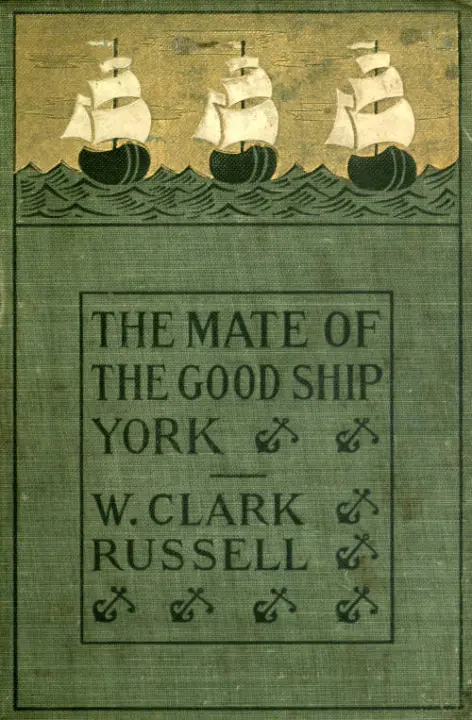
"The Mate of the Good Ship York; Or, The Ship's Adventure" by William Clark Russell is a novel written in the early 20th century. The story follows George Hardy, the chief mate of the clippership "York", and his encounter with Julia Armstrong, a young woman fleeing a troubled home life to seek independence. Their journey unfolds with themes of adventure, social class struggles, and the search for belonging. At the start of the narrative, we meet George Hardy as he prepares to join his ship after an absence at sea. On his way to the station, he discovers Julia Armstrong unconscious in a ditch, having fled her oppressive household due to her cruel stepmother. George comes to her aid, and, following their brief interaction, it is revealed that Julia is determined to escape England for a better life, aiming to work as a stewardess on a ship. As their connection deepens, they share plans for the future in a world that seems full of obstacles, setting the stage for their ensuing adventures in the bustling and challenging setting of London.
Introduction adapted from the source catalogue; source summaries may be automatically generated.
Free to read · English · 93,861 words · No account needed
MAKE TIME FOR A GOOD BOOK
On by default. Untick to stop anonymous reading totals. Each page counts after 10 seconds in view. How this works.
Anonymous counting is on unless you have switched it off.
"Don't you know, Miss Armstrong," continued Smedley, "that there is no marriage market in the world to equal an East Indiaman?"
Julia flushed a little, but did not speak.
"She takes out young people," went on the commander of the Glamis Castle, "called Griffins. They are young men with a glass in their eye and susceptible hearts behind their waistcoats. They also take out planters, merchants, gentlemen going to join houses--"
"And ladies," interrupted Hardy. "Ladies in plenty."
"You know nothing about it," said Captain Smedley. "A few ladies, most of them married. Now," he continued, "such a young lady as Miss Armstrong, no matter what position she fills on board, stands a first-rate chance of finding a husband before her arrival in India. Your emigrant ship is not going to provide any chance of the sort."
"I do not think of marriage," said Julia, who after colouring had turned rather paler than usual, but she spoke calmly and even with sweetness, as though grateful for the interest these strangers were taking in her.
"Oh," cried Captain Smedley, with warmth, "but you must think of marriage. It is a condition of every woman's life. It is thought of from about the age of twelve until it happens, and nothing else is thought of. All the milliners and dressmakers contribute to the dream. It is the one idea in the darlings' heads, and of course it is a wrong one."
"What will Miss Armstrong think of such stuff and nonsense?" said Mrs.
Smedley.
"What's a girl to do when she gets to India if she isn't married?"
asked Hardy.
"They want governesses and nursemaids, I dare say," replied the captain. "Let her call upon the missionary. I took out the Bishop of Calcutta last voyage. He's a dear old chap, and many a yarn we spun together. I'll venture to say that a letter of introduction to him from me will ensure this young lady a berth."
Hardy, putting his elbow on the table, rested his cheek in the palm of his hand, and looked at Miss Armstrong musingly. Nobody spoke until Hardy started, and turning to Smedley, said, "Can you give her a berth on board your ship?"
"I am thinking of it," was the answer.
Julia looked almost startled, and exclaimed to Hardy, "We should be
going different ways."
Smedley and his wife exchanged glances.
"I must see you safe on board bound to somewhere," answered Hardy, softly. "I am bound to Melbourne; afterward to a New Zealand port. Your ship will be bound to Calcutta. These places are different ways, and India is the same thing."
Your reading position is saved on this browser. Take it to another device with a library code. Reading pages adapt to text, rather than matching a printed edition.
William Clark Russell

William Clark Russell
William Clark Russell

William Clark Russell
BEHIND THE BOOK
This eBook is for the use of anyone anywhere in the United States and most other parts of the world at no cost and with almost no restrictions whatsoever. You may copy it, give it away or re-use it under the terms of the Project Gutenberg License included with this eBook or online at www.gutenberg.org. If you are not located in the United States, you will have to check the laws of the country where you are located before using this eBook. Read the source licence.
The original source file, including credits and licence, is retained by this library. Request an original-format copy at no charge. Please include the book title and Project Gutenberg identifier #62329.
KEEP YOUR CURIOSITY GOING
Coulson Kernahan

Maurice Baring
Frances Wright
Cécile Tormay

Frederic Jesup Stimson

W. H. P. (William Henry Pope) Jarvis