
List, Ye Landsmen! A Romance of Incident
William Clark Russell
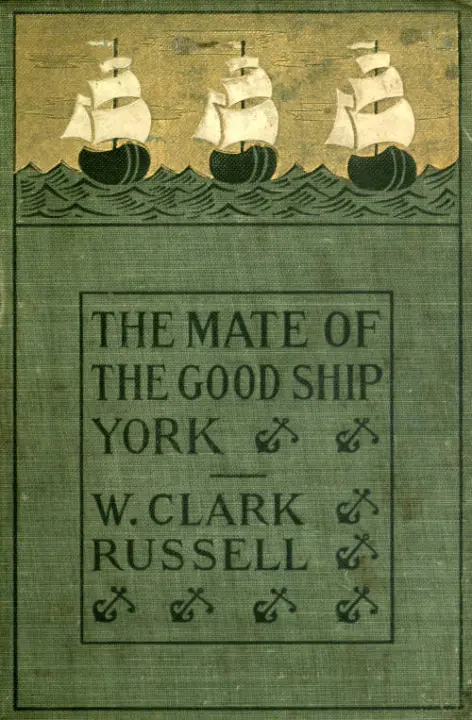
THE CLASSIC COLLECTION · 1900
"The Mate of the Good Ship York; Or, The Ship's Adventure" by William Clark Russell is a novel written in the early 20th century. The story follows George Hardy, the chief mate of the clippership "York", and his encounter with Julia Armstrong, a young woman fleeing a troubled home life to seek independence. Their journey unfolds with themes of adventure, social class struggles, and the search for belonging. At the start of the narrative, we meet George Hardy as he prepares to join his ship after an absence at sea. On his way to the station, he discovers Julia Armstrong unconscious in a ditch, having fled her oppressive household due to her cruel stepmother. George comes to her aid, and, following their brief interaction, it is revealed that Julia is determined to escape England for a better life, aiming to work as a stewardess on a ship. As their connection deepens, they share plans for the future in a world that seems full of obstacles, setting the stage for their ensuing adventures in the bustling and challenging setting of London.
Introduction adapted from the source catalogue; source summaries may be automatically generated.
Free to read · English · 93,861 words · No account needed
MAKE TIME FOR A GOOD BOOK
On by default. Untick to stop anonymous reading totals. Each page counts after 10 seconds in view. How this works.
Anonymous counting is on unless you have switched it off.
This was all he said. He did not inquire the barque's name; it was no business of his to know it. But she was forging ahead, and the name under the counter in long white letters grew visible: Columbia--Boston.
"Where's your crew?" shouted the man with the trumpet.
"On deck," was the answer.
A man standing by the figure on the rail took the speaking-trumpet and replaced it by a telescope, which the figure levelled at Julia.
"He's admiring you," said Hardy.
"I dare say the crew on that forecastle are laughing," she exclaimed.
"Sailors are too well fed to laugh easily," replied Hardy. "Oily men, fat men, rich men, seldom laugh."
All between the two speeding vessels was the rush of the white surge, and the ships seemed to salute each other like acquaintances as they bowed in stately rolls and sang the song of the shrouds one to the other, for it is all singing at sea--singing or singing out.
Suddenly when the barque had drawn on to the weather-bow of the York she was luffed up into the wind, and the weather-half of her loftier canvas was aback.
"They mean to visit us," said Hardy.
"Not to stay, I hope," said Julia, anxiously.
In a few moments some figures broke from the barque's forecastle crowd and ran aft, and a white boat of a whaling pattern, sharpened stem and stern, sank from its davits with six men in her, and the man who had given the telescope to the figure on the rail steered the boat.
Hardy put his helm down and shook the wind out of his small canvas, and presently the boat was hooked on alongside, and an American sailor--a chief mate--clambered over the rail on to the deck of the York.
It is bad taste to imitate accents, or oddities of phrase, or nasal
deliverances. This Yankee mate then shall speak as our first cousin
does.
"Do you mean to say," said he, touching his cap as he approached Hardy and Julia, "that you and this lady"--he bowed to her--"are your ship's company?"
"No," answered Hardy. "We have that dog: he is worth ten foreigners, and we have a watch-tackle and a winch."
"And you are carrying this ship to London alone?"
"Ay."
The Yankee mate looked a little stupefied, glanced along the deck, then up at the Red Ensign, then at the girl who stood beneath it.
"Where are you from?" he asked.
Your reading position is saved on this browser. Take it to another device with a library code. Reading pages adapt to text, rather than matching a printed edition.
William Clark Russell

William Clark Russell
William Clark Russell

William Clark Russell
BEHIND THE BOOK
This eBook is for the use of anyone anywhere in the United States and most other parts of the world at no cost and with almost no restrictions whatsoever. You may copy it, give it away or re-use it under the terms of the Project Gutenberg License included with this eBook or online at www.gutenberg.org. If you are not located in the United States, you will have to check the laws of the country where you are located before using this eBook. Read the source licence.
The original source file, including credits and licence, is retained by this library. Request an original-format copy at no charge. Please include the book title and Project Gutenberg identifier #62329.
KEEP YOUR CURIOSITY GOING
Coulson Kernahan

Maurice Baring
Frances Wright
Cécile Tormay

Frederic Jesup Stimson

W. H. P. (William Henry Pope) Jarvis