
List, Ye Landsmen! A Romance of Incident
William Clark Russell
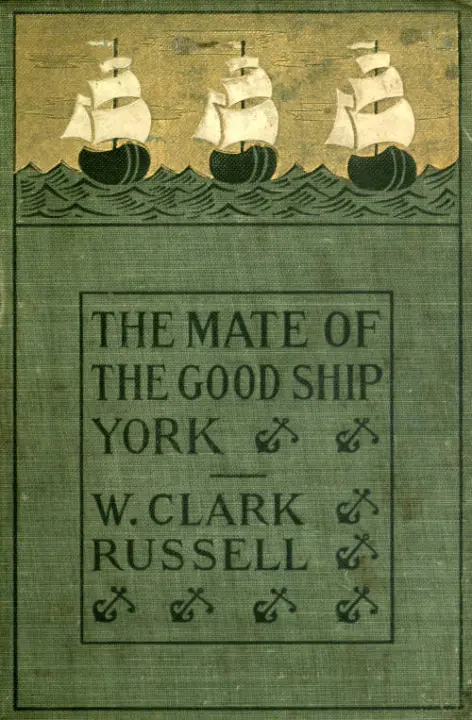
THE CLASSIC COLLECTION · 1900
"The Mate of the Good Ship York; Or, The Ship's Adventure" by William Clark Russell is a novel written in the early 20th century. The story follows George Hardy, the chief mate of the clippership "York", and his encounter with Julia Armstrong, a young woman fleeing a troubled home life to seek independence. Their journey unfolds with themes of adventure, social class struggles, and the search for belonging. At the start of the narrative, we meet George Hardy as he prepares to join his ship after an absence at sea. On his way to the station, he discovers Julia Armstrong unconscious in a ditch, having fled her oppressive household due to her cruel stepmother. George comes to her aid, and, following their brief interaction, it is revealed that Julia is determined to escape England for a better life, aiming to work as a stewardess on a ship. As their connection deepens, they share plans for the future in a world that seems full of obstacles, setting the stage for their ensuing adventures in the bustling and challenging setting of London.
Introduction adapted from the source catalogue; source summaries may be automatically generated.
Free to read · English · 93,861 words · No account needed
MAKE TIME FOR A GOOD BOOK
On by default. Untick to stop anonymous reading totals. Each page counts after 10 seconds in view. How this works.
Anonymous counting is on unless you have switched it off.
With her consent the sailor lighted a pipe. The girl sat in a chair opposite to him, her head a little on one side, hands on her hips, all in the old, fascinating, coquettish, incommunicable way. Outside the night lay in a thin gloom, and they saw the stars shining above the trees. The hush of the sleeping land was in the air. You heard nothing but the silver tinkling of a natural fall of water that ran down the hillside, and fell purely in a stone bowl for men, horses, and dogs to drink.
"You are a plucky girl," said Hardy; "but I think you are attempting more than you understand. You talk, for instance, of going to the workhouse. You are the last girl in the world to go to the workhouse. Think of dying in a workhouse," he continued, whilst she watched him without smiling. "Creatures bend over your bed, and say, 'Isn't she gone yet?' That's the sympathy of the workhouse."
"I want to get out of England, abroad, and be independent," said Julia.
He looked at an old clock upon the mantelpiece. The hour was about eight. He asked her if she would have some whisky and water, and on her declining, he mixed a draught for himself, then went to the door and called to Bax, leaving the girl to wonder what he meant to do. The farmer arrived.
"Bax," said the sailor, "you have given us a capital supper."
"I'm much obliged to you, sir," answered Bax.
"This is an excellent whisky," continued Hardy, "and I drink your health"--here he sipped--"and the health of your worthy daughter"--here he sipped again--"in your very hospitable gift."
Bax grinned, and said, "We make no charge. You're my guests, and you're
welcome."
"Bax," said Hardy, "haven't you a spring cart?"
"Yes," answered Bax.
"Got a horse?"
"Got a pretty little mare."
"Will you drive me over to Captain Armstrong's as soon as possible to fetch this young lady's luggage?"
Julia started in her chair, and said, "Don't trouble, Mr. Hardy. My father will send the box on to me when he gets my address in London."
"How d'ye know he will?" inquired Hardy.
"Ah!" murmured Bax.
"Suppose the stepmother declines to let the box go?" said Hardy. "Now you'll want all the clothes you've got and can get, Miss Armstrong, if you mean to colonise. Bax, bear a hand, my lad; clap your mare to the cart, and report when you're ready."
He spoke as if he was on the quarter-deck of a ship and making the sailors jump for their lives, and Bax went out, saying, "I'll not be ten minutes."
Your reading position is saved on this browser. Take it to another device with a library code. Reading pages adapt to text, rather than matching a printed edition.
William Clark Russell

William Clark Russell
William Clark Russell

William Clark Russell
BEHIND THE BOOK
This eBook is for the use of anyone anywhere in the United States and most other parts of the world at no cost and with almost no restrictions whatsoever. You may copy it, give it away or re-use it under the terms of the Project Gutenberg License included with this eBook or online at www.gutenberg.org. If you are not located in the United States, you will have to check the laws of the country where you are located before using this eBook. Read the source licence.
The original source file, including credits and licence, is retained by this library. Request an original-format copy at no charge. Please include the book title and Project Gutenberg identifier #62329.
KEEP YOUR CURIOSITY GOING
Coulson Kernahan

Maurice Baring
Frances Wright
Cécile Tormay

Frederic Jesup Stimson

W. H. P. (William Henry Pope) Jarvis