THE CLASSIC COLLECTION✦The Countess FannyCLASSIC FREE BOOKS
The Countess Fanny
Marjorie Bowen
THE CLASSIC COLLECTION · 1907
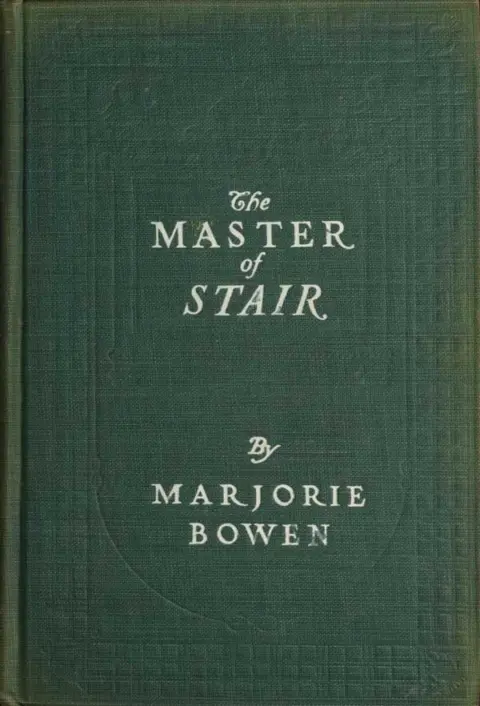
"The Master of Stair" by Marjorie Bowen is a historical novel written in the early 20th century. The book is set against the backdrop of the harsh and beautiful Scottish Highlands, exploring themes of clan rivalry, loyalty, and the complex socio-political landscape of 17th-century Scotland. Central to the narrative are Ronald Macdonald, a proud Highlander of the Macdonald clan, and Helen Fraser, an enigmatic woman who stirs within him both admiration and conflict. At the start of the story, we are introduced to Ronald Macdonald and his men as they traverse the misty landscape of the Highlands. Shrouded in fog, they are wary of strangers, believing themselves to be perpetually at odds with the rival clan, the Campbells. Ronald’s encounter with a woman in a scarlet coat—initially presumed to be a Campbell—leads to a tense yet intriguing dialogue that reveals a deep-seated animosity between the clans. This incident sets the stage for the themes of ferocity and honor that permeate the book as characters grapple with the legacies of their feuds, and the ramifications of their decisions take shape against the impending unrest of clan politics. As the narrative unfolds, the foundations of loyalty and betrayal seem destined to intertwine.
Introduction adapted from the source catalogue; source summaries may be automatically generated.
Free to read · English · 94,441 words · No account needed
MAKE TIME FOR A GOOD BOOK
On by default. Untick to stop anonymous reading totals. Each page counts after 10 seconds in view. How this works.
Anonymous counting is on unless you have switched it off.
With a few murmured words Delia followed Jerome into the opposite room, a dirty dingy place where Sir Perseus sat over a rough supper. She joined him in a white agitation and glanced from one man to another.
“Delia—what is the matter?” asked Sir Perseus. “This encounter will do
us no harm.”
She was silent, one hand over her bosom; with the other she pushed her plate aside; she was quite white.
“I know,” she said faintly, “But I cannot eat—I will go to bed.”
“That is folly,” answered Sir Perseus curtly. Then he turned to Jerome and added in a lowered voice: “Did you speak to the Earl?”
“Why not?” asked Jerome calmly. “I asked him for the room and he gave it me—cold and stiff but courteous. His wife is beautiful—is she not?”
They commenced their supper, but Delia sat miserably silent, with absent eyes. “The Macdonalds have not taken the oath,” beat in her head. “The Macdonalds have not taken the oath!”
The hostess in clumsy hurry left the door ajar behind her, enough for them to see across the passage where in the doorway of the opposite room stood the Countess with her sleeves rolled up over her white elbows, and flour on her hands, her face was turned to the stairway, upon it a lovely smile.
Jerome fixed on her his mournful eyes, then, as he watched, Breadalbane crossed the passage and entered the room. The Countess closed the door.
“I saw a woman like that once—in a dream,” said Jerome. “The face was strangely impressed on my mind.”
Sir Perseus, eating lustily, asked:
“What was she doing in your dream?”
Jerome gave his grieving smile. “She was strangling me with a long lace tie,” he said slowly.
Sir Perseus laughed, but Delia broke out passionately: “A cold Scotswoman! I loathe her—she would strangle you if it needed—her eyes are hard as stones.”
“Delia!” cried Sir Perseus. “The place is overrun with Campbells—have a care—they have a whole body-guard of Highlanders at the back—”
“And yet she does servants’ work,” said Delia.
“She is devoted to him,” answered Jerome.
“A strange thing!” flashed Delia.
“Nay—give her credit for her greatest virtue,” he replied. “She would do anything for Breadalbane. I think he is very fortunate.”
Delia bit her lip and dropped her eyes under Jerome’s calm gaze; she was nervous, excited, almost beyond bearing; she rose up impatiently.
“Mr. Caryl—you told me the Macdonalds had taken the oath,” she said with burning cheeks. “And she—this woman—told me they had not—and she should know.”
Your reading position is saved on this browser. Take it to another device with a library code. Reading pages adapt to text, rather than matching a printed edition.
Marjorie Bowen
Marjorie Bowen
Marjorie Bowen
Marjorie Bowen
BEHIND THE BOOK
This eBook is for the use of anyone anywhere in the United States and most other parts of the world at no cost and with almost no restrictions whatsoever. You may copy it, give it away or re-use it under the terms of the Project Gutenberg License included with this eBook or online at www.gutenberg.org. If you are not located in the United States, you will have to check the laws of the country where you are located before using this eBook. Read the source licence.
The original source file, including credits and licence, is retained by this library. Request an original-format copy at no charge. Please include the book title and Project Gutenberg identifier #49979.
KEEP YOUR CURIOSITY GOING
Cécile Tormay

Moritz Busch
Coulson Kernahan
John L. Ransom

Maurice Baring
Frances Wright