THE CLASSIC COLLECTION✦The Countess FannyCLASSIC FREE BOOKS
The Countess Fanny
Marjorie Bowen
THE CLASSIC COLLECTION · 1907
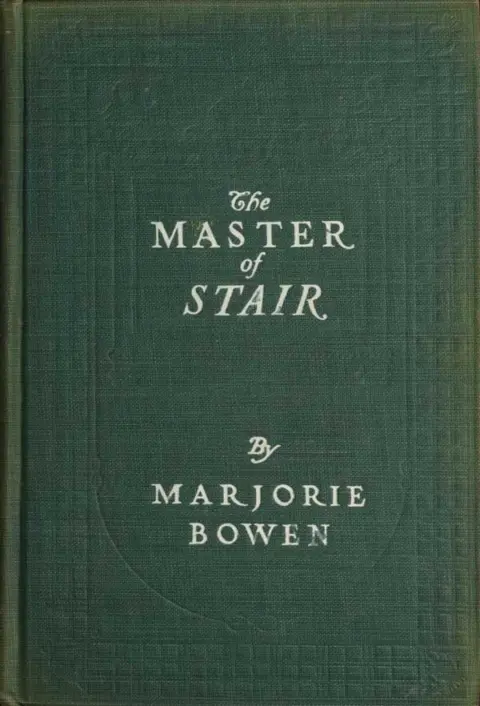
"The Master of Stair" by Marjorie Bowen is a historical novel written in the early 20th century. The book is set against the backdrop of the harsh and beautiful Scottish Highlands, exploring themes of clan rivalry, loyalty, and the complex socio-political landscape of 17th-century Scotland. Central to the narrative are Ronald Macdonald, a proud Highlander of the Macdonald clan, and Helen Fraser, an enigmatic woman who stirs within him both admiration and conflict. At the start of the story, we are introduced to Ronald Macdonald and his men as they traverse the misty landscape of the Highlands. Shrouded in fog, they are wary of strangers, believing themselves to be perpetually at odds with the rival clan, the Campbells. Ronald’s encounter with a woman in a scarlet coat—initially presumed to be a Campbell—leads to a tense yet intriguing dialogue that reveals a deep-seated animosity between the clans. This incident sets the stage for the themes of ferocity and honor that permeate the book as characters grapple with the legacies of their feuds, and the ramifications of their decisions take shape against the impending unrest of clan politics. As the narrative unfolds, the foundations of loyalty and betrayal seem destined to intertwine.
Introduction adapted from the source catalogue; source summaries may be automatically generated.
Free to read · English · 94,441 words · No account needed
MAKE TIME FOR A GOOD BOOK
On by default. Untick to stop anonymous reading totals. Each page counts after 10 seconds in view. How this works.
Anonymous counting is on unless you have switched it off.
“My lord—that consummation approaches,” she answered, hardening, through her smile, at his implied slight to her husband. “’Tis no’ the lack o’ power but policy has held Jock’s hand.”
The Earl of Argyll lifted his eyes fretfully.
“Policy! Always this talk of policy! If it had na been for my father’s ‘policy’ in joining Monmouth in ’85, he would na have lost his head or the Campbells the Hielands....”
She interrupted.
“But the triumph o’ your return, cousin, made full amends for your
father’s downfall.”
He shrugged his shoulders, sipping his tea; he had the manner of a man
with a grievance.
“Certainly I return to the Hielands, but what do I find?” he complained. “The Macdonalds overrunning everything, Campbells hanged at sight, my houses gone to ruin—long arrears of rent due and the Stewarts o’ Appin, the Camerons, the Macnaughtens, and these cursed Macdonalds refusing to pay a farthing.”
The Countess Peggy gave him a bright glance. “We have our chance noo,” she said. “Our chance, Cousin Archibald, for our revenge.” She offered him as she spoke a little glass dish of macaroons, and he carefully selected one not too sugared before he answered.
“We?” he questioned. “You and Breadalbane have little to complain of—I dinna call to mind any misfortune in your branch.”
There was a note of bitterness in his voice; he could not forget that while he had been living in a Dutch garret his cousin Breadalbane had managed to keep even with every government and come out at the end with unimpaired estates and a title as good as his own.
The Countess understood this and smiled.
“Dinna forget that we are Campbells, too,” she said. “And we hae had many wrongs frae the Hielands.” She tilted the tea-urn with half-shut eyes—“Particularly the Macdonalds,” she added.
Argyll looked at her a second.
“Does Breadalbane think they willna’ come in?” he asked.
“Cousin, he is sure of it—vera few will.”
“Ah!” Argyll gave a luxurious little sigh of satisfaction. “I thought so—I had orders to quarter my regiment at Dunblane—and quietly.”
“Orders frae the Master of Stair?”
“Yes.”
“He is at Kensington noo?” asked the Countess.
“Yes—he and Carstairs rule Scotland between them—the King gives no ear
to any other.”
“And he, the Master—is ane with Jock!” she said eagerly. “And there are only twa weeks more—cousin—I think the thing is done.”
Some animation came into Argyll’s languid eyes.
“Almost, I think so,” he said. “Breadalbane goes to London soon?”
“He comes up frae Kilchurn to-morrow,” she answered, “and will be ready to accompany ye to Court.” Their eyes met.
Your reading position is saved on this browser. Take it to another device with a library code. Reading pages adapt to text, rather than matching a printed edition.
Marjorie Bowen
Marjorie Bowen
Marjorie Bowen
Marjorie Bowen
BEHIND THE BOOK
This eBook is for the use of anyone anywhere in the United States and most other parts of the world at no cost and with almost no restrictions whatsoever. You may copy it, give it away or re-use it under the terms of the Project Gutenberg License included with this eBook or online at www.gutenberg.org. If you are not located in the United States, you will have to check the laws of the country where you are located before using this eBook. Read the source licence.
The original source file, including credits and licence, is retained by this library. Request an original-format copy at no charge. Please include the book title and Project Gutenberg identifier #49979.
KEEP YOUR CURIOSITY GOING
Cécile Tormay

Moritz Busch
Coulson Kernahan
John L. Ransom

Maurice Baring
Frances Wright