THE CLASSIC COLLECTION✦The Countess FannyCLASSIC FREE BOOKS
The Countess Fanny
Marjorie Bowen
THE CLASSIC COLLECTION · 1907
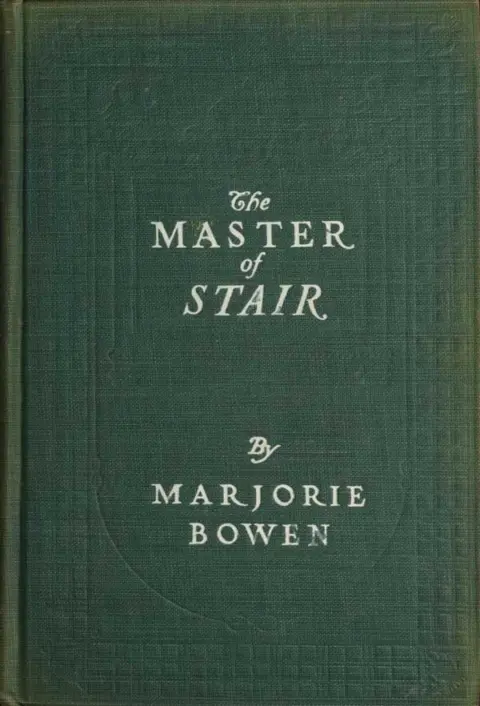
"The Master of Stair" by Marjorie Bowen is a historical novel written in the early 20th century. The book is set against the backdrop of the harsh and beautiful Scottish Highlands, exploring themes of clan rivalry, loyalty, and the complex socio-political landscape of 17th-century Scotland. Central to the narrative are Ronald Macdonald, a proud Highlander of the Macdonald clan, and Helen Fraser, an enigmatic woman who stirs within him both admiration and conflict. At the start of the story, we are introduced to Ronald Macdonald and his men as they traverse the misty landscape of the Highlands. Shrouded in fog, they are wary of strangers, believing themselves to be perpetually at odds with the rival clan, the Campbells. Ronald’s encounter with a woman in a scarlet coat—initially presumed to be a Campbell—leads to a tense yet intriguing dialogue that reveals a deep-seated animosity between the clans. This incident sets the stage for the themes of ferocity and honor that permeate the book as characters grapple with the legacies of their feuds, and the ramifications of their decisions take shape against the impending unrest of clan politics. As the narrative unfolds, the foundations of loyalty and betrayal seem destined to intertwine.
Introduction adapted from the source catalogue; source summaries may be automatically generated.
Free to read · English · 94,441 words · No account needed
MAKE TIME FOR A GOOD BOOK
On by default. Untick to stop anonymous reading totals. Each page counts after 10 seconds in view. How this works.
Anonymous counting is on unless you have switched it off.
The Macdonalds stood in the center of the vast dining-hall, the old chief between his two sons; all three erect with their bonnets in their hands, all huge in height and build.
The two young men were breathing hard, flushed and defiant, their eyes roving quickly from door to window; but the elder Makian’s fine old face showed a dignified, placid calm in keeping with his venerable appearance, a benevolent good-will showed in his bright blue eyes and his lips were curved to a kindly smile.
Breadalbane, entering, gave him a quick glance, then stepped forward, motioning to Ardkinglass to stand back against the wall. The two young men swung round, black with mistrust, but Makian spoke in bland Lowland Scotch:
“Ye will be wondering, why we make such a tardy appearance,” he remarked gently, “weel, it was the weather—was ower rough.”
His manner utterly waived all thought of offense between them; he spoke as if the Campbells and Macdonalds had been friends for centuries.
Breadalbane hitched his sword over his hip so that it lay nearer his hand. “Weel,” he answered thoughtfully, “I’ll no’ be denying that I was expecting Makian, though ’tis ower long since a Macdonald came to Kilchurn.”
Makian waved his hand courteously as if he dismissed even the hint of an unpleasant subject. “Ye will be guessing our errand?” he said suavely.
There was the slightest pause; Breadalbane measured the three huge Highlanders in their dark tartans with their dirks stuck through their belts, and the Highlanders eyed the Earl, slender in his Lowland suit of gray velvet with his left hand gently pulling his sword backwards and forwards.
He was the first to speak:
“Yea,” he said, “it will be aboot the coos ye have come, Macdonald.”
Makian’s face was a pleasant blank.
“The coos?” he repeated courteously.
Breadalbane lifted his ash-gray eyes with a sinister flash.
“The coos,” he answered, “and the bonnie pasture lands—they have been keeping ye, Macdonald, this mony year, I ken—I willna’ be mentioning the gould and siller, the plate and furniture and sic details—for I’m no’ doubting ye have come to return the coos.”
“I’m no’ understanding,” said Makian pleasantly. “We hav’na’ ane coo in Glencoe.” His two sons emphasized the statement with a scowl, but the Earl was imperturbable.
“Weel,” he remarked, “ye eat a muckle of meat in a fortnight—it is only that time since ye took a hundred fat coos—but I make no doubt that since ye have eaten them, Macdonald, ye have brought the siller to pay for them.”
Your reading position is saved on this browser. Take it to another device with a library code. Reading pages adapt to text, rather than matching a printed edition.
Marjorie Bowen
Marjorie Bowen
Marjorie Bowen
Marjorie Bowen
BEHIND THE BOOK
This eBook is for the use of anyone anywhere in the United States and most other parts of the world at no cost and with almost no restrictions whatsoever. You may copy it, give it away or re-use it under the terms of the Project Gutenberg License included with this eBook or online at www.gutenberg.org. If you are not located in the United States, you will have to check the laws of the country where you are located before using this eBook. Read the source licence.
The original source file, including credits and licence, is retained by this library. Request an original-format copy at no charge. Please include the book title and Project Gutenberg identifier #49979.
KEEP YOUR CURIOSITY GOING
Cécile Tormay

Moritz Busch
Coulson Kernahan
John L. Ransom

Maurice Baring
Frances Wright