THE CLASSIC COLLECTION✦The Countess FannyCLASSIC FREE BOOKS
The Countess Fanny
Marjorie Bowen
THE CLASSIC COLLECTION · 1907
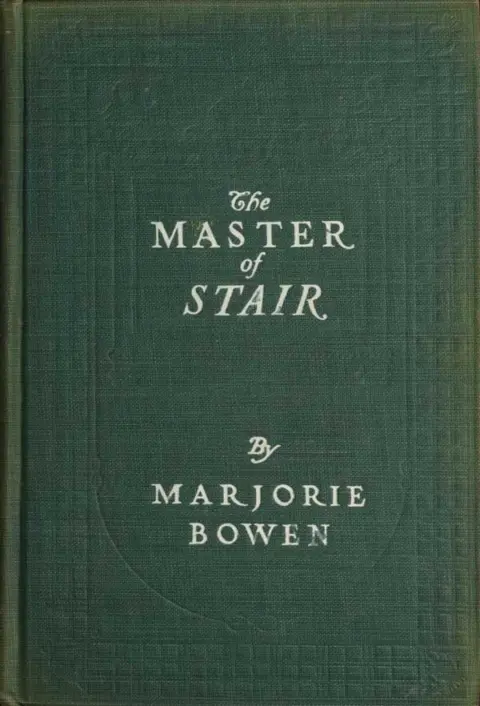
"The Master of Stair" by Marjorie Bowen is a historical novel written in the early 20th century. The book is set against the backdrop of the harsh and beautiful Scottish Highlands, exploring themes of clan rivalry, loyalty, and the complex socio-political landscape of 17th-century Scotland. Central to the narrative are Ronald Macdonald, a proud Highlander of the Macdonald clan, and Helen Fraser, an enigmatic woman who stirs within him both admiration and conflict. At the start of the story, we are introduced to Ronald Macdonald and his men as they traverse the misty landscape of the Highlands. Shrouded in fog, they are wary of strangers, believing themselves to be perpetually at odds with the rival clan, the Campbells. Ronald’s encounter with a woman in a scarlet coat—initially presumed to be a Campbell—leads to a tense yet intriguing dialogue that reveals a deep-seated animosity between the clans. This incident sets the stage for the themes of ferocity and honor that permeate the book as characters grapple with the legacies of their feuds, and the ramifications of their decisions take shape against the impending unrest of clan politics. As the narrative unfolds, the foundations of loyalty and betrayal seem destined to intertwine.
Introduction adapted from the source catalogue; source summaries may be automatically generated.
Free to read · English · 94,441 words · No account needed
MAKE TIME FOR A GOOD BOOK
On by default. Untick to stop anonymous reading totals. Each page counts after 10 seconds in view. How this works.
Anonymous counting is on unless you have switched it off.
“Ye are ganging to Kensington,” she said in a voice muffled but steady.
He turned so that he could see her with the greater ease.
“Yes, madam.”
The words came clearly above the rumbling of the wheels.
“You are going to inform,” she said, with the same steadiness.
He leaned forward a little.
“The Prince will not go hunting in Hampton Court on Saturday, madam.”
“Ye are ganging to betray us,” said the Countess. “I knew it.”
“It is not the right word,” he answered. “I shall warn the Prince—no
more.”
She looked at him quickly and quietly then burst out contemptuously:
“Ye lie! lie! lie! Ye will gie every name ye know to the Prince!”
Jerome Caryl smiled; she sat upright with clasped hands.
“I knew it. When across the room I saw your face as the fule Berwick spoke of his plans. I saw that ye meant to betray us. Ah, they talk of their man’s sagacity but a woman can see clearer—Berwick did not see—I did.”
“Berwick knows me better, madam.”
She took no heed of the quiet words.
“Ye will tell the Prince every name ye know,” she said hoarsely. “And if ye dinna—they will discover once ye have lodged the information.”
She shuddered further into her corner; her whole face and figure seemed misty to Jerome in the wavering light; only her eyes, fixed on him, were clear and brilliant.
“Will ye do it—will ye no reflect?”
There was no doubting her controlled agitation, the distress in her accents; Jerome, who had been studying her curiously, spoke now with a deepening of curiosity; he spoke under his breath softly.
“You are not involved—” he said. “For whom are you afraid?”
Her eyes traveled slowly over him.
“My husband,” she said intensely.
He gave a little laugh and lifted his shoulders; Breadalbane was a
byword for cunning hypocrisy; her devotion jarred as strangely out of
place.
“Others beside your husband would fall if I—or any informed,” he
answered quietly.
She sat up, shaking her furs to the floor. “I care only for my husband.”
The coach rattled and shook and the lamp-wick leaped and flickered.
“Only for my husband—and if his share in this is discovered it means ruin—if not death—to him.”
The very words seemed to come with an effort from her tongue; she blenched at the bare thought of the possibility she spoke of.
“I shall not mention your husband’s name,” said Jerome Caryl.
“If ye put them on the track they will discover for themselves.”
“Lord Breadalbane has weathered rougher storms.”
“He has gone farther than ye ken—and this assassination—”
Your reading position is saved on this browser. Take it to another device with a library code. Reading pages adapt to text, rather than matching a printed edition.
Marjorie Bowen
Marjorie Bowen
Marjorie Bowen
Marjorie Bowen
BEHIND THE BOOK
This eBook is for the use of anyone anywhere in the United States and most other parts of the world at no cost and with almost no restrictions whatsoever. You may copy it, give it away or re-use it under the terms of the Project Gutenberg License included with this eBook or online at www.gutenberg.org. If you are not located in the United States, you will have to check the laws of the country where you are located before using this eBook. Read the source licence.
The original source file, including credits and licence, is retained by this library. Request an original-format copy at no charge. Please include the book title and Project Gutenberg identifier #49979.
KEEP YOUR CURIOSITY GOING
Cécile Tormay

Moritz Busch
Coulson Kernahan
John L. Ransom

Maurice Baring
Frances Wright