THE CLASSIC COLLECTION✦The Countess FannyCLASSIC FREE BOOKS
The Countess Fanny
Marjorie Bowen
THE CLASSIC COLLECTION · 1907
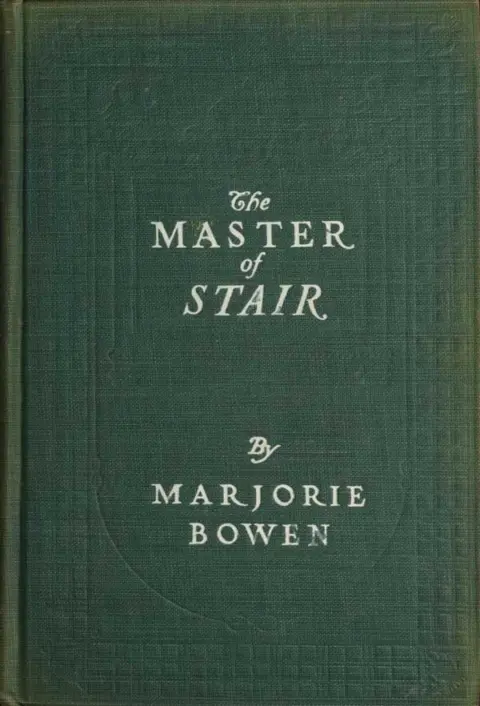
"The Master of Stair" by Marjorie Bowen is a historical novel written in the early 20th century. The book is set against the backdrop of the harsh and beautiful Scottish Highlands, exploring themes of clan rivalry, loyalty, and the complex socio-political landscape of 17th-century Scotland. Central to the narrative are Ronald Macdonald, a proud Highlander of the Macdonald clan, and Helen Fraser, an enigmatic woman who stirs within him both admiration and conflict. At the start of the story, we are introduced to Ronald Macdonald and his men as they traverse the misty landscape of the Highlands. Shrouded in fog, they are wary of strangers, believing themselves to be perpetually at odds with the rival clan, the Campbells. Ronald’s encounter with a woman in a scarlet coat—initially presumed to be a Campbell—leads to a tense yet intriguing dialogue that reveals a deep-seated animosity between the clans. This incident sets the stage for the themes of ferocity and honor that permeate the book as characters grapple with the legacies of their feuds, and the ramifications of their decisions take shape against the impending unrest of clan politics. As the narrative unfolds, the foundations of loyalty and betrayal seem destined to intertwine.
Introduction adapted from the source catalogue; source summaries may be automatically generated.
Free to read · English · 94,441 words · No account needed
MAKE TIME FOR A GOOD BOOK
On by default. Untick to stop anonymous reading totals. Each page counts after 10 seconds in view. How this works.
Anonymous counting is on unless you have switched it off.
A little silence fell; an unusual look of resolution came into Lady Dalrymple’s gentle face as she gazed into the fire; Delia, standing with her hands clasped on the chair-back gazed upon her fairness with sick aversion that mounted to her brain and set her mouth into lines of cruelty. At last, with a shiver of satin, Lady Dalrymple moved and looked at the other.
“The Macdonalds have taken the oaths,” she said quietly, “but it will be suppressed. That is Viscount Stair’s work—and the Earl of Breadalbane’s.”
“I thought so!” cried Delia fiercely. “The Viscount’s work, you say! I think Sir John has had a hand in it.”
“I will not discuss my husband’s politics,” interrupted Lady Dalrymple. “I tell you this because I would prevent an injustice and a crime. It is true, and the Macdonalds are doomed, if you can save them—do so—”
“If I can save them!” flashed Delia, “I tell you this shall be over all England to-morrow!”
Lady Dalrymple rose and came toward her.
“So you can save your friends,” she said gently.
“Will you not thank me a little?”
Delia stared at her.
“Why should I thank you?” she demanded.
“For what Sir John would not have told you,” was the answer. “This news should mean much to you.”
“I do thank you, madam,” said Delia coldly, drawing back.
Lady Dalrymple came nearer, leaned forward over the table.
“Ah, sit down,” she said, sweetly and sadly. “I have few to talk to—”
“Wherefore, madam?” demanded Delia.
“Because—because it is my will, I mean, they are all employed here—”
She put her hands in a troubled manner to her heart and her restless fingers pulled the mauve ribbon; a closed gold miniature case fell lightly onto the table.
Lady Dalrymple took it up in silence and looked at it with the air of some one who holds something very precious, and who, wishful to display it, yet dreads a scornful reception. She fingered the case a moment in silence and took a timid glance at Delia, who gazed blankly with a troubled face.
Lady Dalrymple encouraged by her look, snapped open the case and held it out hesitating, pleading, making a great effort to be calm.
“My children,” she said.
Delia gave one glance, then motioned it away with a gesture of horror.
“How like,” she said fearfully.
“How like whom?” asked Lady Dalrymple startled. “They are beautiful faces—are they not? Why do you turn away? I crave people to gaze on them—”
“They are like—Sir John,” faltered Delia with quivering lips. “It
startled me—”
“Why—you have seen him?”
“Yes.”
Your reading position is saved on this browser. Take it to another device with a library code. Reading pages adapt to text, rather than matching a printed edition.
Marjorie Bowen
Marjorie Bowen
Marjorie Bowen
Marjorie Bowen
BEHIND THE BOOK
This eBook is for the use of anyone anywhere in the United States and most other parts of the world at no cost and with almost no restrictions whatsoever. You may copy it, give it away or re-use it under the terms of the Project Gutenberg License included with this eBook or online at www.gutenberg.org. If you are not located in the United States, you will have to check the laws of the country where you are located before using this eBook. Read the source licence.
The original source file, including credits and licence, is retained by this library. Request an original-format copy at no charge. Please include the book title and Project Gutenberg identifier #49979.
KEEP YOUR CURIOSITY GOING
Cécile Tormay

Moritz Busch
Coulson Kernahan
John L. Ransom

Maurice Baring
Frances Wright