THE CLASSIC COLLECTION✦The Countess FannyCLASSIC FREE BOOKS
The Countess Fanny
Marjorie Bowen
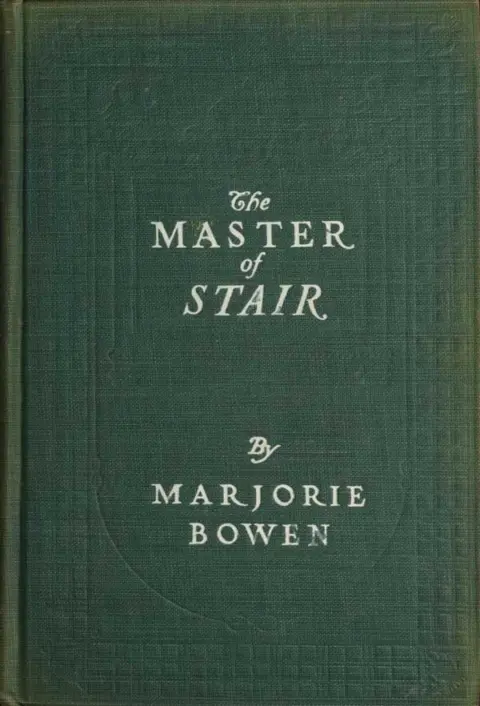
THE CLASSIC COLLECTION · 1907
"The Master of Stair" by Marjorie Bowen is a historical novel written in the early 20th century. The book is set against the backdrop of the harsh and beautiful Scottish Highlands, exploring themes of clan rivalry, loyalty, and the complex socio-political landscape of 17th-century Scotland. Central to the narrative are Ronald Macdonald, a proud Highlander of the Macdonald clan, and Helen Fraser, an enigmatic woman who stirs within him both admiration and conflict. At the start of the story, we are introduced to Ronald Macdonald and his men as they traverse the misty landscape of the Highlands. Shrouded in fog, they are wary of strangers, believing themselves to be perpetually at odds with the rival clan, the Campbells. Ronald’s encounter with a woman in a scarlet coat—initially presumed to be a Campbell—leads to a tense yet intriguing dialogue that reveals a deep-seated animosity between the clans. This incident sets the stage for the themes of ferocity and honor that permeate the book as characters grapple with the legacies of their feuds, and the ramifications of their decisions take shape against the impending unrest of clan politics. As the narrative unfolds, the foundations of loyalty and betrayal seem destined to intertwine.
Introduction adapted from the source catalogue; source summaries may be automatically generated.
Free to read · English · 94,441 words · No account needed
MAKE TIME FOR A GOOD BOOK
On by default. Untick to stop anonymous reading totals. Each page counts after 10 seconds in view. How this works.
Anonymous counting is on unless you have switched it off.
She looked up at him; the sunshine touched his face and his plain dark
attire.
He smiled again.
“Will you be sorry when I leave for France?” he said.
The brown eyes widened.
“Why do you ask?” she murmured faintly.
“My faith—I wondered.”
“Why, sir, do you, can you care whether it matters to me or no?” cried Delia, a little wildly.
“Yes, I care,” he answered.
There was a pause; the singing had ceased. Delia bent her head and rested unseeing eyes upon the bishop’s tombstone.
“You take, sir, a curious tone for a stranger,” she said at last.
“I would not have us strangers, Delia—did not you say the same King, the same faith, the same cause?”
She turned as some one standing on defense.
“What do you mean?”
A slight smile crossed his face; it might have been sadness or
contempt; he leaned heavily against the Abbey wall and his shadow was
over Delia.
“What do I mean?” he repeated; he looked at her in a very gentle manner. “I mean I should like to be in your thoughts sometimes—”
She rose, and her muff fell unnoticed between them.
“Am I in yours?” she asked slowly.
“You have the sweetest face I have ever met,” he said quietly, “Is it likely I should forget you?”
She went very pale and put her hands together in a bewildered way; he surveyed her gravely with a half-sad interest, standing very much at his ease and carelessly while she was tense and painfully still.
“Delia,” he smiled. “Delia.”
She stepped back.
“What is it you want with me?” she said.
He moved from his place. “Do you care for me?” he asked. “Could you
ever care for me?”
She fell back before him. “Oh, why do you ask?” she cried.
His eyes rested on her with a curious expression as of yearning.
“Because I care for you,” he answered. “Don’t you understand, Delia?”
The first notes of the anthem were sounding through the silence as she
answered faintly:
“It cannot be you mean this....”
She sat down heavily and clasped her trembling hands very tightly.
“Well—but if I did mean it?” he inquired.
“If you did mean it?” she whispered, looking up. “Ah, if you did mean
it—”
Her voice died away, she sat silent as if terrified; and now the sun
left him and lay behind her head halo-wise and sparkled in her brown
eyes.
Mr. Wedderburn, looking very intently down at her, bent a little nearer.
“Sweetheart—ye shall answer me,” he said. “Nay, ye shall—”
“Ah, what will you force me to say?” she answered desperately. “What do
you want?”
Your reading position is saved on this browser. Take it to another device with a library code. Reading pages adapt to text, rather than matching a printed edition.
Marjorie Bowen
Marjorie Bowen
Marjorie Bowen
Marjorie Bowen
BEHIND THE BOOK
This eBook is for the use of anyone anywhere in the United States and most other parts of the world at no cost and with almost no restrictions whatsoever. You may copy it, give it away or re-use it under the terms of the Project Gutenberg License included with this eBook or online at www.gutenberg.org. If you are not located in the United States, you will have to check the laws of the country where you are located before using this eBook. Read the source licence.
The original source file, including credits and licence, is retained by this library. Request an original-format copy at no charge. Please include the book title and Project Gutenberg identifier #49979.
KEEP YOUR CURIOSITY GOING
Cécile Tormay

Moritz Busch
Coulson Kernahan
John L. Ransom

Maurice Baring
Frances Wright