THE CLASSIC COLLECTION✦The Countess FannyCLASSIC FREE BOOKS
The Countess Fanny
Marjorie Bowen
THE CLASSIC COLLECTION · 1907
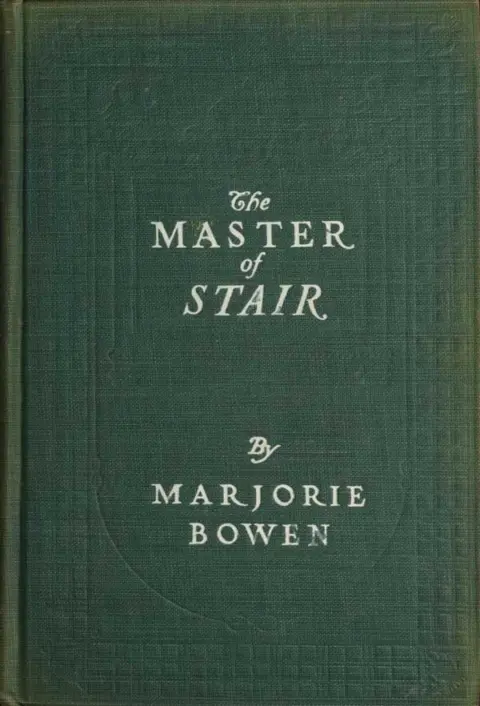
"The Master of Stair" by Marjorie Bowen is a historical novel written in the early 20th century. The book is set against the backdrop of the harsh and beautiful Scottish Highlands, exploring themes of clan rivalry, loyalty, and the complex socio-political landscape of 17th-century Scotland. Central to the narrative are Ronald Macdonald, a proud Highlander of the Macdonald clan, and Helen Fraser, an enigmatic woman who stirs within him both admiration and conflict. At the start of the story, we are introduced to Ronald Macdonald and his men as they traverse the misty landscape of the Highlands. Shrouded in fog, they are wary of strangers, believing themselves to be perpetually at odds with the rival clan, the Campbells. Ronald’s encounter with a woman in a scarlet coat—initially presumed to be a Campbell—leads to a tense yet intriguing dialogue that reveals a deep-seated animosity between the clans. This incident sets the stage for the themes of ferocity and honor that permeate the book as characters grapple with the legacies of their feuds, and the ramifications of their decisions take shape against the impending unrest of clan politics. As the narrative unfolds, the foundations of loyalty and betrayal seem destined to intertwine.
Introduction adapted from the source catalogue; source summaries may be automatically generated.
Free to read · English · 94,441 words · No account needed
MAKE TIME FOR A GOOD BOOK
On by default. Untick to stop anonymous reading totals. Each page counts after 10 seconds in view. How this works.
Anonymous counting is on unless you have switched it off.
But the Earl’s caution had kept him from giving any written pledge to the Jacobites and the knowledge of it steadied him now; he fenced warily with the Viscount’s wiliness and took his leave, more hastily than ceremoniously, leaving the Viscount in a pleasant humor. The little episode delighted him; he chuckled to himself at the thought of Argyll’s face. He pictured that unfortunate gentleman’s agonies as he hurried home; then his smile deepened as he saw still further. Argyll might warn the conspirators that the Master was on their track; they might take fright and escape the net spreading for them; so would the Master’s labor go for nothing; the Viscount finally laughed aloud at the thought of the storm there would be when Sir John found himself outwitted; his was the temper that loves to provoke and then standing aside watch the violence aroused in others.
In these pleasant thoughts he was disturbed by the sound of the opening door and the slow entry of Lady Dalrymple.
At sight of him she hesitated.
“Where is Sir John?” she asked.
The Viscount pointed to the folding door. “In there, with my Lord
Breadalbane.”
She shrank away from the door as if she saw the man behind it.
“What do they talk of?” she asked heavily.
“Why, madam,” he answered dryly, “what business is that of yours?”
She shook her head drearily and crossed to the window; in the gray light of the winter afternoon her face and figure showed one dull whiteness; her pale hair, her white dress and her pallor made her appear ghostlike in the somber room. A few flakes of snow were falling across the leaden sky; Lady Dalrymple stared out at the bleak square and the bare trees.
“Madam, have you no occupation?” asked the Viscount suavely.
“No,” she answered, without looking round.
“There are pleasanter ways of doing nothing,” he observed, “than contemplating a dreariness.”
“My lord—I see nothing else—wherever I look.” She turned her head and her dim blue eyes rested on him.
“An unfortunate disposition,” he remarked.
She came down the room restlessly, her head hanging a little.
“Did you want to see my son?” questioned the Viscount, eying her.
“No,” she answered dully.
“You merely questioned, madam, that you might avoid him?”
Lady Dalrymple lifted her head.
“Perhaps,” she said, with trembling lips.
The Viscount smiled.
“Will you, madam, do me a like service?”
“What?” she asked.
“Avoid me, madam; the house is large enough.”
A faint flush came into her face.
“I strive, my lord, not to trouble you.”
“Madam, you are hardly successful.”
Your reading position is saved on this browser. Take it to another device with a library code. Reading pages adapt to text, rather than matching a printed edition.
Marjorie Bowen
Marjorie Bowen
Marjorie Bowen
Marjorie Bowen
BEHIND THE BOOK
This eBook is for the use of anyone anywhere in the United States and most other parts of the world at no cost and with almost no restrictions whatsoever. You may copy it, give it away or re-use it under the terms of the Project Gutenberg License included with this eBook or online at www.gutenberg.org. If you are not located in the United States, you will have to check the laws of the country where you are located before using this eBook. Read the source licence.
The original source file, including credits and licence, is retained by this library. Request an original-format copy at no charge. Please include the book title and Project Gutenberg identifier #49979.
KEEP YOUR CURIOSITY GOING
Cécile Tormay

Moritz Busch
Coulson Kernahan
John L. Ransom

Maurice Baring
Frances Wright