
The Writing of News A Handbook with Chapters on Newspaper Correspondence and Copy Reading
Charles G. (Charles Griffith) Ross
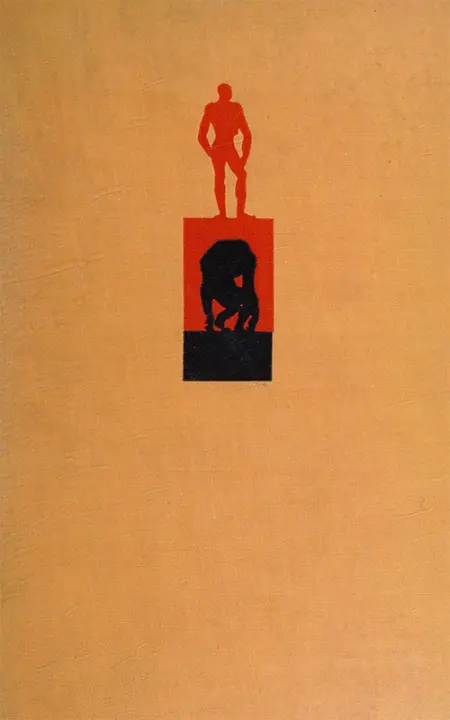
THE CLASSIC COLLECTION · 1929
"The master of destiny" by Frederick Tilney is a scientific publication written in the early 20th century. Framed as a “biography of the brain,” it surveys the brain’s evolutionary rise from the simplest life to modern humanity, explaining how neural development, senses, and the neocortex underpin civilization and urging education and reason as the means to guide our collective future.
The opening of the book presents a forceful foreword calling scientists to speak plainly to the public and to center the brain as the “master organ” whose training determines human progress or disaster. It then traces the brain’s origin: from single-celled organisms to colonial forms with division of labor, to sponges with primitive muscles, to nerve nets in hydra and the first centralization in jellyfish; onward to head formation in flatworms, sophisticated yet limited arthropod systems, and the decisive vertebrate line (fish to amphibians to reptiles to birds to mammals) culminating in the mammalian neocortex. Alongside a sweeping geologic backdrop, it marshals evidence for evolution from comparative anatomy, blood, embryology, and the senses, introducing the “sense combiner” concept and showing how hearing, sight, touch, smell, and body sense progressively centralize in the forebrain. At the start of the historical arc of humanity, it sketches early humans and their antiquity, profiles key fossils (Java ape-man, Piltdown, Heidelberg, Neanderthal), and outlines Paleolithic cultures and tools, highlighting the Mousterian shift to cave dwelling as a seed of property and social organization.
Introduction adapted from the source catalogue; source summaries may be automatically generated.
Free to read · English · 89,156 words · No account needed
MAKE TIME FOR A GOOD BOOK
On by default. Untick to stop anonymous reading totals. Each page counts after 10 seconds in view. How this works.
Anonymous counting is on unless you have switched it off.
Even better known are the several acts in the cycle of the plasmodium malaria. This protozoan animal is often borne by the Anopheles mosquito and injected into the blood of man. Then follows the familiar series of pathological events consisting of chill, fever, and sweat, called malaria. In certain respects it seems like retributive justice when this animal is injected into the body of man to cure the effects produced by another microörganism. The other organism is the spirochæte which causes syphilis. It often produces changes which destroy the human brain in consequence of a disease known as paresis. Many other protozoan animals are parasites, but in the main they live and have lived simple, unobtrusive lives.
Notwithstanding their apparent simplicity of structure and action, these minute animals, like all other things, have been subject to the influence of continuous change. They have responded to this influence in different ways. In many instances, through generations of reproduction, they have effected combinations and recombinations of their essential constituents out of which have emerged modifications of their original structure. Often these changes have proved progressive and contributed to more complex modes of living. Often they have been regressive or non-progressive. It was the progressive modifications in these earliest animals that were of utmost importance to the origin of the brain. This organ was not yet in sight, but adaptations working toward it were soon to appear.
Critical Changes in Animal Existence
In the course of time certain critical changes took place in the lowly scheme of animal existence. These were distinctly progressive changes. Some of the single-cell animals began to live in colonies. Circumstances thus conferred upon them a community life. They began to exist in close contact with others like themselves and were compelled to forego their simple, independent habits. They were, in fact, actually joined to each other by rather slender bonds of their own vital substance--protoplasm. This was an epochal stride forward. It was the first step which led to progress. In some instances it brought about entirely new relations between these animals and the world in which they lived. Now, since these small cells were grouped together as colonies, each individual cell lost much of its own independence. Its interests became, in some degree at least, the interests of the group. If, as a single cell by itself, it had been thoroughly self-contained, now it was necessary for it to follow the needs and inclinations of its neighbours. It was forced to observe the conventions and habits of its colony. This condition of affairs exists in what are known as the colonized protozoans. In addition to the advantages of community life there was another and far more important reason why this new kind of existence was a critical step. It introduced for the first time the principle of differentiation or class distinction. A division of labour was thus made possible. Some of the cells in each group were forced to take up positions on the outer surface of the colony. Others occupied places inside of the group. This arrangement immediately created a distinction between “outer cells” and “inner cells.” It was destined to have far-reaching consequences because it established a difference in the responsibilities of two great classes. The outer cells made an immediate and direct contact with the world. They were nearest to the water, to the light, and to all of the outer chemical substances necessary for living. They were like guards and outposts about a camp, defending the colony from adverse influences. They might be likened to the first line of battle in the aggressive struggles for life, acting as foragers and procurers of food. The rôle of the inner cells was different. Their contacts with the world were more indirect and established largely through the outer cells. Their offices were especially confined to the inner workings of the colony. They became the germ cells whose function it was to insure the immortality of the species. This arrangement was a momentous advance in the direction of progress. It was particularly momentous because it laid the foundations upon which all of the great developments in the animal world were to be built. In a certain way, it was also a prophecy, for it foretold the coming of animals that were to follow the protozoans. These newcomers, the metazoans (animals which came after the first forms of animal life), were to possess a body with outer cells engaged chiefly in the efforts of life, while the inner cells would be particularly concerned with the essence of living, such, for example, as digestion, assimilation, and circulation.
Your reading position is saved on this browser. Take it to another device with a library code. Reading pages adapt to text, rather than matching a printed edition.
BEHIND THE BOOK
This eBook is for the use of anyone anywhere in the United States and most other parts of the world at no cost and with almost no restrictions whatsoever. You may copy it, give it away or re-use it under the terms of the Project Gutenberg License included with this eBook or online at www.gutenberg.org. If you are not located in the United States, you will have to check the laws of the country where you are located before using this eBook. Read the source licence.
The original source file, including credits and licence, is retained by this library. Request an original-format copy at no charge. Please include the book title and Project Gutenberg identifier #78733.
KEEP YOUR CURIOSITY GOING
Charles G. (Charles Griffith) Ross
Hannah Webster Foster

Emily Lawless
Edwin Hamlin Carr

Charles De Lano Hine
Andrew Ure