
The Writing of News A Handbook with Chapters on Newspaper Correspondence and Copy Reading
Charles G. (Charles Griffith) Ross
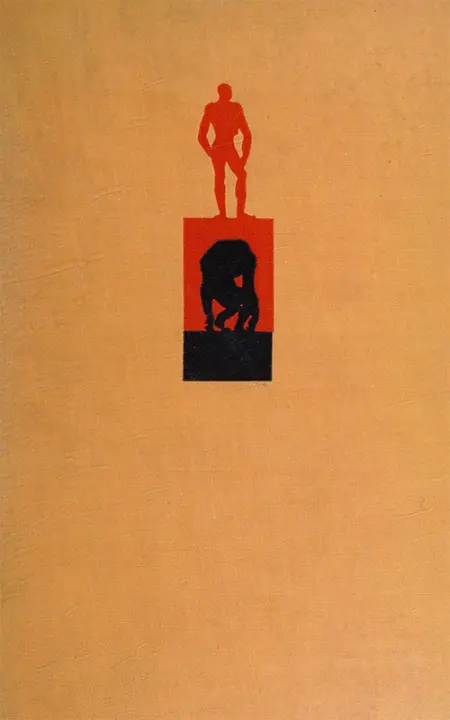
THE CLASSIC COLLECTION · 1929
"The master of destiny" by Frederick Tilney is a scientific publication written in the early 20th century. Framed as a “biography of the brain,” it surveys the brain’s evolutionary rise from the simplest life to modern humanity, explaining how neural development, senses, and the neocortex underpin civilization and urging education and reason as the means to guide our collective future.
The opening of the book presents a forceful foreword calling scientists to speak plainly to the public and to center the brain as the “master organ” whose training determines human progress or disaster. It then traces the brain’s origin: from single-celled organisms to colonial forms with division of labor, to sponges with primitive muscles, to nerve nets in hydra and the first centralization in jellyfish; onward to head formation in flatworms, sophisticated yet limited arthropod systems, and the decisive vertebrate line (fish to amphibians to reptiles to birds to mammals) culminating in the mammalian neocortex. Alongside a sweeping geologic backdrop, it marshals evidence for evolution from comparative anatomy, blood, embryology, and the senses, introducing the “sense combiner” concept and showing how hearing, sight, touch, smell, and body sense progressively centralize in the forebrain. At the start of the historical arc of humanity, it sketches early humans and their antiquity, profiles key fossils (Java ape-man, Piltdown, Heidelberg, Neanderthal), and outlines Paleolithic cultures and tools, highlighting the Mousterian shift to cave dwelling as a seed of property and social organization.
Introduction adapted from the source catalogue; source summaries may be automatically generated.
Free to read · English · 89,156 words · No account needed
MAKE TIME FOR A GOOD BOOK
On by default. Untick to stop anonymous reading totals. Each page counts after 10 seconds in view. How this works.
Anonymous counting is on unless you have switched it off.
The Cult of Success
By education man has likewise endeavoured to moderate the recognized liabilities of his frontal lobe. But, like his customs, his education has varied with the fashions of his time and place. With one brilliant exception educational processes have too strictly been confined to technological training, or to the inculcation of traditional cultures or mediæval scholasticism. The ancient Greek alone dealt with his life and its problems as we well might with ours. We are imitators and large users of secondhand materials. He was an originator. His education was an adventure of discovery, an absorbing search for the understanding of what constituted the good life. Largely without traditions and upon his own initiative he endeavoured to gain a critical attitude toward all of his prejudices, to liberate himself from the dominance of herd influence, and to adjust his conduct most intelligently for the welfare of the state.
Modern education is especially in a state of confusion. It is almost wholly devoid of any broader theme than that embraced in the purpose to teach the individual the formulas necessary to make good. There is little effort to inspire a larger point of view, to instill an understanding of life’s values, an appreciation of its relations, and of its truly human opportunities for intelligent living.
Philosophy, religion, societal order, government, and education have failed to produce any entirely satisfactory solution of life. They have scarcely recognized the existence of the frontal lobe, but, looking beyond it to some intangible sources of power, they have neither capitalized its assets nor reckoned with its liabilities. There is probably a cause of long standing behind these several failures. For centuries and ages the incentives of human efforts, even the best, have laboured under a contaminating influence. This influence has touched and tainted every aspect of life. During thousands of years men have struggled to make good in Europe. The result has always been the same. From time to time some section of the race has succeeded, later to weaken, and in the end to succumb. In the past an invariable cycle of rise, decline, and fall has dictated the course of life in Europe. Such was the lot of the Neanderthals. Cromagnon and Neolithic men both had their days of success and of disappearance. It was not different with the Greeks or the Romans who rose and finally, under this spell of Europe, passed into decline. In many respects the motive at work in this destructive cycle seemed to act like some evil influence. It was already well developed in the first trading exploits of the Phœnicians. With them it began to migrate westward from harbour to harbour along the Mediterranean. It implanted the germs of its spreading infection, which came to be the dominant spirit of civilization--gold and a price for everything. Nothing escaped the effects of this new standardization of human enterprise. The pioneer Phœnicians carried this gold standard of life far beyond the Pillars of Hercules to the shores of Britain until it spread throughout Europe. The source of this influence lies far back of these earlier civilizations. It had its origin in those primitive days when Mousterian cave man tasted the first drafts of power. The use of this power he justified by one standard only--success. For three hundred thousand years the human brain has been conditioned by this influence. Power increased, successes multiplied, and the passion for possession became a frenzy. Thus it was that those whom the gods would destroy they first made rich; and thus also one civilization after another met its destruction. No other solution can be worked out on this standard of existence. It will serve to exploit nature, including human nature. It may bend the natural forces one after another to man’s bidding. It may make him master of the entire world except in one superlative detail--himself. In proportion as it has been concentrated upon the conquest of the earth, it has had little time for the mastery of the spirit. The old idea is still at work with us to-day. We have found nothing new, nothing better. We scarcely attempt to look. It is now our ruling passion. It has been the contaminating influence which has for ages frustrated the best human efforts.
Your reading position is saved on this browser. Take it to another device with a library code. Reading pages adapt to text, rather than matching a printed edition.
BEHIND THE BOOK
This eBook is for the use of anyone anywhere in the United States and most other parts of the world at no cost and with almost no restrictions whatsoever. You may copy it, give it away or re-use it under the terms of the Project Gutenberg License included with this eBook or online at www.gutenberg.org. If you are not located in the United States, you will have to check the laws of the country where you are located before using this eBook. Read the source licence.
The original source file, including credits and licence, is retained by this library. Request an original-format copy at no charge. Please include the book title and Project Gutenberg identifier #78733.
KEEP YOUR CURIOSITY GOING
Charles G. (Charles Griffith) Ross
Hannah Webster Foster

Emily Lawless
Edwin Hamlin Carr

Charles De Lano Hine
Andrew Ure