
The Writing of News A Handbook with Chapters on Newspaper Correspondence and Copy Reading
Charles G. (Charles Griffith) Ross
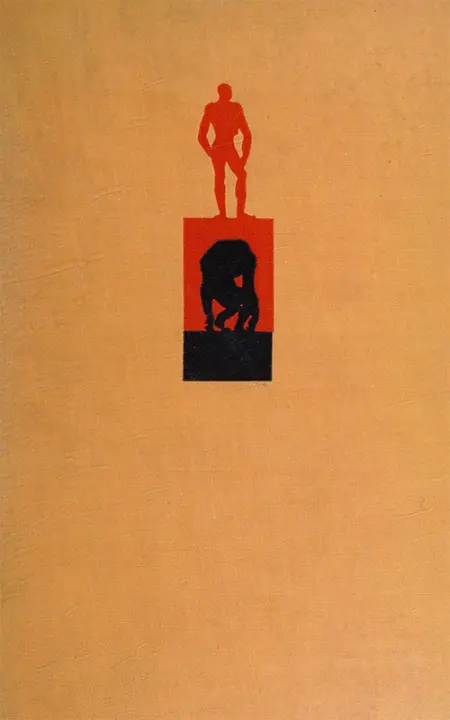
THE CLASSIC COLLECTION · 1929
"The master of destiny" by Frederick Tilney is a scientific publication written in the early 20th century. Framed as a “biography of the brain,” it surveys the brain’s evolutionary rise from the simplest life to modern humanity, explaining how neural development, senses, and the neocortex underpin civilization and urging education and reason as the means to guide our collective future.
The opening of the book presents a forceful foreword calling scientists to speak plainly to the public and to center the brain as the “master organ” whose training determines human progress or disaster. It then traces the brain’s origin: from single-celled organisms to colonial forms with division of labor, to sponges with primitive muscles, to nerve nets in hydra and the first centralization in jellyfish; onward to head formation in flatworms, sophisticated yet limited arthropod systems, and the decisive vertebrate line (fish to amphibians to reptiles to birds to mammals) culminating in the mammalian neocortex. Alongside a sweeping geologic backdrop, it marshals evidence for evolution from comparative anatomy, blood, embryology, and the senses, introducing the “sense combiner” concept and showing how hearing, sight, touch, smell, and body sense progressively centralize in the forebrain. At the start of the historical arc of humanity, it sketches early humans and their antiquity, profiles key fossils (Java ape-man, Piltdown, Heidelberg, Neanderthal), and outlines Paleolithic cultures and tools, highlighting the Mousterian shift to cave dwelling as a seed of property and social organization.
Introduction adapted from the source catalogue; source summaries may be automatically generated.
Free to read · English · 89,156 words · No account needed
MAKE TIME FOR A GOOD BOOK
On by default. Untick to stop anonymous reading totals. Each page counts after 10 seconds in view. How this works.
Anonymous counting is on unless you have switched it off.
Such interludes as these in the course of man’s happiness and peace may perhaps be regarded as unfortunate digressions from the scheme of human behaviour. Their apology lies in the fact that they belong to other times by contrast with which we have shown great improvement. We are much changed for the better--so much changed that many of these appalling episodes of history could not occur in this day. Reassurance of this kind may comfort us, but it does not provide us with protection against ourselves. For with due provocations of circumstance and time there is no guarantee that we would not repeat or even amplify the ghastly delinquencies of the past. The pride we feel in our modern progress and prosperity elevates us to a plane of conscious superiority. And yet this same pride experienced a sickening collapse when no later than our own day and generation it was forced to witness a phenomenon of eruptive brutality compared to which all former warfare was insignificant. In spite of this recent experience we feel sure of ourselves, confident in the great capacities which have made us men. We possess this confidence, however unenlightened we may be concerning the real power upon which we depend, especially as to its source, its nature, its possibilities, and its proper management.
Compounding the Essential Impulses of Life
As no other members of the animal kingdom, we have compounded each one of the essential impulses of life. Through our frontal mechanisms we have raised these primitive drives to the most elevated planes of consciousness. We have increased their clarity to the highest degree. It was doubtless the introduction of symbols which first secured this greater clarity. Later the development of spoken language established the universal medium of exchange within the brain. Lower animals evidently do not learn to speak. They only acquire the use of beast cries by which to transmit warnings, sex invitations, or challenges to combat. Such specific cries modified by the structural adjustments of man may have been sufficient for the simple human language of earliest times. There seems to be no actual barrier between the vocal activities of birds, dogs, apes, and men except that superior mechanism of speech provided by a progressively developing frontal lobe. From its first introduction language was a societal phenomenon. All of its products were likewise societal. If it raised man as an individual, its greatest profits appeared in the elevation of the social order. Under this new influence the primitive impulses of hunger, herding, mating, avoiding, and the rest entered into complex combinations. In consequence, each primordial drive was converted into a thriving industry in the interest of further human satisfaction. Excessive growth in these industries soon manifested many dangerous tendencies. New human expansions developed out of the primitive impulse of hunger under the added opportunities of the frontal lobe. Appetite and indulgence with their tendencies toward excess came in conflict with sumptuary restrictions and prohibitions. The effects of frontal expansion upon the herding impulse contributed to the development of crime, to the creation of mass phenomena under the influence of fear, hate, and hope, to the epidemic spread of group manias and popular delusions such as were the pilgrimages, crusades, and demonism of the Middle Ages, such as was the extremity of ruthlessness manifested in the last great war. The extension of the sex impulse through the mechanisms of the frontal lobe is incalculable. From it have come crops of asceticism and licentiousness, of poetry and sentimentality, of social order and disorder, of philosophy and pure bunkum. The expansion of impulses underlying the avoiding reactions has produced an unescapable blight upon human life due to the extensive corticalization of fear. The fear of bondage or slavery, of tyranny or cruelty, is no longer upon us. A multitude of more subtle fears, engendered by modern civilization, have produced our phobias, our irresistible compulsions, and our great variety of somatic and psychic anxieties.
Your reading position is saved on this browser. Take it to another device with a library code. Reading pages adapt to text, rather than matching a printed edition.
BEHIND THE BOOK
This eBook is for the use of anyone anywhere in the United States and most other parts of the world at no cost and with almost no restrictions whatsoever. You may copy it, give it away or re-use it under the terms of the Project Gutenberg License included with this eBook or online at www.gutenberg.org. If you are not located in the United States, you will have to check the laws of the country where you are located before using this eBook. Read the source licence.
The original source file, including credits and licence, is retained by this library. Request an original-format copy at no charge. Please include the book title and Project Gutenberg identifier #78733.
KEEP YOUR CURIOSITY GOING
Charles G. (Charles Griffith) Ross
Hannah Webster Foster

Emily Lawless
Edwin Hamlin Carr

Charles De Lano Hine
Andrew Ure