THE CLASSIC COLLECTION✦A dead man’s diaryCLASSIC FREE BOOKS
A dead man’s diary
Coulson Kernahan
THE CLASSIC COLLECTION · 1910
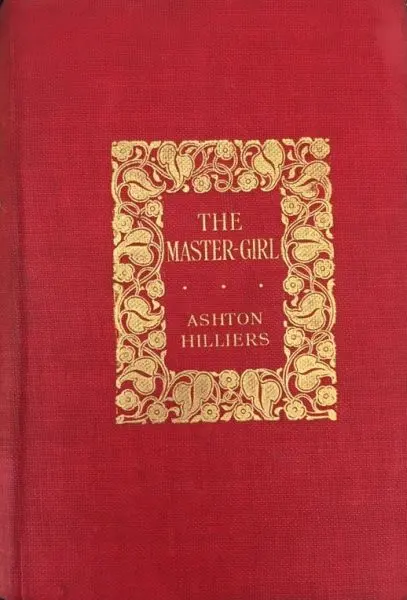
"The Master-Girl" by Ashton Hilliers is a novel written in the early 20th century. The story follows Dêh-Yān, a young woman of the Little Moons tribe, who is strong, capable, and often burdened by the expectations of her gender in a primitive society. As she navigates the challenges of life, she finds herself drawn to a wounded enemy, Pŭl-Yūn, leading to a series of transformative events that challenge the conventions of her world. The opening of the book introduces us to the characters Dêh-Yān and Pŭl-Yūn against the backdrop of their harsh, prehistoric environment. Dêh-Yān is initially in a position of authority over the younger girls in her tribe, revealing her competence in survival skills such as hunting and gathering. When she encounters Pŭl-Yūn, who is stranded and injured, she faces a choice between her tribal customs and her instincts. The narrative establishes a tense yet adventurous dynamic between the two characters, setting the stage for themes of gender roles, survival, and the confrontation of societal norms as their relationship develops amid the primal threat of the elements and predators.
Introduction adapted from the source catalogue; source summaries may be automatically generated.
Free to read · English · 48,046 words · No account needed
MAKE TIME FOR A GOOD BOOK
On by default. Untick to stop anonymous reading totals. Each page counts after 10 seconds in view. How this works.
Anonymous counting is on unless you have switched it off.
At night Pŭl-Yūn, as he bade her call him, groaned in sleep. By daylight his wife would examine his hurt. The limb was sufficiently wasted to show the overlapping of the bones. It was a simple fracture of the fibula, and the muscle was enfeebled enough to tempt her to put into practice the woman's lore learnt of the old chiefs head-wife.
"Hold to the rock--hard--I shall pull." He braced himself, she drew with slow power and felt the limb give, then, venting pent breath, relaxed and heard the broken ends of the bone cluck neighbourly as they came to a renewed understanding.
"Now, lie upon your sound side, and the leg will keep its shape."
Her man took breath, for the operation had hurt him abominably, albeit he had not let the least little moan. "O woman, what talk is this?--It is a moon-and-a-half of a matter before broken leg-bone knits strongly; how am I to keep it in one shape so long?--when I am sleeping, say? Wah! You are very clever, but I shall break it again before morning."
The girl thought hard, sitting at the entrance of the cave and studying the curve of the young moon just visible, afloat in the darkening blue, her people's totem and her own, and her favourite object among the heavenly host. "O Moon, Little Moon, teach me to medicine my man!" she murmured. "Here are not the things which we of your people use in such a case. This cave-floor is hard rock, I cannot drive little pegs to keep the limb in place, nor while this frost holds can I dig clay to make a mould to hold it firm. What shall I do for him, O Little Moon?"
And, behold it came, a Thought, an Expedient, bright and wonderfully simple, and perfectly novel and practicable. Arising without a word, she fetched six straight hazel wands, and, having wound the limb carefully in a deer's hide, bound it within a cradle of splints. 'Twas new practice, she had never seen nor heard of such work before, nor had her man, but he let her have her way with him, for he was not only very weak and weary, but the fellow saw that he had fallen into the hands of a wise woman. We, too, are by way of recognising that here was that rare and invaluable creature, a born inventor. Such are of altogether incalculable value to the race. And, bethink you, how seldom do they appear. Our own age, verily an age of miracles, is altogether exceptional; never in the whole course of man's history has there been such a time. Dimly one descries a period, the so-called Second Dynasty, when the Egyptian brain, then young and new and plastic, scintillated once in a century or so, admirable inventions, the wedge, the lever, inclined plane, wheel-and-axle, but who invented anything since until our own day?--Gunpowder and printing, the arch, and steel, the mariner's compass, you'll remind me, and what else in the course of six thousand years? Within the memory of living men if an Oxford don wanted light in haste he had recourse to flint and steel and an oil lamp. If he wished to reach London in haste a good horse was his best servant. Rameses the Great would have done no otherwise in either emergency. Most of earth's greatest men have harboured an inexplicable prejudice against inventors, the Greek philosophers, for instance; even the greatest generals in history would trust nothing that was new, Alexander, Hannibal, Marlborough conquered with the ordinary weapons of their day; Wellington distrusted the rocket and preferred Brown Bess to the rifle, Napoleon (fortunately for Liberty and England), sneered at inventions and had a nickname for inventors.
Your reading position is saved on this browser. Take it to another device with a library code. Reading pages adapt to text, rather than matching a printed edition.
BEHIND THE BOOK
This eBook is for the use of anyone anywhere in the United States and most other parts of the world at no cost and with almost no restrictions whatsoever. You may copy it, give it away or re-use it under the terms of the Project Gutenberg License included with this eBook or online at www.gutenberg.org. If you are not located in the United States, you will have to check the laws of the country where you are located before using this eBook. Read the source licence.
The original source file, including credits and licence, is retained by this library. Request an original-format copy at no charge. Please include the book title and Project Gutenberg identifier #59039.
KEEP YOUR CURIOSITY GOING
Coulson Kernahan

Maurice Baring
Frances Wright
Cécile Tormay

Frederic Jesup Stimson

W. H. P. (William Henry Pope) Jarvis