
Jinny the Carrier
Israel Zangwill
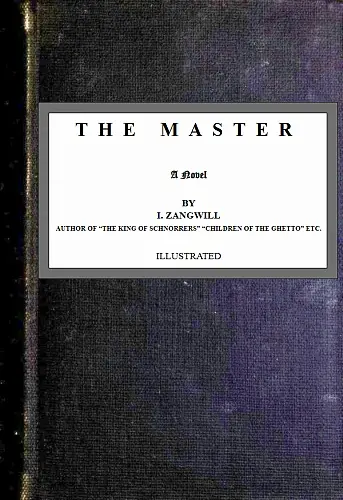
THE CLASSIC COLLECTION · 1895
"The Master" by Israel Zangwill is a novel written in the late 19th century. The story revolves around the life of young Matt Strang, who faces the struggles of growing up in a rural Nova Scotia family afflicted by poverty and loss. The novel explores themes of family dynamics, personal aspirations, and the pursuit of artistic expression against the backdrop of a harsh, unforgiving landscape. The opening of the novel introduces readers to the Strang family, highlighting the challenges they face following the death of Matt's father, a sailor who dies at sea. The narrative begins in the cold winter of Acadia, where the family deals with their grief while also confronting the practicalities of survival. Matt, who has artistic talents, grapples with the reality of his circumstances, taking on the role of caretaker for his siblings as they navigate their mother's emotional turmoil and the looming responsibility of paying off the family mortgage. The source of much of their distress is their mother’s erratic behavior, which leads to dramatic confrontations, as well as Matt's internal struggles as he seeks to find a balance between duty to his family and his longing for creative fulfillment.
Introduction adapted from the source catalogue; source summaries may be automatically generated.
Free to read · English · 192,829 words · No account needed
MAKE TIME FOR A GOOD BOOK
On by default. Untick to stop anonymous reading totals. Each page counts after 10 seconds in view. How this works.
Anonymous counting is on unless you have switched it off.
Despite its long stretch of winter, in which May might wed December in no incompatible union, ’twas a happy soil, this Acadia, a country of good air and great spaces; two-thirds of the size of Scotland, with a population that could be packed away in a corner of Glasgow; a land of green forests and rosy cheeks; a land of milk and molasses; a land of little hills and great harbors, of rich valleys and lovely lakes, of overflowing rivers and oversurging tides that, with all their menace, did but fertilize the meadows with red silt and alluvial mud; a land over which France and England might well bicker when first they met oversea; a land which, if it never reached the restless energy of the States, never retained the Old World atmosphere that long lingered over New England villages; save here and there in some rare Acadian settlement that dreamed out its life in peace and prayer among its willow-trees and in the shadows of its orchards.
At Minudie, at Clare in Annapolis County, where the goodly apples grew, lay such fragments of old France, simple communities shutting out the world and time, marrying their own, tilling their good dyke land, and picking up the shad that the retreating tide left on the exposed flats; listening to the Angelus, and baring their heads as some Church procession passed through the drowsy streets. They had escaped the Great Expulsion, nor had joined in the exodus of “Evangeline,” and, sprinkled about the country, were compatriots of theirs who had drifted back when the times grew more sedate; but for the most part it was the Saxon that profited by the labors of the pioneer Gaul, repairing the tumble-down farms and the dilapidated dykes, possessing himself of embanked marsh lands, and replanting the plum-trees and the quinces his predecessor had naturalized. For the revolt of the States against Britain sent thousands of American loyalists flocking into this “New Scotland,” which thus became a colony of “New England.” Scots themselves flowed in from auld Scotland, and the German came to sink himself in the Briton, and a band of Irish adventurers, under the swashbuckling Colonel McNutt, arrived with a grant of a million acres that they were not destined to occupy. The Acadian repose had fled forever. The sparse Indian hastened to make himself scarcer, conscious there was no place for him in the new order, and disappearing deliciously in hogsheads of rum. The virgin greenwood rang with axes, startling the bear and the moose. Crash! Down went pine and beech, hemlock and maple, their stumps alone left to rot and enrich the fields. Crash!--thud! The weasel grew warier, the astonished musquash vanished in eddying circles. Bridges began to span the rivers where the beaver built its dams in happy unconsciousness of the tall cylinder that was about to crown civilization. The caribou and the silver fox pressed inland to save their skins. The snare was set in the wild-wood, and the crack of the musket followed the ring of the axe. The mackerel and the herring sought destruction in shoals, and the seines brimmed over with salmon and alewives and gaspereux. The wild land that had bloomed with golden-rod and violets was tamed with crops, and plump sheep and fat oxen pastured where the wild strawberry vine had trailed or the bull-frog had croaked under the alders. A sturdy, ingenious race the fathers of the new settlement, loving work almost as much as they feared God; turning their hand to anything, and opening it wide to the stranger. They raised their own houses, and fashioned their own tools, and shod their own horses, and later built their own vessels, and even sailed them to the great markets laden with the produce of their own fields and the timber from their own saw-mills. There were women in this workaday paradise--shapely, gentle creatures, whose hands alone were rough with field and house-work; women who span and sang when the winter night-winds whistled round the settlement. The dramas of love and grief began to play themselves out where the raccoon and the chickadee had fleeted the golden hours in careless living. Children came to make the rafters habitable, and Death to sanctify them with memories. The air grew human with the smoke of hearths, the forest with legends and histories. And as houses grew into homes and villages into townships, Church and State arose where only Faith and Freedom had been.
Your reading position is saved on this browser. Take it to another device with a library code. Reading pages adapt to text, rather than matching a printed edition.
Israel Zangwill

Israel Zangwill
Israel Zangwill
Israel Zangwill
BEHIND THE BOOK
This eBook is for the use of anyone anywhere in the United States and most other parts of the world at no cost and with almost no restrictions whatsoever. You may copy it, give it away or re-use it under the terms of the Project Gutenberg License included with this eBook or online at www.gutenberg.org. If you are not located in the United States, you will have to check the laws of the country where you are located before using this eBook. Read the source licence.
The original source file, including credits and licence, is retained by this library. Request an original-format copy at no charge. Please include the book title and Project Gutenberg identifier #49795.
KEEP YOUR CURIOSITY GOING
Coulson Kernahan

Maurice Baring
Frances Wright
Cécile Tormay

Frederic Jesup Stimson

W. H. P. (William Henry Pope) Jarvis