Trilby
George Du Maurier
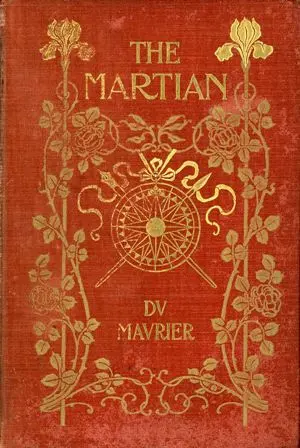
THE CLASSIC COLLECTION · 1896
"The Martian: A Novel" by George Du Maurier is a largely autobiographical novel published in 1898. It follows Barty Josselin from his Paris school days through a spiritual awakening that transforms his life. After losing his vision and contemplating suicide, Barty encounters Martia, a guardian spirit from Mars who guides him toward literary success and influences his romantic choices. This introspective tale explores friendship, destiny, and the mysterious connection between earthly existence and otherworldly guidance.
Introduction adapted from the source catalogue; source summaries may be automatically generated.
Free to read · English · 128,278 words · No account needed
MAKE TIME FOR A GOOD BOOK
On by default. Untick to stop anonymous reading totals. Each page counts after 10 seconds in view. How this works.
Anonymous counting is on unless you have switched it off.
"But for thy royal beauty
Be humble, I pray thee.
Here all things die, flower, summer,
Youth and life:
Soon, soon the day will be,
My fair one, when they'll carry thee
Faded and pale in a winding-sheet."
418, 19. perissoires--paddle-boats.
pique-tetes--diving-boards.
418, 21. station balneaire--bathing resort.
419, 25. utile dulci--the useful with the pleasant.
420, 9. la chasse aux souvenirs--the hunt after remembrances.
420, 25, s'est encanaille--keeps low company.
422, 25. porte-cochere--carriage entrance.
423, 1. "Ah, ma foi!... la balle au camp"--"Ah, my word, I understand that, gentlemen--I, too, was a school-boy once, and was fond of rounders."
423, 11. Le Fils de la Vierge--The Virgin's Son.
423, 12. mutatis mutandis--the necessary changes being made.
423, 34. "Moi aussi, je fumais ... n'est ce pas?"--"I too smoked when it was forbidden; what do you expect? Youth must have its day, musn't it?"
424, 3. dame--indeed.
425, 30. cour des miracles--the court of miracles. (A meeting-place of beggars described in Hugo's "Notre Dame de Paris." So called on account of the sudden change in the appearance of the pretended cripples who came there.)
426, 16. "O dis-donc, Hortense," etc.--"Oh say, Hortense, how cold it is! whenever will it be eleven o'clock, so that we can go to bed?"
428, 5. nous autres--we others.
428, 22. Numero Deus impare gaudet--The god delights in uneven
numbers.
430, 22. "Aus meinen Thraenen spriessen," etc.
"Out of my tear-drops springeth
A harvest of beautiful flowers;
And my sighing turneth
To a choir of nightingales."
Heine.
435, 24. Ah, mon Dieu!--Ah, my God!
437, 34. Etablissement--establishment.
439, 31. Pandore et sa Boite--Pandore and her Box.
441, 12. "C'est papa qui paie et maman qui regale"--"Papa pays and
mamma treats."
445, 8. au grande trot--at a full trot.
447, 12. Nous etions bien, la--We were well, there.
447, 21. l'homme propose--man proposes.
448, 1. "O tempo passato, perche non ritorni?"--"O bygone days, why do you not return?"
448, 7. "Et je m'en vais," etc.
"And off I go
On the evil wind
Which carries me
Here and there
Like the
Leaf that is dead."
Your reading position is saved on this browser. Take it to another device with a library code. Reading pages adapt to text, rather than matching a printed edition.
George Du Maurier
George Du Maurier
George Du Maurier
George Du Maurier
BEHIND THE BOOK
This eBook is for the use of anyone anywhere in the United States and most other parts of the world at no cost and with almost no restrictions whatsoever. You may copy it, give it away or re-use it under the terms of the Project Gutenberg License included with this eBook or online at www.gutenberg.org. If you are not located in the United States, you will have to check the laws of the country where you are located before using this eBook. Read the source licence.
The original source file, including credits and licence, is retained by this library. Request an original-format copy at no charge. Please include the book title and Project Gutenberg identifier #27400.
KEEP YOUR CURIOSITY GOING
Coulson Kernahan

Maurice Baring
Frances Wright
Cécile Tormay

Frederic Jesup Stimson

W. H. P. (William Henry Pope) Jarvis