
Trilby
George Du Maurier
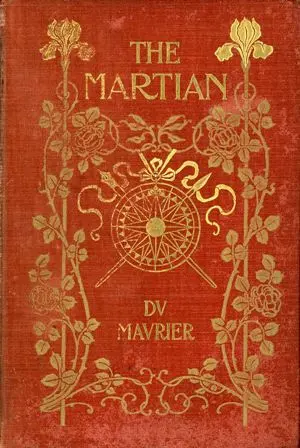
THE CLASSIC COLLECTION · 1896
"The Martian: A Novel" by George Du Maurier is a largely autobiographical novel published in 1898. It follows Barty Josselin from his Paris school days through a spiritual awakening that transforms his life. After losing his vision and contemplating suicide, Barty encounters Martia, a guardian spirit from Mars who guides him toward literary success and influences his romantic choices. This introspective tale explores friendship, destiny, and the mysterious connection between earthly existence and otherworldly guidance.
Introduction adapted from the source catalogue; source summaries may be automatically generated.
Free to read · English · 128,278 words · No account needed
MAKE TIME FOR A GOOD BOOK
On by default. Untick to stop anonymous reading totals. Each page counts after 10 seconds in view. How this works.
Anonymous counting is on unless you have switched it off.
Never but once did she give way. It was one June evening, when I was reading to her some favorite short poems out of Browning's Men and Women on a small lawn surrounded with roses, and of which she was fond.
The rest of the family were on the river, except her father and mother, who were dressing to go and dine with some neighbors; for a wonder, as they seldom dined away from home.
The carriage drove up to the door to fetch them, and they came out on the lawn to wish us good-night.
Never had I been more struck with the splendor of Barty and his wife, now verging towards middle age, as they bent over to kiss their daughter, and he cut capers and cracked little jokes to make her laugh.
Leah's hair was slightly gray and her magnificent figure somewhat matronly, but there were no other signs of autumn; her beautiful white skin was still as delicate as a baby's, her jet-black eyes as bright and full, her teeth just as they were thirty years back.
Tall as she was, her husband towered over her, the finest and handsomest man of his age I have ever seen. And Marty gazed after them with her heart in her eyes as they drove off.
"How splendid they are, Uncle Bob!"
Then she looked down at her own shrunken figure and limbs--her long,
wasted legs and her thin, slight feet that were yet so beautifully
shaped.
And, hiding her face in her hands, she began to cry:
"And I'm their poor little daughter--oh dear, oh dear!"
She wept silently for a while, and I said nothing, but endured an agony such as I cannot describe.
Then she dried her eyes and smiled, and said:
"What a goose I am," and, looking at me--
"Oh! Uncle Bob, forgive me; I've made you very unhappy--it shall
never happen again!"
Suddenly the spirit moved me to tell her the story of Martia.
Leah and Barty and I had often discussed whether she should be told this extraordinary thing, in which we never knew whether to believe or not, and which, if there were a possibility of its being true, concerned Marty so directly.
They settled that they would leave it entirely to me--to tell her or
not, as my own instinct would prompt me, should the opportunity
occur.
My instinct prompted me to do so now. I shall not forget that
evening.
Your reading position is saved on this browser. Take it to another device with a library code. Reading pages adapt to text, rather than matching a printed edition.
George Du Maurier

George Du Maurier
George Du Maurier
George Du Maurier
BEHIND THE BOOK
This eBook is for the use of anyone anywhere in the United States and most other parts of the world at no cost and with almost no restrictions whatsoever. You may copy it, give it away or re-use it under the terms of the Project Gutenberg License included with this eBook or online at www.gutenberg.org. If you are not located in the United States, you will have to check the laws of the country where you are located before using this eBook. Read the source licence.
The original source file, including credits and licence, is retained by this library. Request an original-format copy at no charge. Please include the book title and Project Gutenberg identifier #27400.
KEEP YOUR CURIOSITY GOING
Coulson Kernahan

Maurice Baring
Frances Wright
Cécile Tormay

Frederic Jesup Stimson

W. H. P. (William Henry Pope) Jarvis