THE CLASSIC COLLECTION✦In the Heart of a FoolCLASSIC FREE BOOKS
In the Heart of a Fool
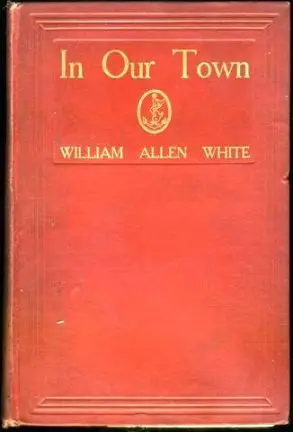
William Allen White
THE CLASSIC COLLECTION · 1918
"The Martial Adventures of Henry and Me" by William Allen White is a semi-autobiographical novel written during the early 20th century. The book follows the journey of the two main characters, Henry Jay Allen, an editor, and the narrator, who are both middle-aged American newspaper editors. They are sent to Europe as representatives of the American Red Cross during World War I, embarking on an adventure that blends humor and poignant insights into the human experience in wartime. The opening of the book establishes the contrast between the mundane lives of the protagonists in their small-town Kansas editors' roles and the extraordinary circumstances they find themselves in as they prepare for their trip to Europe. Henry and the narrator reflect on their anxieties and absurdities of packing, their initial reluctance towards military garb, and their subsequent departure aboard the ship Espagne. As they sail toward Europe, they encounter various personalities onboard, hinting at the camaraderie and complexities of wartime life that lie ahead, while the narrative is laced with humor, nostalgia for home, and a growing awareness of the gravity of their mission amidst the backdrop of war.
Introduction adapted from the source catalogue; source summaries may be automatically generated.
Free to read · English · 63,812 words · No account needed
MAKE TIME FOR A GOOD BOOK
On by default. Untick to stop anonymous reading totals. Each page counts after 10 seconds in view. How this works.
Anonymous counting is on unless you have switched it off.
The boys must be popular in the neighbourhood. For in the next village, which by the way was a town of ten thousand, our American Red Cross uniforms were treated with distinguished courtesy. Henry wanted a match. He could talk no French but a little boy at the inn, seeing him fumbling through his clothes with an unlighted pipe, came running to us with a little blue box of matches. Henry gave the boy a franc--more to be amiable than anything else. The boy flashed home to his mother proud as Punch! And just as we were pulling out of the village the boy came running to us with another little blue box of matches. We thought the boy had discovered that matches would bring a franc a box from Americans and was preparing to make his fortune. So Henry took the box, and as the car was moving handed the boy another franc. We noticed him waving his hands and shaking his head. And when we were a mile out of the village Henry opened his second box and found his original franc in it. The boy's mother was ashamed that he should have taken any money for a box of matches, and had made him bring back the money with another box to show how much the French appreciate the Americans coming to France. We met many instances like that.
Soon the road was cluttered up with American soldiers. They were driving motors, whacking mules, stringing along the by-paths and sweating copiously under the autumn sun. We wondered in passing what an American farmer boy and his self-respecting mule thought of the two-wheeled French carts they were using. Then we turned the corner and came into a new view; we saw our first troop of American soldiers quartered in a French village. They were busy building barracks. We stopped and visited them, and they showed us their quarters: In barns, in lofts of houses, in cellars, in vacant stores--everywhere that human beings could slip in, the American soldiers had installed themselves. The Y.M.C.A. hut was finished, and in it a score of boys were writing letters, playing rag-time on the pianos, and jollying the handsome, wise-looking American women at the counter across one end of the room. An Irish Catholic padre in a major's uniform was in charge of the sports of the camp and he literally permeated the Y.M.C.A. hut. He was the leader of the men. The little village where this troop lived faded into the plain and we rode again for five miles or so, and then came to another and another and still another. At that time thirteen villages in an arc of forty miles or so contained most of our American troops. We stopped many times on our long day's journey. Once we stopped for mid-day dinner and there came to Henry and me our first estrangement. It is curious, as the poet sings, "how light a thing may move dissension between hearts that love--hearts that the world in vain has tried and sorrow but more closely tied." Well--the thing that came between us was cooking--cooking that has parted more soul mates than any other one thing in the world! For two weeks more or less we had been eating in the French mess, or eating at country hotels or country homes in France, eating good French country cooking, and it was excellent. A mid-day meal typically was a melon, or a clear soup, or onion soup, brown and strong; a small bit of rare steak or chop, or a thin sliced roast in the juice with browned potatoes or carrots, a vegetable entree--peas, spinach, served dry and minced, or string beans; then raw fruit, and cheese. The bread, of course, was black war bread, but crusty and fine. That was my idea of a lunch for the gods. What we got at the American mess was this: a thick, frowsy, greasy soup--a kind of larded dishwater; thin steak fried hard as nails, boiled beans with fried bacon laid on the beans--not pork and beans, but called pork and beans--with the beans slithery and hard and underdone; lettuce, cabbage, and onions soused in vinegar, white bread cut an inch thick, soft and spongy, boiled potatoes that had stood in the water after they were cooked done, and then bread pudding, made by pouring water on bread, sticking in some raisins, stirring in an egg, and serving a floury syrup over it for sauce! There was enough, of course, to keep soul and body together. But the cooking had spoiled a lot of mighty good food. And Henry liked it! There were two preachers with us, and they bragged about the "good old American cooking!" And when they heard me roar they said, "He is insulting the star-spangled banner," and Henry threatened to take my pajamas out of his black valise!
Your reading position is saved on this browser. Take it to another device with a library code. Reading pages adapt to text, rather than matching a printed edition.
William Allen White
William Allen White
William Allen White
BEHIND THE BOOK
This eBook is for the use of anyone anywhere in the United States and most other parts of the world at no cost and with almost no restrictions whatsoever. You may copy it, give it away or re-use it under the terms of the Project Gutenberg License included with this eBook or online at www.gutenberg.org. If you are not located in the United States, you will have to check the laws of the country where you are located before using this eBook. Read the source licence.
The original source file, including credits and licence, is retained by this library. Request an original-format copy at no charge. Please include the book title and Project Gutenberg identifier #5633.
KEEP YOUR CURIOSITY GOING
Cécile Tormay

Moritz Busch
Coulson Kernahan
John L. Ransom

Maurice Baring
Frances Wright