THE CLASSIC COLLECTION✦In the Heart of a FoolCLASSIC FREE BOOKS
In the Heart of a Fool
William Allen White
THE CLASSIC COLLECTION · 1918
"The Martial Adventures of Henry and Me" by William Allen White is a semi-autobiographical novel written during the early 20th century. The book follows the journey of the two main characters, Henry Jay Allen, an editor, and the narrator, who are both middle-aged American newspaper editors. They are sent to Europe as representatives of the American Red Cross during World War I, embarking on an adventure that blends humor and poignant insights into the human experience in wartime. The opening of the book establishes the contrast between the mundane lives of the protagonists in their small-town Kansas editors' roles and the extraordinary circumstances they find themselves in as they prepare for their trip to Europe. Henry and the narrator reflect on their anxieties and absurdities of packing, their initial reluctance towards military garb, and their subsequent departure aboard the ship Espagne. As they sail toward Europe, they encounter various personalities onboard, hinting at the camaraderie and complexities of wartime life that lie ahead, while the narrative is laced with humor, nostalgia for home, and a growing awareness of the gravity of their mission amidst the backdrop of war.
Introduction adapted from the source catalogue; source summaries may be automatically generated.
Free to read · English · 63,812 words · No account needed
MAKE TIME FOR A GOOD BOOK
On by default. Untick to stop anonymous reading totals. Each page counts after 10 seconds in view. How this works.
Anonymous counting is on unless you have switched it off.
We realized that behind the curtain in Germany, a despotic will, scientifically guided, is controlling the food, the munitions, the assembling of men and materials for this war. But on this side of the German curtain at the "front" which we knew, a democratic purpose is doing these things. The view of that democratic purpose at work, to me at least, was my chief trophy of the war. The laws which make food conservation possible, which direct shipping, mobilize railroads, control industry, regulate wages, prescribe many of the habits of life to fit the war, all rise out of the experience of the people. There is a vast amount of the "consent of the governed" in this whole war game, so far as the Allies are concerned. And as it is in democratic finance, so also is it in the taste and talent and capacity for war. That also is democratic. What a wide range of human activity is massed in this business of war!
For days and days after we left the continent, in our minds we could see armies moving into the trenches somewhere along the "far flung battle line," and other armies moving out. The picture haunted us. It seemed to me a cinematograph of democracy. For the change of an army division from the trenches, tired, worn and bedraggled, moving wearily to its station of rest, with another army division, fresh and eager, moving up from its station of rest to the front, is indeed a social miracle. It is a fine bit of human machinery. So in terms of our modern democracy it may be well to review the interminable panorama of this democratic war. Fifty years ago it would have been a memorable achievement. Waterloo itself was not such a miracle. Yet somewhere in this war, this wonder is done every day and no record is made of it. Imagine hundreds of miles of wide, white roads, hard-surfaced and graded for the war, leading to a sector of the line. To make and keep these roads, itself is a master's job. Imagine the roads filled all day with two long lines of trucks, passing and repassing; one line carrying its guns and camp outfit, its whole paraphernalia of war, going to the battle front in the hills; another never-ceasing procession with its martial impedimenta coming out of the hills to rest. A few horses hauling big gun carriages straggle through the dust. Here and there, but rarely, is a group of marching men--generally men singing as they march. Occasionally a troop of German prisoners marching with the goose step, comes swinging along carrying their shovels at a martial angle--road menders--which proves that we are more than thirty kilos from the firing line; now and then a camp-kitchen rattles past. But ever in one's ears is the rich rumble of trucks, recalling the voluptuous sound of the circus wagon on the village street. But always there are two great circus parades, one going up, one coming down. Lumbering trucks larger than city house-moving vans whirl by in dust clouds; long--interminably long--lines of these trucks creak, groan and rumble by. Some of the trucks are mysteriously non-committal as to their contents--again reproducing the impression of the circus parade. Probably they hide nothing more terrible than tents or portable ice plants. But most of the trucks that go growling up and come snarling down the great white roads, bear men; singing men, sleeping men, cheering men, unshaved men, natty men, eating men, smoking men, old men and young men, but always cheerful men--private soldiers hurrying about the business of war; to their trenches or from their trenches, but always cheerful. Sometimes a staff officer's car, properly caparisoned, shuttles through the line like a flashing needle; sometimes a car full of young officers of the line tries to nose ahead of the men of the regiment, but rather meekly do these youngsters try to sneak their advantage, as one swiping an apple; no great special privilege is theirs. Interminable lines of truck-mounted guns rattle along, each great gun festively named, as for instance, "The Siren," or "Baby" or "The Peach" or "The Cooing Dove." Curious snaky looking objects all covered with wiggly camouflage--some artist's pride--are these guns, and back of them or in front of them and around them, clank huge empty ammunition wagons going out, or heavy ones coming in. At short intervals along the road are repair furnaces, and near them a truck or a gun carriage, or an ambulance that has turned out for slight repairs. In the village are great stores of gasoline and rubber, huge quantities of it assembled by some magic for the hour's urgent need.
Your reading position is saved on this browser. Take it to another device with a library code. Reading pages adapt to text, rather than matching a printed edition.
William Allen White
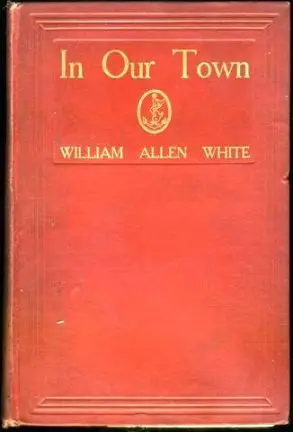
William Allen White
William Allen White
BEHIND THE BOOK
This eBook is for the use of anyone anywhere in the United States and most other parts of the world at no cost and with almost no restrictions whatsoever. You may copy it, give it away or re-use it under the terms of the Project Gutenberg License included with this eBook or online at www.gutenberg.org. If you are not located in the United States, you will have to check the laws of the country where you are located before using this eBook. Read the source licence.
The original source file, including credits and licence, is retained by this library. Request an original-format copy at no charge. Please include the book title and Project Gutenberg identifier #5633.
KEEP YOUR CURIOSITY GOING
Cécile Tormay

Moritz Busch
Coulson Kernahan
John L. Ransom

Maurice Baring
Frances Wright