THE CLASSIC COLLECTION✦The wolves and the lambCLASSIC FREE BOOKS
The wolves and the lamb
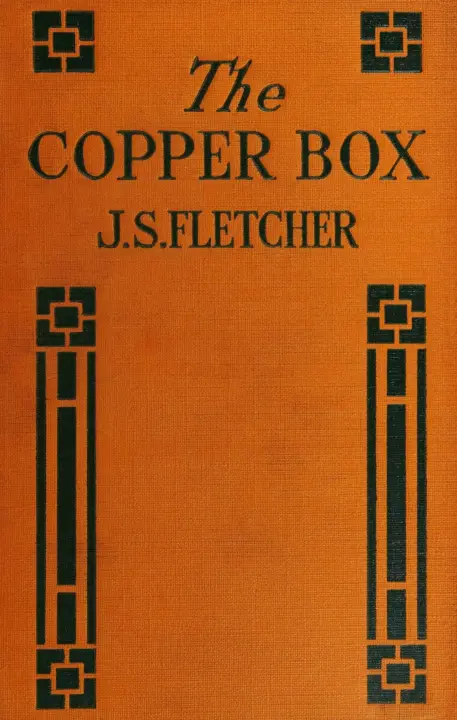
J. S. (Joseph Smith) Fletcher
THE CLASSIC COLLECTION · 1923
"The Markenmore Mystery" by J. S. Fletcher is a detective novel written in the early 20th century. The story centers around the beleaguered Markenmore family, particularly focusing on the complex relationships among Sir Anthony Markenmore, his children Harry and Valencia, and the enigmatic figure of Guy Markenmore, the estranged elder son who re-emerges just before a series of tragic events unfold. The novel hints at secrets, family tensions, and the unsettling atmosphere that surrounds Markenmore Court. The opening of the novel introduces us to Braxfield, the loyal butler of Markenmore Court, as he performs his nightly duties of securing the estate. On this particular evening, he unexpectedly encounters John Harborough, a family friend who has just returned home after a long absence, and learns that Sir Anthony is gravely ill. There's a palpable sense of decay and change in the family dynamic as Harborough and Braxfield discuss the whereabouts of Guy, their estranged elder brother, who has not been seen for seven years. The atmosphere becomes even more charged when Braxfield later receives a familiar knock at the pantry window, which heralds the return of Guy himself—setting the stage for the mysteries, revelations, and dark events that begin to unfold as the family grapples with its past.
Introduction adapted from the source catalogue; source summaries may be automatically generated.
Free to read · English · 82,109 words · No account needed
MAKE TIME FOR A GOOD BOOK
On by default. Untick to stop anonymous reading totals. Each page counts after 10 seconds in view. How this works.
Anonymous counting is on unless you have switched it off.
Blick made his way downstairs. The door of the drawing-room was still open, and the Baron von Eckhardstein was still softly singing sentimental ditties. At the foot of the staircase the maid suddenly appeared, and smiled. Blick smiled back.
“I haven’t made your mistress’s headache any worse,” he remarked.
“The headache’s too much cigarette smoking,” she whispered, with a
look. “I say!”
“What?” asked Blick, whispering too.
“Has anything—been found out?” she asked.
“What, yet? No!—too early,” answered Blick. “Why—do you know
anything?”
“I? Good Heavens, no! Merely curious! being a woman.”
“What’s your name?” enquired Blick, with a smile.
“Halliwell,” she replied quickly. “Why?”
“Miss or Mrs.?” asked Blick.
“Miss!—What makes you ask?”
“Just wanted to know,” said Blick. “I shall be here some time, most likely, and I’m sure to meet you again.”
Then, with another smile, he went away, and once clear of the house dismissed everything but one thought. That was an important one. Von Eckhardstein, on leaving the improvised court-room that morning, after the Coroner’s adjournment, had possessed himself, in passing the table whereon it was laid, of the tobacco-pipe which had been left at the Sceptre. Now then—was von Eckhardstein the man who had left it there?
Blick had a trick of imagining possible reasons for anything: he began to invent some now. Von Eckhardstein might be one of those folk who have a mania for collecting objects connected with crime—he, Blick, had come across more than one maniac of that sort, and knew that such would stop at nothing, not even theft, to achieve their desires. Or, he might know the man who had left the pipe, and have quietly abstracted it, in the crush and confusion, with the idea of destroying evidence against a friend. But, anyhow, there the pipe was, in von Eckhardstein’s pocket, where he had slipped it on picking it up from the table—and Blick had seen and identified it.
“And if it’s his,” mused Blick, “then he’s the man who went to the Sceptre at two o’clock last Tuesday morning, and left at three-fifteen with Guy Markenmore and the other chap! That’s a dead sure thing!”
He strolled back to the Inn, and in due course sat down to his
supper. Grimsdale tapped at his door and came in, just as he had
finished.
“There’s some of the rustics talking about this murder, in the kitchen,” he remarked, with a sly smile. “Would you like to hear what they’ve got to say?”
“They wouldn’t talk before me,” said Blick.
Your reading position is saved on this browser. Take it to another device with a library code. Reading pages adapt to text, rather than matching a printed edition.
J. S. (Joseph Smith) Fletcher
J. S. (Joseph Smith) Fletcher
J. S. (Joseph Smith) Fletcher
J. S. (Joseph Smith) Fletcher
BEHIND THE BOOK
This eBook is for the use of anyone anywhere in the United States and most other parts of the world at no cost and with almost no restrictions whatsoever. You may copy it, give it away or re-use it under the terms of the Project Gutenberg License included with this eBook or online at www.gutenberg.org. If you are not located in the United States, you will have to check the laws of the country where you are located before using this eBook. Read the source licence.
The original source file, including credits and licence, is retained by this library. Request an original-format copy at no charge. Please include the book title and Project Gutenberg identifier #59818.
KEEP YOUR CURIOSITY GOING
Coulson Kernahan

Maurice Baring
Frances Wright
Cécile Tormay

Frederic Jesup Stimson

W. H. P. (William Henry Pope) Jarvis