THE CLASSIC COLLECTION✦The wolves and the lambCLASSIC FREE BOOKS
The wolves and the lamb
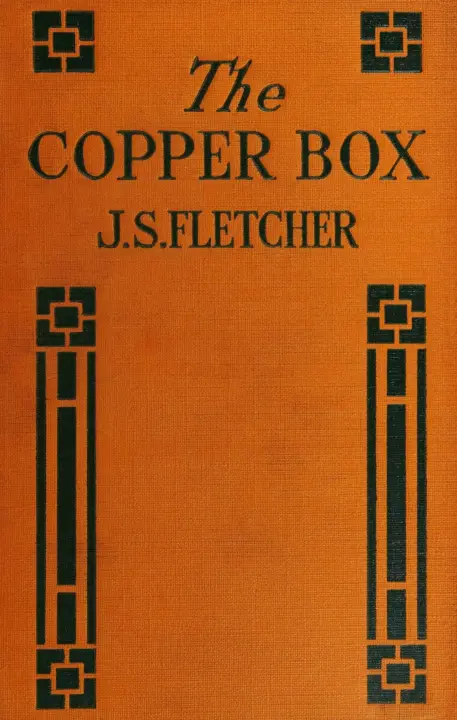
J. S. (Joseph Smith) Fletcher
THE CLASSIC COLLECTION · 1923
"The Markenmore Mystery" by J. S. Fletcher is a detective novel written in the early 20th century. The story centers around the beleaguered Markenmore family, particularly focusing on the complex relationships among Sir Anthony Markenmore, his children Harry and Valencia, and the enigmatic figure of Guy Markenmore, the estranged elder son who re-emerges just before a series of tragic events unfold. The novel hints at secrets, family tensions, and the unsettling atmosphere that surrounds Markenmore Court. The opening of the novel introduces us to Braxfield, the loyal butler of Markenmore Court, as he performs his nightly duties of securing the estate. On this particular evening, he unexpectedly encounters John Harborough, a family friend who has just returned home after a long absence, and learns that Sir Anthony is gravely ill. There's a palpable sense of decay and change in the family dynamic as Harborough and Braxfield discuss the whereabouts of Guy, their estranged elder brother, who has not been seen for seven years. The atmosphere becomes even more charged when Braxfield later receives a familiar knock at the pantry window, which heralds the return of Guy himself—setting the stage for the mysteries, revelations, and dark events that begin to unfold as the family grapples with its past.
Introduction adapted from the source catalogue; source summaries may be automatically generated.
Free to read · English · 82,109 words · No account needed
MAKE TIME FOR A GOOD BOOK
On by default. Untick to stop anonymous reading totals. Each page counts after 10 seconds in view. How this works.
Anonymous counting is on unless you have switched it off.
When the sensation caused by this reply had died down, the questioner gave Mrs. Tretheroe a searching look.
“You swear that he said this—on your oath?”
“On my oath!”
“Harborough said—to you—that it was due to Guy Markenmore that he, Harborough, had lost his chance with you, and that if he ever met Guy again, however long it might be, he’d shoot him like a dog?”
“Yes. That is precisely what he said.”
“I take it, then, that at that time Harborough was passionately in
love with you?”
“Madly, I believe!” murmured Mrs. Tretheroe. “He acted like a madman. I was afraid of him.”
“When this threat was made had Guy Markenmore gone away from here?”
“Oh, yes—some little time before.”
“And did Harborough go soon after?”
“He went away a few days before I was married.”
“Now, during the seven years of your marriage—six years, rather, I think—did you ever meet Harborough?”
“Never!”
“Ever hear from him?”
“No.”
“Or of him?”
“I heard—just once—from a friend of mine in Selcaster that he was still travelling abroad, and that Greycloister had then been shut up for some years.”
“Very well. In time your husband died, and you came back to England and took the Dower House here. And last Monday Mr. Harborough returned to Greycloister. Now, Mrs. Tretheroe, I want to ask you a most important question. Did you meet John Harborough last Monday?”
A dead silence fell on the room. For Mrs. Tretheroe hesitated in her answer. Every neck was craned forward. At last she spoke.
“Yes!”
“Where?—and at what time?”
“Just outside his own gates, at Greycloister, about five o’clock in
the afternoon.”
“Were you alone?”
“I was. I had gone out for a short walk by myself, with my dogs.”
“The meeting was accidental?”
“Certainly. I had no idea he’d come home.”
“Was there any—shall we call it embarrassment?”
“Well, yes. I was surprised. He seemed taken aback—agitated. Of course we shook hands and talked a little. Mere talk.”
“Any reference to your former relations?”
“No.”
“Just a mere polite exchange of—nothing in particular?”
“Just that. But he asked if—or, rather, when—he might come and see
me.”
“And what did you reply?”
“I replied—well, that he might come whenever he liked. What else
could I reply?”
“He knew that you were free?—that Colonel Tretheroe was dead?”
“Oh, yes—I mentioned that myself.”
“And then, I suppose, you parted?”
“Yes.”
“Where did you next see him?”
Your reading position is saved on this browser. Take it to another device with a library code. Reading pages adapt to text, rather than matching a printed edition.
J. S. (Joseph Smith) Fletcher
J. S. (Joseph Smith) Fletcher
J. S. (Joseph Smith) Fletcher
J. S. (Joseph Smith) Fletcher
BEHIND THE BOOK
This eBook is for the use of anyone anywhere in the United States and most other parts of the world at no cost and with almost no restrictions whatsoever. You may copy it, give it away or re-use it under the terms of the Project Gutenberg License included with this eBook or online at www.gutenberg.org. If you are not located in the United States, you will have to check the laws of the country where you are located before using this eBook. Read the source licence.
The original source file, including credits and licence, is retained by this library. Request an original-format copy at no charge. Please include the book title and Project Gutenberg identifier #59818.
KEEP YOUR CURIOSITY GOING
Coulson Kernahan

Maurice Baring
Frances Wright
Cécile Tormay

Frederic Jesup Stimson

W. H. P. (William Henry Pope) Jarvis