THE CLASSIC COLLECTION✦The Dark Road: further adventures of Chéri-BibiCLASSIC FREE BOOKS
The Dark Road: further adventures of Chéri-Bibi
Gaston Leroux
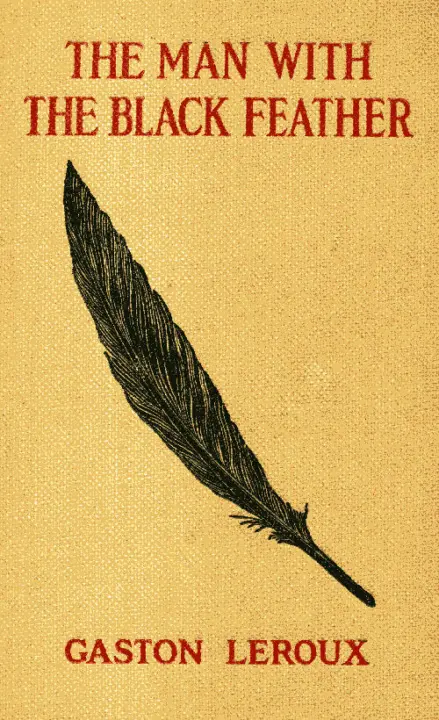
THE CLASSIC COLLECTION · 1912
"The Man with the Black Feather" by Gaston Leroux is a novel written in the early 20th century. The story begins with M. Theophrastus Longuet, a timid and unremarkable rubber stamp manufacturer, who receives a mysterious sandalwood box from the executor of a deceased friend. Inside, he discovers a bundle of manuscripts that set the stage for an extraordinary tale, where he begins to grapple with his own identity and a past life that intertwines with the rich history of Paris. At the start of the novel, Theophrastus and his wife, Marceline, along with their friend Adolphe, visit the Conciergerie, a famous historical prison. It is here that Theophrastus experiences an inexplicable connection to the past, uttering phrases that seem foreign yet familiar to him. Following a strange incident involving a hidden document found in the prison's cellars, Theophrastus becomes entwined with the life of a man from the 18th century, grappling with the reality of reincarnation and the mystery of buried treasures. This sets off a thrilling exploration of his previous identity and the fascinating secrets of the past that link to his present.
Introduction adapted from the source catalogue; source summaries may be automatically generated.
Free to read · English · 65,329 words · No account needed
MAKE TIME FOR A GOOD BOOK
On by default. Untick to stop anonymous reading totals. Each page counts after 10 seconds in view. How this works.
Anonymous counting is on unless you have switched it off.
The guests had not recovered from the shock when Theophrastus bawled to an old French air, in a voice which none of them recognised as his, his voice of the Conciergerie, bawled to the most select society from Crécy-en-Brie to Lagny-Thorigny-Pomponne:
"Bullies all! In our snug cribs
We live like fighting-cocks:
On dainties rich we splash the dibbs,
And booze we never docks.
Then guzzle, cullies, and booze away
Till Gabriel's trump on Judgment Day!"
In spite of the richness of the rhyme, no applause followed the stanza. The ladies did not clink their glasses with their knives; they stared at Theophrastus with their eyes starting out of their heads; and the eyes of Marceline projected furthest of all.
Theophrastus did not need any applause; like one possessed of a devil,
he bawled on:
"Bullies all! In our snug cribs
Dan Cupid loves to dance.
He brings to help us splash the dibbs
The prettiest silk in France.
Then guzzle, cullies, and booze away
Till Gabriel's trump on Judgment Day!"
In a final triumphant roar he repeated the last couplet and prolonged the final note, his eyes on the sun, which was sinking over the edge of the horizon, laid one hand on his heart, embraced "Nature" with a sweeping gesture of the other, and bellowed:
"Then guzzle, cullies, and booze away
Till Gabriel's trump on Judgment Day!"
He sat down with an air of supreme content, and said proudly:
"What do you think of that, Marie-Antoinette?"
"Why do you call me Marie-Antoinette?" gasped the trembling Marceline.
"Because you're the prettiest of them all!" roared Theophrastus in that awful voice. "I appeal to Madame la Maréchale de Boufflers, who's a woman of taste! I appeal to all of you! And there's not one of you, by the Pope's gullet, who'll dare to deny it! Neither the big Picard, nor the Bourbonnais, nor the Burgundian, nor Sheep's-head, nor the Cracksman, nor Parisian, nor the Provincial, nor the little Breton, nor the Feather, nor Patapon, nor Pint-pot, nor St. James's Gate, nor Gastelard, nor Iron-arm, nor Black-mug, nor even Fancy Man!"
Since Theophrastus had on his right old Mlle. Taburet, he prodded her in the ribs by way of emphasis, an action which nearly made her faint.
No one dared budge; his flaming eye chained them to their chairs; and leaning affectionately towards Mlle. Taburet, he pointed to the gasping Marceline, and said:
"Look, Mlle. Taburet, aren't I right? Who can compare with her? Pretty-Milkmaid, of Pussycat? Or even Blanche, the Bustler? Or Belle-Hélène who keeps the Harp tavern?"
He turned towards Adolphe.
Your reading position is saved on this browser. Take it to another device with a library code. Reading pages adapt to text, rather than matching a printed edition.
Gaston Leroux
Gaston Leroux
Gaston Leroux
BEHIND THE BOOK
This eBook is for the use of anyone anywhere in the United States and most other parts of the world at no cost and with almost no restrictions whatsoever. You may copy it, give it away or re-use it under the terms of the Project Gutenberg License included with this eBook or online at www.gutenberg.org. If you are not located in the United States, you will have to check the laws of the country where you are located before using this eBook. Read the source licence.
The original source file, including credits and licence, is retained by this library. Request an original-format copy at no charge. Please include the book title and Project Gutenberg identifier #46343.
KEEP YOUR CURIOSITY GOING
Coulson Kernahan

Maurice Baring
Frances Wright
Cécile Tormay

Frederic Jesup Stimson

W. H. P. (William Henry Pope) Jarvis