
The story of Betty
Carolyn Wells
THE CLASSIC COLLECTION · 1919
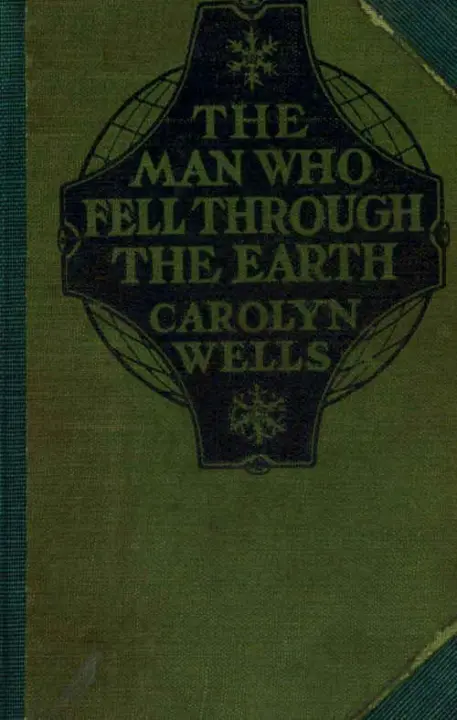
"The Man Who Fell Through the Earth" by Carolyn Wells is a mystery novel written in the early 20th century. The story introduces the main character, Tom Brice, a lawyer who inadvertently becomes embroiled in a perplexing case involving a shooting in an office suite belonging to Amos Gately, the president of the Puritan Trust Company. As Brice witnesses a struggle and a gunshot from across the hall, he finds himself drawn into a web of intrigue surrounding Gately's mysterious disappearance. At the start of the novel, Brice moves into his new law office and soon becomes a witness to a heated argument that culminates in a gunshot and a woman's scream. He discovers that Gately's office is empty when he tries to intervene, raising questions about the identities of the individuals involved in the struggle and their current whereabouts. As the inquiry unfolds, Brice and his astute assistant, Norah MacCormack, delve into the events leading up to this dramatic incident, ultimately uncovering the layers of secrecy surrounding Gately's life and the mysterious circumstances of his disappearance.
Introduction adapted from the source catalogue; source summaries may be automatically generated.
Free to read · English · 64,560 words · No account needed
MAKE TIME FOR A GOOD BOOK
On by default. Untick to stop anonymous reading totals. Each page counts after 10 seconds in view. How this works.
Anonymous counting is on unless you have switched it off.
"I can't think it was a woman," I said. "Although the shadow was indistinct, it struck me as that of a man, the motions and attitudes were masculine, as I recall them. The hatpin may have been left here this morning or any time."
"The visitor must be found," declared Mr. Talcott, "but I don't know how
to go about it."
"Ask the elevator girls," I suggested; "one of them must have brought the
caller up here."
We did this, but the attendants of the three elevators all denied having brought anyone up to Mr. Gately's offices since the old man and the elderly lady who had been mentioned by Jenny.
Miss Raynor had been brought up by one of the girls also, but we couldn't quite ascertain whether she had come before or after the other two.
While waiting for Miss Raynor to come again, I tried to do a little scientific deduction from any evidence I might notice.
But I gained small information. The desk-blotter, inkwell, and pens were in immaculate order, doubtless they were renewed every day by a careful attendant. All the minor accessories, such as paperweights and letter openers were of individual styles and of valuable materials.
There was elaborate smoking paraphernalia and a beautiful single rose in
a tall silver vase.
"Can you read anything bearing on the mystery, Mr. Brice," asked Talcott, noting my thoughtful scrutiny.
"No; nothing definite. In fact, nothing of any importance. I see that on one occasion, at least, Mr. Gately kept a chauffeur waiting an unconscionably long time, and the man was finally obliged to go away without him."
"Well, now, how do you guess that?" and Mr. Talcott looked decidedly
interested.
"Like most of those spectacular deductions," I responded, "the explanation takes all the charm out of it. There is a carriage check on the desk,--one of those queer cards with a lot of circular holes in it. That must have been given to Mr. Gately when he left his car, or perhaps a taxicab, outside of some hotel or shop. As he didn't give it up, the chauffeur must have waited for him until he was tired."
"He may have gone off with some friend, and sent word to the man not to
wait," offered Talcott.
"But then he would have sent the call-check out to identify him. What a queer-looking thing it is," and I picked up the card, with its seven round holes in a cabalistic array.
"Perhaps the caller left it," spoke up Norah; "perhaps he, or she, came here in a cab, or a car, and----"
Your reading position is saved on this browser. Take it to another device with a library code. Reading pages adapt to text, rather than matching a printed edition.
Carolyn Wells

Carolyn Wells & Harry Persons Taber

Carolyn Wells

Carolyn Wells
BEHIND THE BOOK
This eBook is for the use of anyone anywhere in the United States and most other parts of the world at no cost and with almost no restrictions whatsoever. You may copy it, give it away or re-use it under the terms of the Project Gutenberg License included with this eBook or online at www.gutenberg.org. If you are not located in the United States, you will have to check the laws of the country where you are located before using this eBook. Read the source licence.
The original source file, including credits and licence, is retained by this library. Request an original-format copy at no charge. Please include the book title and Project Gutenberg identifier #44872.
KEEP YOUR CURIOSITY GOING
Coulson Kernahan

Maurice Baring
Frances Wright
Cécile Tormay

Frederic Jesup Stimson

W. H. P. (William Henry Pope) Jarvis