THE CLASSIC COLLECTION✦A dead man’s diaryCLASSIC FREE BOOKS
A dead man’s diary
Coulson Kernahan
THE CLASSIC COLLECTION · 1908
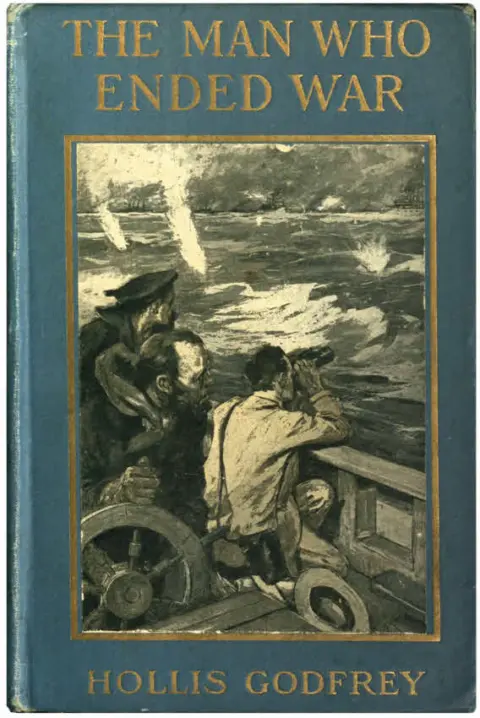
"The Man Who Ended War" by Hollis Godfrey is a fictional novel written in the early 20th century. The narrative revolves around the extraordinary premise of a mysterious individual who claims he can bring an end to all war. The initial chapters introduce a group of correspondents and officials discussing a bizarre letter from this figure, setting the stage for an intriguing exploration of themes such as power, war, and the potential for peace. At the start of the story, the setting is a government office where the Secretary of War has just concluded a statement about new military transports. The protagonist, Orrington, and his colleague Ordway then delve into the contents of a ludicrous letter declaring war against war itself; the author of the letter threatens to destroy battleships if nations do not disarm. This shocking declaration seems ludicrous at first, summoning laughter among the correspondents. However, as Orrington pursues further investigation into the peculiar claims of the letter, he discovers a deeper, possibly dangerous significance behind the man’s intentions. The narrative intertwines personal stories, including the budding romance between Orrington and a research scientist named Dorothy Haldane, lending emotional depth to the unfolding adventure as they uncover the truth behind the mysterious figure and his ambitions.
Introduction adapted from the source catalogue; source summaries may be automatically generated.
Free to read · English · 70,394 words · No account needed
MAKE TIME FOR A GOOD BOOK
On by default. Untick to stop anonymous reading totals. Each page counts after 10 seconds in view. How this works.
Anonymous counting is on unless you have switched it off.
“They’re all right,” he said, handing them back. “Now, if I give you twenty pounds a month for two months, will that be all right?”
A dull red rose in the man’s face as his eyes lighted. “It will mean everything to me, sir,” he said. “I’ve got a wife and a boy.”
Tom drew out his purse. “Here’s ten pounds to clinch the bargain,” and he handed him two five pound notes.
“I appreciate that more than I can say,” said the man, the tears welling up into his eyes with emotion. “Now, what did you want to know?”
“First about Dr. Heidenmuller’s apparatus, and then about his death.”
“I’m afraid I can’t tell you much of the apparatus. I never even saw it. It was in an inner room to which the doctor had the only key. I never was in the room till the day we broke down the door and took him out dead. There was no apparatus there then. It must have been removed.”
“How did the room look?” asked Dorothy.
“It was all bare. Nothing in it at all, except the wooden chair where he sat and a wooden table.”
“How about the walls and ceiling?”
“They were all of wood.”
“How about the locks on the door and windows?”
“That was a funny thing. They were of wood, too, though he had an iron
key.”
“What did the doctor have in his pockets?”
“Four five-pound notes, no change, and his watch was gone. There was nothing in his watch pocket except a watch crystal. His keys were gone, too, and only the ribbon of his watch was left lying on the floor.”
“What did the doctors say about his death?”
“Straight paralysis, they said. I had been away for three days. He was around the laboratory for one day after I left, and the day after that he must have died. They said death was instantaneous.”
“Did the doctor leave any family?”
“None.”
“What became of his papers?”
“Nobody knows. He had scarcely any friends. His property went to a niece in Germany, and she came over to hunt for papers, but she found none.”
“What became of the other assistant?”
“He went back to Germany. He knew nothing more than I did, however.”
“Did the doctor have any friends who came to see him?”
“Very few. There was one American who came to see him now and then. I never knew his name or where he came from, nor did I know the name of the two or three German friends he had.”
“Anything else you think of?” asked Tom.
Your reading position is saved on this browser. Take it to another device with a library code. Reading pages adapt to text, rather than matching a printed edition.
BEHIND THE BOOK
This eBook is for the use of anyone anywhere in the United States and most other parts of the world at no cost and with almost no restrictions whatsoever. You may copy it, give it away or re-use it under the terms of the Project Gutenberg License included with this eBook or online at www.gutenberg.org. If you are not located in the United States, you will have to check the laws of the country where you are located before using this eBook. Read the source licence.
The original source file, including credits and licence, is retained by this library. Request an original-format copy at no charge. Please include the book title and Project Gutenberg identifier #49848.
KEEP YOUR CURIOSITY GOING
Coulson Kernahan

Maurice Baring
Frances Wright
Cécile Tormay
Francis Greenleaf Allinson & Anne C. E. (Anne Crosby Emery) Allinson

Frederic Jesup Stimson