THE CLASSIC COLLECTION✦A dead man’s diaryCLASSIC FREE BOOKS
A dead man’s diary
Coulson Kernahan
THE CLASSIC COLLECTION · 1908
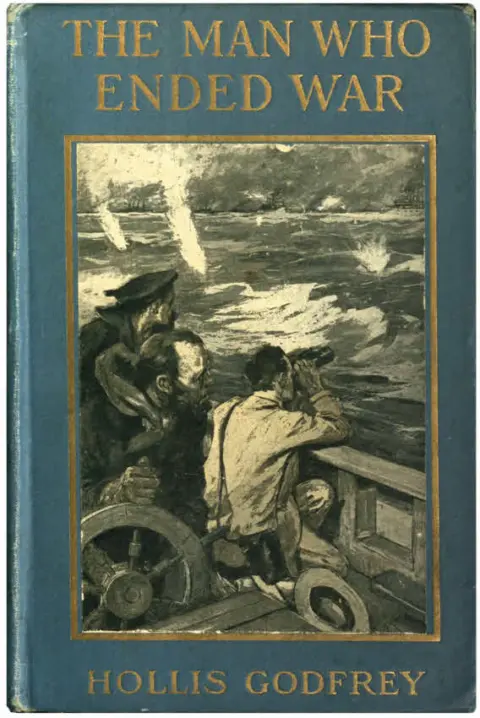
"The Man Who Ended War" by Hollis Godfrey is a fictional novel written in the early 20th century. The narrative revolves around the extraordinary premise of a mysterious individual who claims he can bring an end to all war. The initial chapters introduce a group of correspondents and officials discussing a bizarre letter from this figure, setting the stage for an intriguing exploration of themes such as power, war, and the potential for peace. At the start of the story, the setting is a government office where the Secretary of War has just concluded a statement about new military transports. The protagonist, Orrington, and his colleague Ordway then delve into the contents of a ludicrous letter declaring war against war itself; the author of the letter threatens to destroy battleships if nations do not disarm. This shocking declaration seems ludicrous at first, summoning laughter among the correspondents. However, as Orrington pursues further investigation into the peculiar claims of the letter, he discovers a deeper, possibly dangerous significance behind the man’s intentions. The narrative intertwines personal stories, including the budding romance between Orrington and a research scientist named Dorothy Haldane, lending emotional depth to the unfolding adventure as they uncover the truth behind the mysterious figure and his ambitions.
Introduction adapted from the source catalogue; source summaries may be automatically generated.
Free to read · English · 70,394 words · No account needed
MAKE TIME FOR A GOOD BOOK
On by default. Untick to stop anonymous reading totals. Each page counts after 10 seconds in view. How this works.
Anonymous counting is on unless you have switched it off.
Tom’s hearty laugh was the last thing I heard. The bull’s-eye shut, and I found myself breathing fast. To my surprise the air supply was ample, no trace of taint,--good, wholesome air. “Come,” I said to myself. “This is not half bad.” Aided by the boy, I clambered clumsily over the bow and went down the little ladder. As I entered the water, the weight of my suit went from me, I was borne up as if I were in swimming, but, as I sank slowly, I began to feel a strange earache, increasing in intensity till I thought I should cry out with the agony. My forehead above my eyes seemed clamped in a circlet of red hot iron, and the bells of a thousand church spires seemed ringing and reverberating through my head. I could see dimly the black water about me, and I gripped the metal case of the electric lamp that I held in my hand, till I feared it would crush into fragments. All of a sudden I touched bottom, and the pain ceased. The relief was so great that for a moment or two I stood motionless, luxuriating in the respite and, as I started to go on, I realized that a slight depression was the only unusual bodily feeling left. I turned the switch of my lamp and looked about me. Nothing but clean, white sand, nothing to show which way I should turn. “Straight ahead is the best course,” I decided, and I started forward, my boots and dress, heavy and dragging on the surface as they were, of but the slightest inconvenience here. Fortunately for me, the tide was no serious hindrance, and I was to windward of the boat. Before moving I turned my lantern in every direction. One thing was sure. There was no huge hulking shadow, such as a warship lying on the bottom would make. My lamp but dimly outlined the lane of light on the sand along which I started forward. Now that I was about my work, and had safely reached the bottom, the strangeness of the situation began to wear off. I went ahead twenty measured steps, casting my light in every direction. No result. I paced back the same number to keep my position even. Turned to the right, and repeated the maneuver. Turned to the left, and did the same. No sign. Apparently the depths had remained untouched since the Royal George had been cleared from the harbor, back about 1840. Returned from my last trip, I turned off my lantern, to save its current, and stood in the darkness pondering. I did not want to go backward from the place where I was. Such a step would put me to leeward of the boat, and the lad had warned me against such a move, saying that it might be hard for me to make progress against the tide. There was nothing to be done save to try a further cast of fortune, so I pushed on twenty paces forward and started to count twenty more. Just as I was reaching the limit, the lantern gleam showed a shadow ahead of me. I hurried on till the object came into the full light. There, peacefully as if sleeping in his quiet bed at home, lay a midshipman in his blue uniform. He could not have been fifteen years of age. His golden hair, that a mother might often have kissed and caressed, swayed with the slight movement of the waters. His arm lay naturally beneath his head. As I knelt beside this childish victim of a dread mission, a wave of bitter rebellion passed over me. I cried out in very intensity of feeling. The sound reverberating through the helmet to my ears seemed a mighty roar, and, surprised into realization, I braced myself to my work and looked more closely. There was something strange about the uniform, something different from that on the youngsters I had seen about German harbors. I studied the form before me for a minute before I saw what it was. At last I placed it. The buttons, the brass buttons were gone. I looked more narrowly. Not a glint of metal showed. Rising, I passed on, and entered on a city of the dead beneath the waves. Officer and sailor, steward and electrician lay in quiet rest. They lay all around me, as if sleeping on a battlefield, ready for the struggle of the morning. I had paced many steps before I reached the end. A thousand men lay there. Not one had even a shadow of surprise, of premonition of death, upon his brow. All lay as if ready for the reveille, the reveille which would not sound for them. It seemed no thing of earth. Rather a scene from some unearthly vision where I, a disembodied spirit, walked among the forgotten shells of other souls. I wakened with a start, as I came sharp up against a mass which gave way at my approach. I flashed my lamp upon it. A heap of crockery, broken and shattered, met my eye. One plate in ornate gold showed the double eagle and below “Kaiserin Luisa.” That heap of broken crockery and this city of the dead were all that remained of as fine a battleship, of as magnificent a result of human ingenuity and skill, as ever sailed the seas. I must not linger, though, I had work enough to do, to find all I could of the reasons for the catastrophe, and give place to Tom before the dawn could come. Just beside me lay an officer. I could not tell his rank, for all insignia had disappeared. I stooped to look for metal, when suddenly I felt myself rising steadily. I was being drawn to the surface, though I had given no signal. Indignantly I jerked the rope twice again and again. The men above paid no heed to my commands, and I mounted steadily upwards.
Your reading position is saved on this browser. Take it to another device with a library code. Reading pages adapt to text, rather than matching a printed edition.
BEHIND THE BOOK
This eBook is for the use of anyone anywhere in the United States and most other parts of the world at no cost and with almost no restrictions whatsoever. You may copy it, give it away or re-use it under the terms of the Project Gutenberg License included with this eBook or online at www.gutenberg.org. If you are not located in the United States, you will have to check the laws of the country where you are located before using this eBook. Read the source licence.
The original source file, including credits and licence, is retained by this library. Request an original-format copy at no charge. Please include the book title and Project Gutenberg identifier #49848.
KEEP YOUR CURIOSITY GOING
Coulson Kernahan

Maurice Baring
Frances Wright
Cécile Tormay
Francis Greenleaf Allinson & Anne C. E. (Anne Crosby Emery) Allinson

Frederic Jesup Stimson