THE CLASSIC COLLECTION✦A dead man’s diaryCLASSIC FREE BOOKS
A dead man’s diary
Coulson Kernahan
THE CLASSIC COLLECTION · 1908
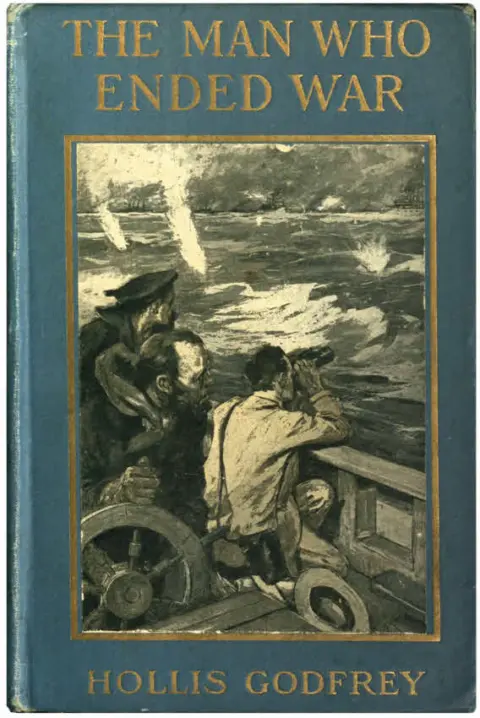
"The Man Who Ended War" by Hollis Godfrey is a fictional novel written in the early 20th century. The narrative revolves around the extraordinary premise of a mysterious individual who claims he can bring an end to all war. The initial chapters introduce a group of correspondents and officials discussing a bizarre letter from this figure, setting the stage for an intriguing exploration of themes such as power, war, and the potential for peace. At the start of the story, the setting is a government office where the Secretary of War has just concluded a statement about new military transports. The protagonist, Orrington, and his colleague Ordway then delve into the contents of a ludicrous letter declaring war against war itself; the author of the letter threatens to destroy battleships if nations do not disarm. This shocking declaration seems ludicrous at first, summoning laughter among the correspondents. However, as Orrington pursues further investigation into the peculiar claims of the letter, he discovers a deeper, possibly dangerous significance behind the man’s intentions. The narrative intertwines personal stories, including the budding romance between Orrington and a research scientist named Dorothy Haldane, lending emotional depth to the unfolding adventure as they uncover the truth behind the mysterious figure and his ambitions.
Introduction adapted from the source catalogue; source summaries may be automatically generated.
Free to read · English · 70,394 words · No account needed
MAKE TIME FOR A GOOD BOOK
On by default. Untick to stop anonymous reading totals. Each page counts after 10 seconds in view. How this works.
Anonymous counting is on unless you have switched it off.
The office before which we finally stopped looked peculiarly businesslike as we reconnoitred through its broad window. “Looks just like home,” murmured Tom, as we gazed at the smart young man in dapper tweeds dictating to a stenographer whose pompadour, though like a single tree in a forest had it been on lower Broadway, yet seemed a rare exotic in this English seaport town. The Remington machine at one side, the brightness of the office furniture, the whole atmosphere, in short, was a stage picture, a sudden revival of the world we had left less than a week ago.
“He is,” exclaimed Tom, without the slightest apparent connection. “See that life insurance calendar on the wall!”
A flaming, big-lettered, American calendar appeared at the end of his
pointing finger.
“May as well play it boldly, anyway,” murmured Tom, pushing open the door. “Pardon me,” he said, as he entered. “We’re Americans, and want to know something about coal.”
Our dapper friend from behind the desk was on his feet in a moment, stepping towards me with outstretched hand. “Mr. Orrington, I’m proud to see you here.” I looked at him in complete surprise, while Tom looked on in equal amaze. The stenographer sitting behind her keys raised one hand to pat her hair, and stared in undisguised and interested wonder.
“I’m afraid you have the advantage of me,” I remarked.
“That’s not surprising,” answered the young man with a smile. “You never saw me before, but look here.”
I followed blindly around his desk, and waited while he pulled open a drawer at the side. “Exhibit Number one,” he remarked as he took out an American illustrated weekly bearing an imprint of my features. It had appeared just after my second signed story came out.
“Oh,” I remarked briefly and lucidly.
“Exhibit Number two,” our friend went on, bringing to my astonished gaze a file of my own paper, whereupon my own stories showed their large familiar headlines at the top.
“That’s what it is to be famous,” said a laughing voice over my shoulder. “Now, I could travel the world over and never find anybody to recognize me.”
“Then it’s up to me to bring you into the limelight,” I said, recovering. “This is Prof. Haldane, Mr.--?”
“Thompson, at your service,” supplied the manager. “From New York, sent over here to take charge of this end two years ago, likewise a sincere admirer of your work. Now, what can I do for you?”
I glanced at the stenographer meaningly.
“Say anything you please; it will go no farther, gentlemen. Let me
introduce Mrs. Thompson.”
We rose and bowed.
Your reading position is saved on this browser. Take it to another device with a library code. Reading pages adapt to text, rather than matching a printed edition.
BEHIND THE BOOK
This eBook is for the use of anyone anywhere in the United States and most other parts of the world at no cost and with almost no restrictions whatsoever. You may copy it, give it away or re-use it under the terms of the Project Gutenberg License included with this eBook or online at www.gutenberg.org. If you are not located in the United States, you will have to check the laws of the country where you are located before using this eBook. Read the source licence.
The original source file, including credits and licence, is retained by this library. Request an original-format copy at no charge. Please include the book title and Project Gutenberg identifier #49848.
KEEP YOUR CURIOSITY GOING
Coulson Kernahan

Maurice Baring
Frances Wright
Cécile Tormay
Francis Greenleaf Allinson & Anne C. E. (Anne Crosby Emery) Allinson

Frederic Jesup Stimson